
Echoes of Place and Feeling: The Art of Ida Shaghoian
Landscapes of memory, atmosphere, and inner reflection

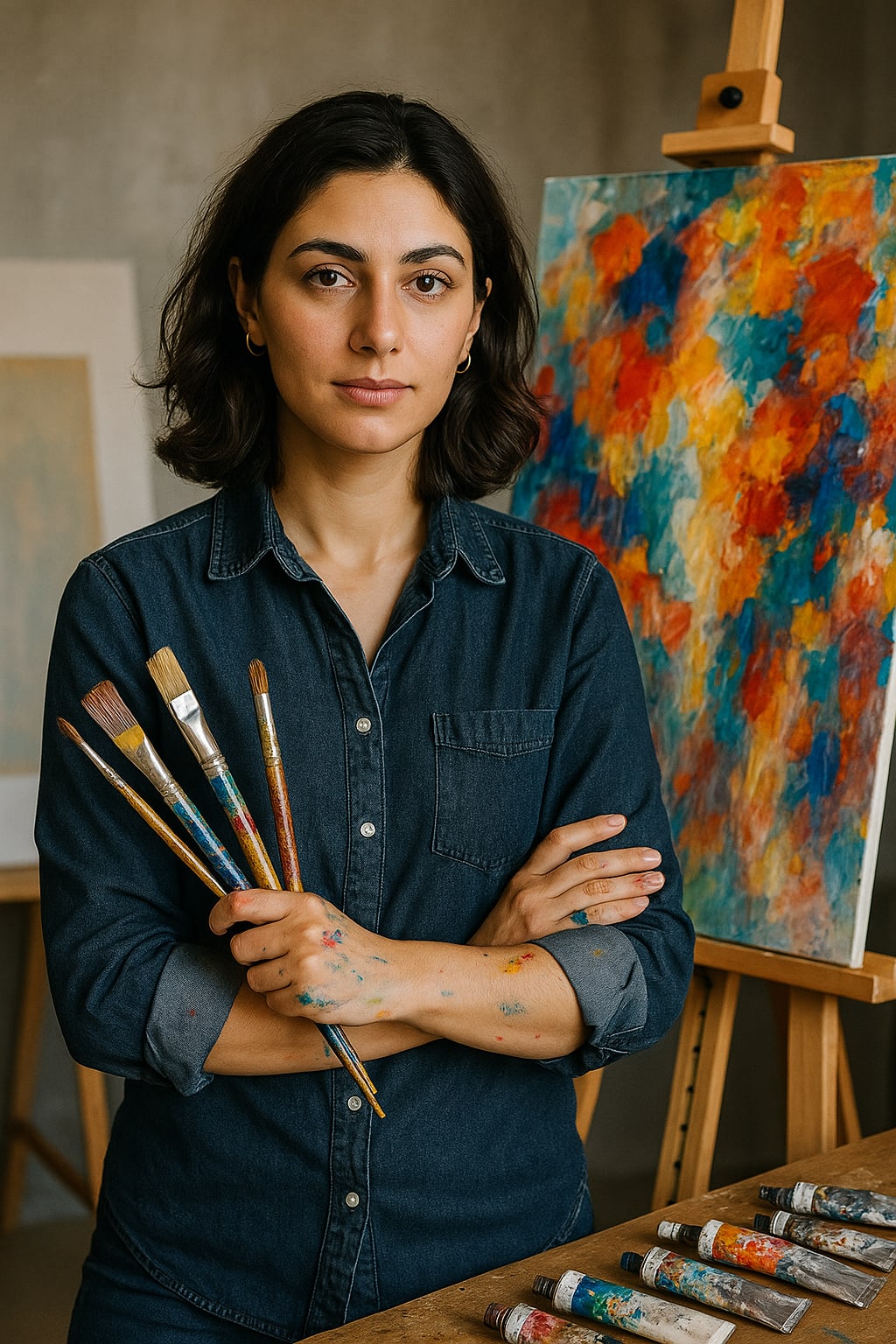
Painting can be many things at once: a record of what the eye sees, a trace of what the heart remembers, and a mirror for the inner life of the viewer. In the work of Ida Shaghoian, landscape becomes a vessel for emotion rather than a literal description of terrain. Her paintings feel suspended between recognition and reverie, offering spaces that suggest hills, water, and sky while remaining open enough to hold personal meaning. What emerges is a body of work that invites contemplation, asking viewers not simply to look, but to feel.
From the first encounter, there is a sense that these environments are not fixed places. They appear as impressions shaped by light, weather, and memory, much like recollections that soften and shift over time. Rather than guiding the eye through a clear narrative, the paintings offer a pause. They create a quiet interval where perception slows and emotion rises gently to the surface.
The roots of a sensory way of seeing
The artist’s early connection to the natural world played a central role in shaping this sensibility. Childhood experiences of open spaces, subtle changes in light, and the moods of weather fostered an awareness of how surroundings influence feeling. Long before formal training, drawing and painting became a way to register atmosphere rather than outline objects. A hillside was not just a hillside, but a presence charged with calm or longing. Water reflected not only light, but inner stillness.
Formal education later provided exposure to a wide range of artistic traditions, from lyrical landscape painting to abstraction and minimalist restraint. Yet no single movement defined the direction of her work. Instead, she absorbed elements selectively. From traditional landscape came an attention to luminosity and depth. From abstraction came freedom of gesture and openness of form. From quieter modern approaches came an appreciation for restraint and silence. These influences blended into a visual language shaped more by intuition than by doctrine.
This resistance to strict categorization remains central to the practice. The paintings feel neither fully abstract nor conventionally representational. They exist in a liminal zone, much like memory itself, where clarity and blur coexist.
Building atmosphere through process
The physical construction of each painting mirrors this emotional intent. Works often begin with expansive washes of color laid down loosely, allowing pigment to move and settle in unpredictable ways. These initial layers act as an atmospheric ground, similar to a distant recollection that lacks detail but holds strong feeling. Over time, additional marks emerge slowly, responding to what is already present on the surface.
Textures accumulate through scraping, layering, and varied applications of paint. Some passages remain thin and translucent, while others grow dense with material. This interplay creates depth that feels lived in rather than designed. Nothing appears rushed. The surface seems to remember each decision made along the way.
Compositions suggest natural forms without insisting on them. A horizon might dissolve into mist. A stand of trees might appear as vertical rhythms of color. Shorelines hint at water without defining its edge. The viewer is left room to complete the image, bringing personal associations into the act of looking.
Memory as a creative force
At the heart of the work lies a sustained engagement with memory. Painting becomes a way to revisit moments that linger emotionally rather than visually. These might include the warmth of late afternoon light, the hush of early morning air, or the weightless feeling of standing near water. Such experiences are not reproduced literally. Instead, they are translated into color relationships, spatial tension, and tonal shifts.
Transitional moments hold particular fascination. Dusk, fog, and seasonal change recur as underlying themes. These states echo emotional passages in life when one feeling gives way to another. In such moments, certainty softens and possibility expands. The paintings capture that openness, allowing meaning to remain fluid rather than fixed.
Because of this approach, the work resonates broadly. Although rooted in personal reflection, it avoids specificity that would limit interpretation. Viewers often find their own memories activated, whether tied to places they have known or feelings they recognize but cannot easily name.
Nature as an inner landscape
In this body of work, nature functions less as subject and more as partner. Elements like light, air, and water operate symbolically, standing in for emotional states. Light often suggests remembrance or clarity. Water implies reflection and depth. Open air evokes freedom and uncertainty. These elements interact on the canvas much as thoughts and feelings interact within the mind.
Color plays a crucial role in this dialogue. Muted palettes can convey introspection or quiet longing, while warmer tones introduce a sense of hope or presence. Transitions between hues are rarely abrupt. Instead, they blend softly, reinforcing the idea of gradual emotional movement.
Through this lens, landscapes become inner terrains. They reflect not where one has been physically, but where one has traveled emotionally. The paintings do not instruct or explain. They offer companionship in contemplation.
Presence within contemporary painting
Within the broader field of contemporary art, Ida Shaghoian stands out for a commitment to emotional sincerity. At a time when much work emphasizes concept or spectacle, these paintings return attention to atmosphere and inner experience. Critics often note their meditative quality, while collectors respond to the sense of calm and depth they bring into a space.
The absence of overt narrative allows the work to remain timeless. It does not depend on current events or explicit commentary. Instead, it addresses enduring human experiences: memory, transition, and the search for meaning within quiet moments.
Looking ahead
As the practice continues to evolve, experimentation with scale, texture, and color remains ongoing. New works suggest deeper exploration of light and spatial ambiguity, yet the guiding impulse stays consistent. Painting remains a way to honor what is felt but not always spoken.
Through this steady vision, Ida Shaghoian offers viewers more than images. She offers spaces for reflection, places where personal histories can surface gently. In standing before these canvases, one is invited to slow down, to breathe, and to listen to the landscapes within.
About the Creator
Ida Shaghoian
Ida Shaghoian is a painter exploring memory, emotion, and nature through textured, vibrant works that blend abstraction and realism and invite quiet reflection.
Keep reading
More stories from Ida Shaghoian and writers in Art and other communities.
Atmospheres of Meaning: Ida Shaghoian and the Language of Quiet Abstraction
In contemporary art, where urgency and bold statements often dominate visual culture, Ida Shaghoian offers an alternative rooted in stillness and reflection. Her paintings unfold slowly, inviting viewers to engage with mood rather than message. Instead of presenting a clear narrative or identifiable location, her work creates environments shaped by feeling, memory, and subtle transition. Each canvas functions as an open space where interpretation is guided by emotion rather than instruction.
By Ida Shaghoian9 days ago in Art
The Paintings of Bouchra Belghali
By Brian D’Ambrosio To stand before a painting by Bouchra Belghali is to experience something closer to listening than looking. It unfolds the way music does—not by telling a story or depicting a recognizable scene, but by setting color into motion, allowing it to vibrate, collide and resolve into feeling. Like a melody unburdened by lyrics, it bypasses explanation and goes straight to sensation.
By Brian D'Ambrosio 6 days ago in Art
The Face in the Window
I noticed the face on the fourth night after I moved into the apartment. It was raining heavily, and the city lights reflected strangely on the glass. I had just finished dinner and was standing near the window when something caught my eye. For a brief second, I thought I saw someone staring back at me from outside.
By Sudais Zakwan2 days ago in Art

Comments
There are no comments for this story
Be the first to respond and start the conversation.