
Eason Chan's song 《浮夸》 ("Useless"):More Than a Scream
The Heartbreaking Story Behind Eason Chan's "Useless," and How It Gave Voice to My Own

The first time I heard someone sing Eason Chan's "Useless" at a karaoke bar, my immediate reaction was: it’s just noise.
The near-cracking screams, the expressions contorted with exaggeration, and the unabashed madness in the melody—it all felt like a calculated offense. I sat in the corner, watching the flashing lights and my friends' captivated faces, feeling like a complete outsider. Is this really music, I wondered, or just some hysterical performance art designed to grab attention?
In this way, the song barged into my world as an "offender." I once believed it was nothing more than an extreme display of vocal gymnastics, a cheap emotional release. It wasn't until I stumbled upon the deep, sorrowful secret hidden behind this wild anthem that I finally understood.
That deafening roar was, in fact, a whisper no one could hear.
My Sanctuary in the Madness
After I truly "understood" "Useless," it became my secret emotional outlet, a resonant chamber that could contain all my misunderstood and suppressed feelings.
Ripples of Emotion: From Resistance to Catharsis
The emotions this song evokes in me are complex and conflicting. The opening piano has an eerie, theatrical quality, like the beginning of a bizarre silent film. Eason begins his story with a restrained, almost neurotic tone, like a man trying desperately to appear normal in a crowd while on the verge of a breakdown. The emotion builds layer by layer after the line, "So you think I'm exaggerating?" Each repetition of the chorus is more frantic, more unhinged than the last. It culminates in that final, sky-piercing scream of "Ahhh—," where all pretense is torn away, leaving only the most primitive, naked pain. Listening to this song is like experiencing an emotional avalanche—from initial resistance to being swept away, and finally, finding a strange sense of peace and release in the thundering chaos.
The Key to My Own Memories: "If It's Not Explosive, How Can It Make Headlines?"
I once worked in a fiercely competitive company where I repeatedly felt my efforts and ideas were drowned out in the noise of the boardroom. The proposal you carefully prepared was no match for someone else's sensational headline. Your quiet dedication was overshadowed by their boastful self-promotion. At those moments, the lyrics, "If it’s not explosive, how can it make headlines? / Let me boast, and become a grand entertainer," would swirl in my mind. It was a key that unlocked the "unseen" room in my heart. The helplessness and sorrow of having to twist yourself out of shape just to be noticed was captured perfectly in that line.
The Power of the Lyrics: Wyman Wong's Social Scalpel
Lyricist Wyman Wong's words are like a sharp scalpel, precisely dissecting the social dilemmas of modern life.
"你当我是浮夸吧 / 夸张只因我很怕 / 似木头 似石头的话 / 得到注意吗"
(So you think I'm exaggerating? / I'm only over-the-top because I'm terrified / If I were like wood or stone / Would I ever be noticed?)
These lines are the thesis of the entire song and its most heartbreaking confession. They attribute all "exaggerated" behavior to a deep-seated "fear"—the fear of being ignored, of being treated like an inanimate "piece of wood or stone." All the bravado is just a desperate attempt to prove one's own existence. This fragile, defensive posture perfectly encapsulates the experience of so many of us in the social media age, trying so hard to perform the role of an "interesting soul."
The Soulful Performer: Eason Chan's Method-Acting Masterpiece
If the music and lyrics are the script, then Eason Chan is the lead actor delivering an award-worthy performance. His interpretation in this song transcends mere "singing." It's not a display of technique; it's a full-body channeling of a spirit. You can hear the tremor in his voice, the gossamer-thin falsetto, the exhausted screams, and even the dramatic tension in his gasps for air. He isn't "singing about" a madman; he is the madman, screaming with all his might only to discover the world is deaf.
The Story Behind the Song: A Requiem Born from Tragedy
Just when I thought I had fully grasped the song's "performer personality" core, the true story behind it struck me with an even deeper level of shock.
The Genesis of an Idea: A Desperate Melody for a Lost Friend
The composer of "Useless" is C.Y. Kong. On April 1, 2003, when he heard the news that his dear friend, the legendary Hong Kong icon Leslie Cheung, had died by suicide, he was plunged into immense grief and shock. He locked himself in his room and, in a state of extreme depression and anguish, wrote the melody for this song. He later recalled completing the track on the very day of Leslie's funeral. Therefore, the frenzy and hysteria we hear are not fabricated. They are born from a creator's raw, heart-wrenching grief in the face of a friend's devastating departure. The song's original demo was a wordless requiem, a primal scream questioning the world.
The Creative Process: From Private Mourning to Public Expression
This dark, powerful piece of music was initially rejected by the record label, who deemed it too negative and unmarketable. Just as C.Y. Kong was about to lose hope and shelve his passion project, it was Eason Chan who insisted on keeping it. He was profoundly moved by the raw power pulsating within the melody.
To make the song accessible to a wider audience, lyricist Wyman Wong took on the task. He didn't write directly about Leslie Cheung's story. Instead, he chose a more brilliant and universal approach: he transformed C.Y. Kong's "great pain" of losing a friend into the "small pain" of an everyman who is misunderstood and craves attention. He created a fringe character who, unable to survive in silence, resorts to "exaggeration" (the literal meaning of 浮夸) to be seen. This character serves as both a scathing satire of our era of entertainment-obsessed, attention-seeking culture and, poignantly, a subtle echo of the immense public pressure Leslie Cheung endured throughout his life.
When the Story Illuminated the Song
Knowing this backstory made "Useless" come alive in my ears in a completely new way, imbued with two overlapping souls.
The first soul is that of the small-time character from Wyman Wong's lyrics, desperate to be seen.
The second is the grieving soul of C.Y. Kong, crying out in memory of Leslie Cheung.
Suddenly, that desperate scream was no longer an empty performance. It was rooted in the bottomless grief over a friend's death, the final struggle of a soul trapped in a vast, suffocating silence. Eason Chan's performance perfectly merges these two souls into one. He sings of the everyman's bitterness, but also of the profound sorrow of a final farewell. And so, every moment of "exaggeration" in the song becomes incredibly sincere, weighted by the gravity of its true emotional origin.
An Anthem for the Unseen: Every Loud Mouth May Hide a Silent Wound
"Useless" diagnoses one of the core sicknesses of our time: we are all terrified of being forgotten.
In this age of information overload, silence equals disappearance. How many of us, at some point in our lives, haven't had to play an "exaggerated" role? Curating a perfect persona on social media, fighting to speak up in meetings, becoming the loudest person at the party... We make noise with all our might, just to prove to the world: "I am here. Please, look at me."
This song is a battle hymn for all who feel ignored by the world, but it's also bitter medicine. It allows us a moment of pure catharsis, while also forcing us to reflect: behind the "exaggerated" facades of others, could there also be a terrified heart, yearning to be understood?
A Lingering Echo, An Invitation
"Useless" is a mirror, reflecting the absurdity of our times and the deepest fears within our hearts. It reminds us that while we pay attention to the loudest, most explosive voices, we must not forget to listen for the silence, the whispers, and even the screams that are merely whispers in disguise.
The next time you hear this song, or encounter someone in your life you deem "over-the-top," perhaps you can pause for a second. Perhaps you can wonder if, behind that exaggeration, there is also a soul terrified of being forgotten by the world.
Have you ever had to wear a mask of "exaggeration" to face the world? Share your story in the comments below.
About the Creator
Keep reading
More stories from Pauline Brown and writers in Art and other communities.
The Best Philosophy in the World Is the One You Can Live
Ask ten philosophers what the best philosophy in the world is, and you will receive at least ten different answers—possibly delivered with footnotes, counterarguments, and mild contempt for the other nine. This disagreement is not a flaw of philosophy; it is its essence. Philosophy was never meant to be a universal prescription handed down like a rulebook. It exists to help human beings live better lives. By that standard, the best philosophy in the world is not the most elegant or complex—it is the one that can be lived.
By Fred Bradford6 days ago in Art
When the Artist Becomes the Art
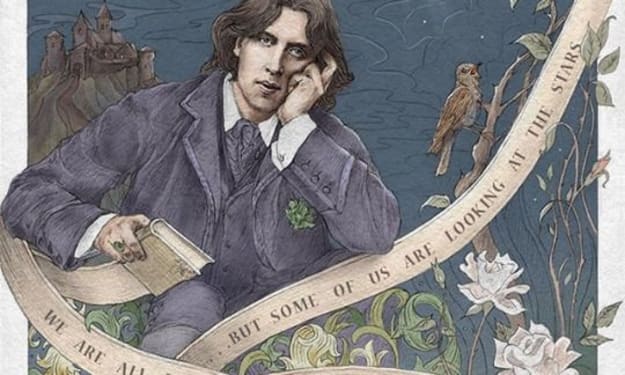
We like to think we can separate the art from the artist, but can we, really? Art is born from the same place as sin. It mainly emerges from conflict: between what is felt and what is permitted, between the self that is lived and the self that must be hidden. No figure embodies this tension more vividly than Oscar Wilde: a man who transformed his own contradictions into style, wit, and devastating clarity. His novel The Picture of Dorian Gray is not merely a tale of aesthetic decadence but the battleground on which this question is fought.
By Yasmine Lagrasabout 17 hours ago in Art



Comments
There are no comments for this story
Be the first to respond and start the conversation.