
Decoding Carbon Offsetting and Emission Reduction Strategies
Decoding Carbon Offsetting and Emission Reduction Strategies

As per recent research, the global logistics and transport sector contributes around 24% of global CO2 emissions. No doubt, supply chain logistics companies have a greater role in boosting global trade however, they also give rise to carbon emissions and climate change.
As environmental predicaments are on the rise, logistics companies are consistently looking for proactive strategies to minimise their environmental impact and counteract the amount of their emission as part of their sustainability goals.
Understanding Carbon Offsetting:
Carbon offsetting refers to a process that lets companies have some compensation for their carbon emission by launching some projects that help them to minimise their GreenHouse Gas emissions or decrease CO2 from the atmosphere. In the logistics sector, where emissions from transportation are crucial, carbon offsetting offers an avenue to balance out the environmental impact of the operation.
Emission reduction strategies in the logistics sector are classified into three scopes of the GHG protocols.
Scope 1:
Direct emissions from resources that the corporation is responsible for and regulates are taken to be scope 1 emissions. In other words, the wide array of actions that corporations take which emit carbon directly into the environment.
Transitioning to Fuel-efficient Vehicles: If companies invest in fuel-efficient vehicles, such as electric or hybrid trucks and environment-friendly vehicles then they can play their part in reducing emissions.
Optimising Alternative Fuels: Companies should take active initiatives in exploring alternative fuels, such as biodiesel or renewable natural gas, which are a great help in lessening emissions. The incremental shift from fossil fuels can lead to decarbonization and reduce the carbon footprint of the logistics industry.
Route Optimization and Consolidation: Route optimization is one of the most viable solutions to decrease mileage, lower fuel usage and minimise emissions. By scaling technology and data analysis, supply chain companies are in the best position to optimize delivery routes, crystallise shipments, and decline empty backhauls, which results in substantial emissions reductions.
Modal Shift: If we upgrade a modal shift from road to rail or maritime transportation, it can considerably curb carbon emissions. Logistics companies can initiate collaboration with rail and maritime operators to opt for greener transport alternatives for long-haul and intercontinental shipments, hence, lowering the dependency on carbon-intensive road transport.
Scope 2:
The indirect emissions when energy is produced come under the scope 2 emissions.
Sustainable Warehousing and Distribution: To downsize emissions, sustainable practices are opted for in inventory management and distribution operations. This incorporates executing energy-efficient lighting systems that will optimise facility layouts for better energy utilization. It also leads to embracing renewable energy sources for sustainable processes.
Investing in Renewable Energy: Companies can also invest in energy sources that are renewable like solar panels or wind turbines, to fuel facilities and other operations that can help de-escalate dependency on fossil fuel-based energy and decrease their carbon emissions.
Scope 3:
Any emissions that do not come under scope 1 or 2 come under scope 3.
Partnering with Suppliers and Partners: Supply chain logistics enterprises have the option to collaborate with carriers, suppliers, etc. to foster sustainable practices and encourage joint emission reduction ventures. This may mean having shared initiatives, such as equipment upgrades, ameliorated logistics planning, and data sharing for enhanced emissions monitoring.
Carbon Offsetting Projects: To neutralise the remaining carbon emissions, logistics companies can go with high-quality carbon offset assignments. They can opt for energy installations, reforestation initiatives, or methane capture projects. If companies choose reliable and verified offset projects that may ensure that the emissions are neutralized with effect.
About the Creator
Keep reading
More stories from writers in Art and other communities.
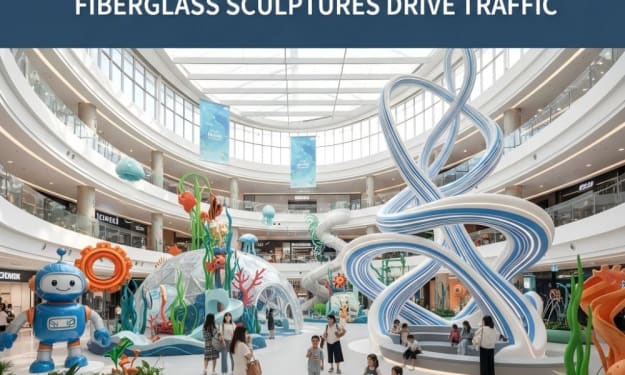
2026 Commercial Space Design:How Fbierglass Sculpture Drives Traffic
Today, offline commercial spaces are facing continuous pressure. With e-commerce offering convenient and fast services, physical stores must showcase unique features to attract customers. In this context, fiberglass sculptures are no longer merely decorative items; they have become visual focal points in shopping malls, brand stores, pop-up shops, and mixed-use commercial projects, playing a crucial role in increasing foot traffic.
By Shenzhen Ruiheng Crafts4 days ago in Art
Why Strategic Branding Is Essential for Long-Term Business Growth
In today’s fast-paced digital environment, businesses face constant pressure to stand out. Consumers are exposed to endless choices every day, making attention harder to earn and trust harder to keep. While quality products and services are important, they are no longer the only factors that determine success. Strategic branding plays a key role in helping businesses grow steadily and remain relevant over time.
By Ayush Bagwari4 days ago in Art
Ludacris and Nelly draw backlash over bookings at MAGA-coded music festival
Ludacris and Nelly headlining a mostly right-wing event is good for them. It’s also great for the genre of hip hop. The two rap veterans have showcased their talents on other stages. Why can’t they perform for mostly MAGA folks and grab that bag?
By Skyler Saunders5 days ago in Beat


Comments
There are no comments for this story
Be the first to respond and start the conversation.