
Debunking Misconceptions about the Frankfurt School: Adorno's Analysis of the Culture Industry
The Emoji Movie, Adorno and the Culture Industry
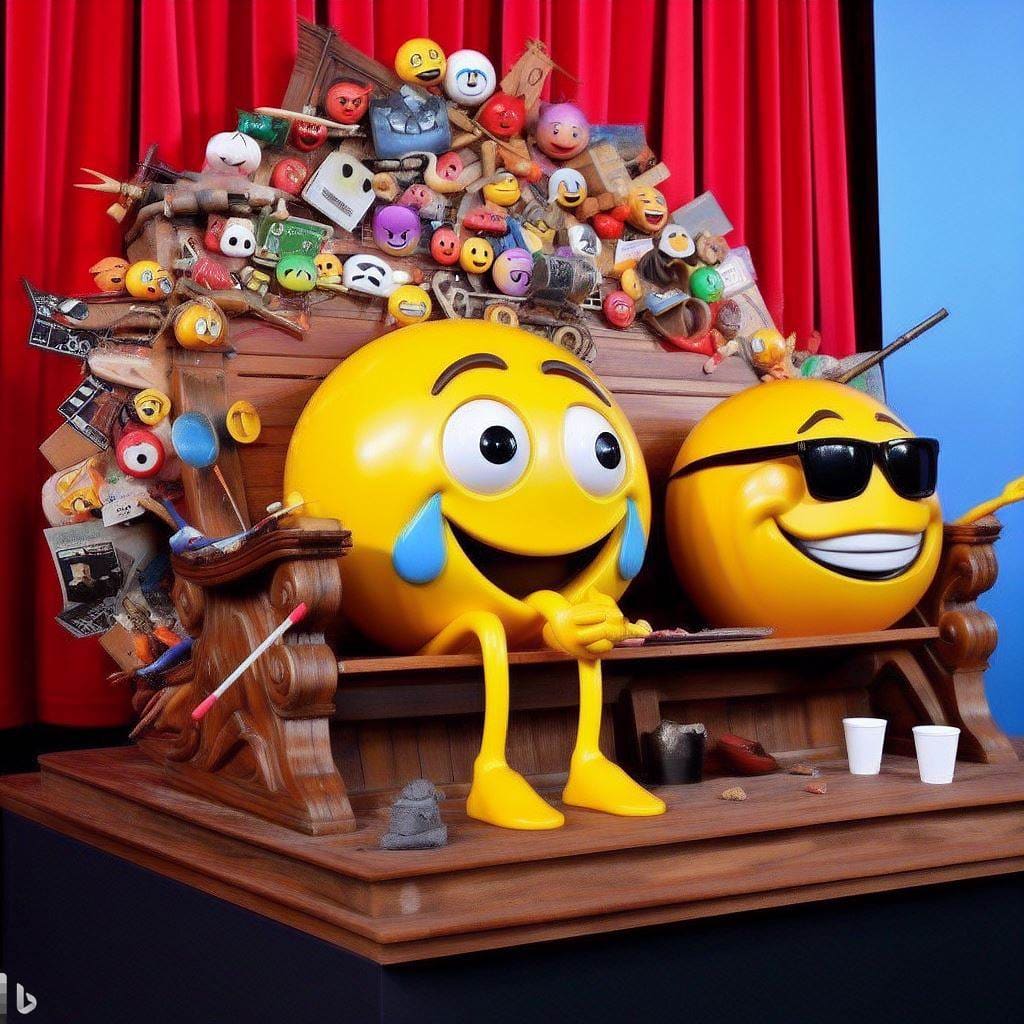
There exists a common misperception that the members of the Frankfurt School, most notably Theodor Adorno, harbored a disdain for Western culture and sought its obliteration. However, the actual truth is quite the contrary. Adorno, the focus of our discussion in this video, did not harbor any aversion for Western culture. Instead, he was deeply concerned about its degradation, which he believed resulted from the overpowering influence of capitalism. His trepidations centered on the cultural transformation that transpired when profit motives took precedence over all other aspects, leading to what Adorno and Max Horkheimer termed the "culture industry."
The culture industry is a manifestation of advanced capitalism, wherein cultural artifacts are systematically designed to maximize profitability, akin to a mass production factory. Notably, Adorno's critique of contemporary culture bears a striking resemblance to the criticisms offered by figures like Peter Joseph Watson concerning popular culture. This similarity challenges the notion of "cultural Marxism" frequently propagated by right-wing critics. Adorno's analysis, however, is significantly more sophisticated and explanatory.
For Adorno, the pursuit of freedom in society was intricately linked to enlightenment and culture. Therefore, we are prompted to ponder what Adorno's perspective might be regarding our present society, where we allocate substantial resources, such as $50 million, for the production of a movie.
The Emoji Movie stands as an exemplar of the culture industry's logic both internally within its plot and externally in its production process. The world inhabited by emojis mirrors the environment Adorno described—a society entirely under the dominion of the culture industry. In this world, individuality is stifled, and people are reduced to their roles in the production process, unable to express anything that falls outside the stringent industrial plan. The resemblance to Marx's critique of the capitalist division of labor is striking, where diverse capabilities and interests are subjugated to monotonous, repetitive tasks, leading to the degradation of the individual.
Adorno championed genuine art's autonomy and spontaneity, qualities that the culture industry actively seeks to suppress by conforming to a comprehensive plan that standardizes every cultural product. This process results in a lack of room for spontaneity, leaving nothing unbound by the production process's strict confines. In The Emoji Movie, the character Gene represents spontaneity that the culture industry endeavors to stifle, despite his destined role as a "meh" emoji. While he deviates from the prescribed path, making various expressions, he is eventually coerced into seeking conformity, mirroring the real-life pressures of suppressing emotions for the sake of efficiency.
On the other hand, the character Jailbreak embodies an individual's rebellion against the homogenization imposed by the culture industry. She was initially a princess emoji but forsook that role to become a hacker. Her journey mirrors the struggle to transcend the constraints of the industrial plan. However, the movie's conclusion presents a paradox: Jailbreak saves the day by reverting to her former role as a princess, relinquishing her independence. Likewise, Gene resumes his role as an emoji but is now permitted to exhibit diverse expressions, having been assimilated into the system.
The outcome of The Emoji Movie aligns with Adorno's critique that the culture industry manufactures conflict and then resolves it to reconcile individuals with the status quo, ensuring society always prevails while individuals become mere puppets manipulated by social norms.
When we step back from the movie's internal dynamics and examine it externally, we find that the film reflects the transformation of cultural commodities. Adorno observed a shift from use value (i.e., the usefulness of cultural assets) to exchange value (i.e., what they can be exchanged for) in the production of cultural artifacts. Modern media exemplifies this shift as use value dwindles in favor of exchange value. Notably, The Emoji Movie becomes an embodiment of this shift, with product placement seamlessly integrated into the plot to appease the profit motive.
Adorno's insights also resonate with the theory of ideology. Mass media often mirrors and reinforces contemporary capitalist relations, perpetuating the belief that our system is universal and natural. It leaves viewers with the impression that capitalist structures are ubiquitous, even in settings and eras vastly different from our own. The notion of ideological indoctrination, as Adorno explained, is not that media creators intend to enforce a dominant ideology actively. Instead, people unintentionally follow their interests within the bounds of the capitalist system, reflecting systemic influences.
To address systemic problems, it is imperative to understand their systemic causes. The culture industry is not steered by an elite, evil cabal intent on making culture worse. Rather, individuals adhere to their interests within the established capitalist framework, conforming to the industrial plan and favoring exchange value over use value. Fixing systemic problems necessitates confronting the system itself. Scapegoating specific figures, akin to the movie's overthrow of Smiler, falls short of effecting any substantial change. The challenge is to question and seek to rectify the overarching relations of production rather than merely redistributing power within the existing system.
In conclusion, Adorno's critical assessment of the culture industry challenges the prevalent misconceptions regarding the Frankfurt School's intentions. Instead of advocating for the eradication of Western culture, he delved into the perils of the culture industry's commodification and standardization. The Emoji Movie serves as a fitting illustration of his analysis, both within the film's narrative and in the broader context of the media industry. By understanding the systemic underpinnings of these issues, we can hope to address the root causes and work toward a more enlightened and autonomous cultural landscape.
About the Creator
Keep reading
More stories from James Watson and writers in Art and other communities.
Schopenhauer's Philosophy and Its Influence on Contemporary Music
Introduction In the realm of philosophy and music, few figures stand as intriguing as Arthur Schopenhauer, the 19th-century German philosopher known for his distinctive views on the human will and existence. This article delves into the intricate relationship between Schopenhauer's philosophy and contemporary music, elucidating how his ideas continue to resonate with modern artists.
By James Watson2 years ago in Art
“What If It Happens?”
Monday, 11 April 2022 Ishrat Jahan One of our friends, Mr. Farooq, is a middle-aged man, yet he has still not been able to free himself from his deeply suspicious and fearful nature. These days, I happened to have some free time, so I thought it would be a good idea to meet him and try to untangle the puzzle of his constant worries. By coincidence, he himself arrived at my humble home, jolting along in a rickshaw.
By Sudais Zakwana day ago in Art
Introduction to Organic Solutions
In the realm of fitness, the role of nutrition cannot be overstated, and organic supplements are increasingly recognised as essential components of a well-rounded training regime. Unlike their synthetic counterparts, organic supplements are derived from natural sources, ensuring that fitness trainers can provide their clients with products that are free from harmful additives and chemicals. This not only promotes better health but also supports the body’s natural processes, thereby enhancing overall performance and recovery.
By Organic Products 6 days ago in Art
Wild Card Weekend Recap: What Happens Now?
I think I figured out why I love Wild Card Weekend so much. It's because it's the first playoff anything of the calendar year. The NFL season starts in the fall, and once upon a time, the champion was crowned either on or slightly before New Year's. The evolution of the NFL schedule has resulted in the playoffs starting just into the New Year, and currently, the final week of the season falls on the first weekend of the New Year, with Wild Card Weekend coming a week after that. So yes, chronologically, the NFL's Wild Card Weekend serves as the first playoff anything of the calendar year.
By Clyde E. Dawkins7 days ago in Unbalanced



Comments
There are no comments for this story
Be the first to respond and start the conversation.