
Cultivating an Indoor Garden: A Guide to Growing Fresh Produce at Home
Gift for garden lovers
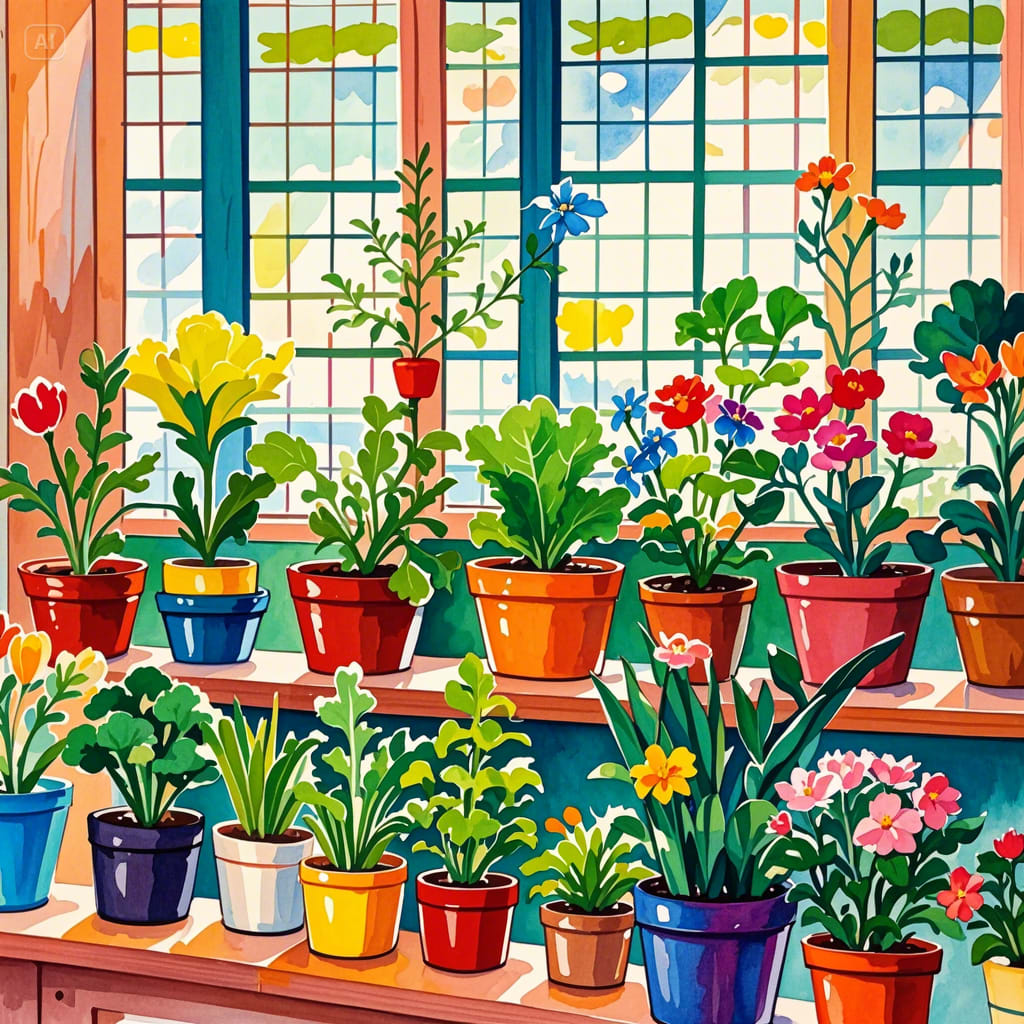
It's undeniable that the temperature is dropping, signaling the end of summer harvests. Even the most resilient plants are preparing for dormancy as the year draws to a close. Instead of succumbing to the gloom of fall and winter, let's continue our gardening journey indoors with some plants for indoor cultivation during the winter months.
Indoor plants don't suddenly have a different set of needs compared to outdoor ones, but the methods we use to meet these needs indoors will vary. For instance, indoor temperatures are usually consistent and potentially higher at this time of year, which is beneficial, especially for germination. Most seeds require a warmer environment to sprout than the plants themselves need once they've emerged.
However, every plant in existence requires light. Even on a day like today, the sun provides an unbeatable advantage for outdoor plants, both in terms of cost and intensity. But when the outdoor temperatures are no longer suitable for a plant's growth, the amount of sunlight or lack thereof becomes irrelevant. If you're fortunate enough to have sunny windows, a solarium, or a greenhouse, these can be sufficient. But often, we'll need to rely on artificial light.
Now that you're considering factors like temperature and light, let's discuss containers and soil for indoor gardening.
We frequently overlook the importance of drainage, if our beds can handle excess water from heavy rainfall when properly set up. However, some have attempted to cultivate plants in self-contained pots or containers, worried about water spilling out the bottom. This is not recommended, as non-draining containers can be detrimental to plants. Ensure that your containers have drainage and a way to collect the runoff from the soil. It may seem convenient to use compost or garden soil, but it's not advisable for indoor growing. Instead, opt for a sterile mix purchased from a store. Using outdoor soil can introduce various pests, which can become a significant problem indoors without the natural balance to keep them under control.
There are four key factors that will determine the success of your indoor growing: temperature, light, water, and soil. Before discussing the various plants that can be grown indoors, let's review the necessary steps for a successful indoor crop. Due to time constraints, we'll cover two steps simultaneously.
When planning an indoor crop, the first decision is choosing the plant to grow, which influences all other aspects. For instance, we'll be growing a wall of sugar snap peas and a bed of spinach. Once you've decided on the crop, you can select the appropriate containers, ensuring they have drainage holes. Remarkably, even containers designed for plants and purchased from a garden center may not have holes, so it's crucial to check. In the current era, reliability in anything is hard to come by. Once we've completed creating our drainage openings, we're all set to fill up these containers. We opt for a sterile, indoor potting mixture, which is specifically formulated for indoor plants, but functions equally well for outdoor gardening. We can fill the containers to the brim.
As for the peas, we soak them prior to planting, typically leaving them overnight. We plant them in pairs, as a precautionary measure in case one fails to sprout. If necessary, we can always reduce their number later. We ensure that each group of pea seeds is spaced approximately three to four inches apart, planting them at a depth of roughly half an inch.
For the spinach, we fashion a small furrow in the center, about half an inch deep. We liberally scatter the seeds in this tiny trench and cover them back up. Lastly, we finish off both containers with a thin layer of mulch. This not only facilitates top watering but also aids in moisture retention, reducing the frequency of watering.
We possess a basic LED grow light, which is quite advanced for what's required, as both peas and spinach can thrive well with just the light from a window. If you're utilizing a grow light, it's recommended to position it approximately 24 inches above the plant tops. Within a week, the spinach begins to sprout, followed by the peas two days later.
Spinach, due to its minimal life cycle, is a perfect choice for indoor cultivation. It's a plant cultivated solely for its foliage, which results in a quicker harvest that requires fewer resources. On the contrary, peas demand more than just foliage; they need to flower and produce fruit. Additionally, they require vertical support as they are climbing plants. They need at least two feet of trellis to grow upwards. While this may not seem like a significant issue, these types of requirements can accumulate when growing indoors.
There's a noticeable difference between a quick leafy harvest like spinach and a flowering plant like peas that requires more resources. This is exactly why we chose these two crops to highlight. It's a factor we need to consider when selecting the most suitable plants for indoor cultivation. Given sufficient space, heat, time, and light, any plant can be grown.
However, there's a point where it becomes impractical or unprofitable. We would recommend selecting the most appropriate plants for your indoor gardening projects, as it's not efficient to cultivate a plant that costs more to grow than its actual value.
First on the list is lettuce. All types are suitable, but loose leaf and romaine varieties, such as the one shown here, are my top recommendations. These upright varieties, including romaine and certain loose-leaf types, can be planted closer together, making them ideal for the limited space indoors. Lettuce grows quickly and can be continually harvested once it has four to five layers of leaves, providing a constant supply throughout the winter. To ensure healthy growth, maintain a cool temperature, provide ample water, and expose it to at least four hours of full-spectrum light daily, if possible.
Next up, a plant we've already discussed is spinach. This crop matures even faster than lettuce, typically within 50 days. However, it's important to note that spinach is usually a single-harvest plant. To ensure a continuous supply of fresh spinach throughout the winter, simply stagger your plantings every couple of weeks. Keep the spinach plants cool, ideally below 65 degrees Fahrenheit, and provide them with a moderate amount of light. Notably, spinach has a shallow root system, much less deep than that of lettuce.
The options for planting are boundless; another green marvel is arugula. This spicy giant, originating from the Mediterranean, is incredibly simple to cultivate, highly tolerant, and reaches maturity in a swift four to six weeks. Across the Atlantic, it's recognized as a rocket, and its growth pattern closely mirrors that of spinach. However, it can withstand higher temperatures and more intense lighting conditions. To plant arugula, sow the seeds at a shallow depth and use a damp paper towel to keep them moist. You can gather arugula at any stage, with the younger leaves offering a milder taste. Although we mentioned that flowering and fruiting crops demand excessive resources, the idea of cultivating a vast indoor expanse of peas is simply too captivating to ignore. Peas, such as the sugar snap variety, have shallow roots, with their spatial needs primarily above ground. They require a minimum of 2 feet of climbing space, and their heat and light requirements are relatively moderate. While peas thrive with more light, their needs are not nearly as intense as those of tomatoes or peppers. However, remember that the size of the light source directly impacts the size of the pods. Light is an energy input, and the pods are an energy output, which makes perfect sense. Provide them with as much light as feasible, but don't assume that growing them without an expensive LED is impossible.
You might be curious about the role of flowers and fertilization in this process. Rest assured, peas have what are known as perfect and complete flowers. This means that both the male and female reproductive parts are located on the same structure. As a result, peas are self-pollinating, eliminating the need for insect involvement or any intervention on your part.
Next, we're going to discuss a group of crops rather than a single plant, and that group is microgreens. The reason we've categorized them together is that microgreens are typically grown indoors and follow the same cultivation method. In this sense, every microgreen qualifies for this list.
You might be wondering, "What exactly are microgreens?" In simple terms, microgreens are the very young shoots of common crops. They are germinated and harvested shortly after their first true leaves emerge. In the sequence of crop categories, microgreens fall right after sprouts and just before baby greens.
To grow microgreens, soak your chosen seeds for 24 hours before planting. However, with microgreens, "planting" is a bit of a misnomer, as you essentially just place the seeds on the soil surface. Most microgreen varieties are ready for harvest within 12 to 14 days. Additionally, some multi-node crops, like the speckled peas shown here, can be harvested more than once. It's worth noting that microgreens are among the most nutrient-dense foods available. However, they aren't affordable to purchase from the shop and their lifespan post-harvest is quite short. The good news is, cultivating them is incredibly simple, even for novice gardeners. The following group of plants, commonly referred to as herbs, will be discussed next. Not all herbs are ideal for indoor cultivation, so I'll focus on my top four. The first one is a universally loved flavor, basil. This zesty member of the mint family is as effortless to cultivate as it is tasty. While fully grown basil plants are frequently available in grocery stores, the seeds are extremely affordable and starting the plant is quite straightforward. Basil prefers a slightly warmer environment, around 80 degrees Fahrenheit, for germination. Once sprouted, it grows swiftly. These basil plants, for instance, sprouted less than a month ago. To harvest basil, cut down the shoots just above the initial leaf node. The plant will then produce two new shoots, doubling your yield. Maintain one plant throughout the winter for an endless supply of basil and pesto. Another herb renowned for its flavor and faster growth rate than basil is cilantro. It is cultivated similarly, requiring higher temperatures for germination and cooler temperatures as the plants mature. Unlike basil, cilantro is an annual herb with a single stem. Therefore, we plant multiple seeds in the containers to achieve lush, bushy harvests.
The duration from sowing to reaping cilantro is under two months, so consider planting a few pots at different intervals for a continuous supply of fresh cilantro throughout the winter. An essential component of enhancing flavor, dill, typically cultivated outdoors, is now increasingly grown indoors. It's worth noting that dill is one herb whose dried leaves manage to preserve some of their distinctive taste. However, nothing beats the freshness of dill, which is remarkably easy to cultivate indoors. Regular pruning and harvesting will help control the plant's size. A single dill plant can provide enough supply to last the entire winter. If you haven't attempted growing dill indoors, I highly recommend giving it a try. Fresh dill serves as a delightful reminder of sunshine even during the coldest winter days.
Lastly, we have two closely related yet distinct plants: chives and green onions (or scallions). Despite their similar appearance, they are not identical. However, their cultivation methods are the same. Plant chive seeds shallowly in clusters of 10 to 15 seeds. For green onions, reduce the number of seeds to three or four, as they are larger single-stalk plants and grow significantly bigger than chives. Both chives and green onions can sprout in almost any temperature, but their optimal growth range is between 70- and 80-degrees Fahrenheit. We try to allow the shoots to reach a minimum height of four inches for chives and six inches for green onions before I proceed with harvesting. You have the option to selectively remove the stems as required, or if you need a larger quantity, you can cut down the entire plant. Rest assured it will regrow. By employing this complete cutting method, you can expect to reap three to four harvests during the winter season. It's best to keep these plants at room temperature, but ensure they receive ample light.
An interesting aspect of green onions is the ability to initiate their growth from store-bought plants. These plants are typically sold with their white root bulbs still attached. When placed in water, they can rapidly develop into new plants. This is truly fascinating, and for those who have never cultivated anything before, green onion cuttings serve as an excellent starting point for your indoor gardening journey.
Indoor cultivation can be costly, complex, and unprofitable, but this doesn't always have to be the case. The success of your indoor food production is less dependent on your skills and experience, and more on the type of crop you choose. These plants are almost certain to yield a harvest that you wouldn't otherwise have as we endure the long winter. Whether you're an experienced grower or a novice, the ability to satisfy that gardening urge in the middle of winter is well worth the effort.
Saigon, July 2024
About the Creator
Trần Nguyên Quý
I love learning about things. I will try to write about everything I know for everyone to see.
Keep reading
More stories from Trần Nguyên Quý and writers in Art and other communities.
The Classical Guitar: A Concise History of Its Development
The guitar is one of the most beloved and widely played instruments in the world. It has undergone a remarkable journey of over the course of several centuries, culminating in the standard six-string instrument we know and cherish today. This article will explore the early history of the guitar, and feature one of the first six-string guitars ever built.
By Trần Nguyên Quý2 years ago in History
Dog Shoes for Small Dogs and Puppy Shoes A Practical, Paw-Friendly Guide
Small dogs and puppies may look tough, but their paws often need more protection than people realize. Their bodies are lighter, their paws are smaller, and many of them spend a lot of time on surfaces that were never designed for delicate paw pads. Add cold sidewalks, hot pavement, rough gravel, wet grass, or even slippery indoor floors, and you start to see why dog footwear has become more than just a cute trend.
By aliyashahzadi5 days ago in Art




Comments
There are no comments for this story
Be the first to respond and start the conversation.