


I was born and raised in Rhodesia in 1959, fought in the civil war from 1977 to 1980 when it changed to Zimbabwe. I emigrated to the U.S. , met and married my wife and settled into my new life. It was in 1993 when I realized that time was flying past at a frightening speed and I realized that I hadn’t been back to Africa or seen my family for 13 years. So I spoke to my wife, and we decided to go visit them and search for African trade beads while we were there. After all, that was my wife’s business.Kill 2 birds with 1 stone.
we were off, and arrived in Bulawayo, my home town. Almost nothing had changed in 13 years except small things like street names and street vendors on almost all street corners.which would never have been seen in the old days. We chose the city hall grounds market to shop for beads.
The bustling market square situated in down town Bulawayo was the same, with street vendors selling everything from wood carvings to baskets, blankets to beaded clothing. It is on the grounds of the City Hall, which is an old colonial building with a clock tower, surrounded by green grass, fountains and colonial era statues. The one thing we didn’t find were beads, which we expected to find. Don’t beads come from Africa?
As it turns out, the trade beads we all associate with Africa don’t come from Zimbabwe. Most trade beads come from Northern Africa, West Africa, Saharan Africa. And those beads are mostly Venetian glass beads from Italy, with some Czech beads thrown in, like the wedding beads from Ghana and Nigeria. Kifa beads are African, and come from Mauritania. But Zimbabwe does not have trade beads. What they do have is bead work like the Zulu beadwork. Several of the stitches that are common in Zimbabwe are made by the local people. One of these stitches is commonly called Ndebele stitch, which is actually the name of the tribe of people. The beaded work is used to make the beaded clothing, doilies, necklaces, etc… that is all over this part of the world. The glass beads that are used are Czech 9/0 seed beads made in the Czech Republic.
We were very disappointed that we could not find any native trade beads, but as we were walking around the market, we had an idea. One man we met was selling wooden walking sticks that he had hand carved, that were incredibly beautiful and intricately made.

Next to him was a man selling stone carvings of animals. They were large carvings, weighing anywhere from 5lbs to 35 lbs, made from the local soapstone or verdite.

We asked him if he could take the wooden head of the walking stick and reduce it in size to a small bead, using his stone. He looked at the walking sticks, and got into a deep conversation with the walking stick maker, and then with about eight other men who wandered over to see what all the action was about. After a few minutes, he agreed that he could carve stone beads to look like the wooden heads on the walking sticks, and also reduce his animal carvings to make small beads for us. He agreed to make samples and meet us in a few days to show us his efforts.
When we saw him next, he showed us his beads, and said it would be possible to mass produce them over the next year. He wanted us to commit to 10,000 beads of a mix of heads, and animals such as rhino, elephant and lion. He said he wanted Z$1 per bead. At that time the official exchange rate was Z$11 to US$1, which made each bead less than .10c each. We quickly agreed to the deal and he would deliver as many beads as he could before we left to go home to the US, and thereafter would go to my mother’s shop in Bulawayo to give her more as he made them and get paid by her once she examined them for quality control.
We took delivery of about 1,000 beads just before leaving Zimbabwe, and paid him Z$1,000, which was enough money to allow him to live comfortably for about 2 years. He came by my mom’s shop almost every 2 weeks after we had left, to drop off beads, most of which she rejected as bad quality, no holes, or could not identify the shape being presented.
at the same time, the walking stick carver came with him to my mother and tried to get her to buy his walking sticks. But because it was not part of the deal, she never looked at them or bought any. He never gave up trying.
The stone bead carver told my mother that he had hired his entire village to help him carve the beads, or dig the rock out of the ground, so he could finish the contract we had. Half way through the year the beads stopped coming, and my mom went out to his village to find him, and she found out he had died of AIDS.
AIDS is the biggest killer in Africa today. In Zimbabwe the infection rate is approximately 85%, and by 2020 90% of the population will be orphaned children under the age of 18.
The saddest part of this story to me is that I didn’t record his name, or take his photograph. All I have to remember him is his beads, and the memory.
About the Creator
Guy lynn
born and raised in Southern Rhodesia, a British colony in Southern CentralAfrica.I lived in South Africa during the 1970’s, on the south coast,Natal .Emigrated to the U.S.A. In 1980, specifically The San Francisco Bay Area, California.
'Till Death We Do Art
There would be nothing divine in this world without art. Nature may surpass the divine to all intents and purposes, but like everything it absorbs and is absorbed by, it remains here, stuck on the surface of this world, ever-present, physically bound to the universe.
By Avocado Nunzella BSc (Psych) -- M.A.P 25 days ago in Art
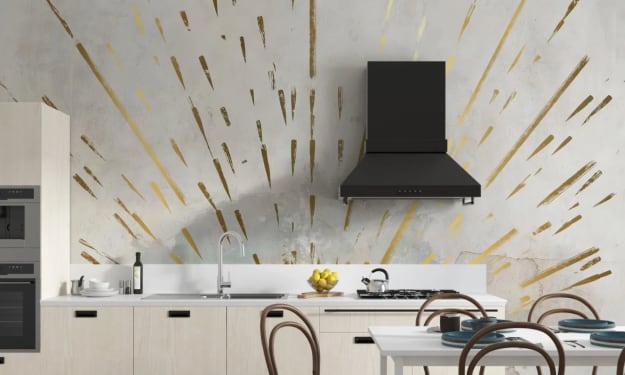
Modern Wall Decor Ideas with Bathroom Wallpaper and Kitchen Wallpaper
Creating Beautiful Interiors with Wall Decor A well-designed home begins with thoughtful wall decor choices that reflect both style and personality. Walls are often the largest surfaces in any room, so the way they are decorated has a major impact on the overall atmosphere of a space. From minimalist textures to bold decorative patterns, modern wall design has evolved into an important part of interior styling. By choosing decorative elements that complement furniture, lighting, and color palettes, homeowners can create a balanced and inviting environment that feels both comfortable and visually appealing.
By Wallanza Wallpaperabout 23 hours ago in Art
Writing To Succeed
If you want to find something that will help readers find your writing, possibly expand your audience, and maybe even get you noticed for other things, then you’re not alone. But how can you get it done in a world full of want-to-be writers? Look less at what you’re writing now, and more at what other writers have used to boost their views and reads.
By Jason Ray Morton 6 days ago in Writers


Comments
There are no comments for this story
Be the first to respond and start the conversation.