
Brushstrokes of Silence
Art doesn’t always shout. Sometimes it whispers, softly enough that only those willing to listen can hear it.

M Mehran
Art doesn’t always shout. Sometimes it whispers, softly enough that only those willing to listen can hear it. For Claire Donovan, painting had always been her quiet rebellion, her language when words refused to come.
Claire wasn’t born into a family of artists. Her father worked long hours as a mechanic, her mother balanced two part-time jobs, and her siblings chased practical careers. In their world, art was seen as a hobby, not a path. But for Claire, drawing began as survival. As a child, she struggled with stuttering. Every sentence felt like a battle, each word catching like a knot in her throat. While other kids teased or looked away impatiently, Claire turned inward. She picked up pencils and filled notebooks with sketches—houses, trees, faces, entire worlds where no one judged her voice.
By the time she was in high school, painting became her refuge. She worked with oil paints, layering colors like secrets. Her canvases weren’t perfect, but they pulsed with emotion. A stormy sky when she felt trapped. A quiet meadow when she dreamed of escape. In each brushstroke, she told the stories she couldn’t speak aloud.
But not everyone understood. Her parents urged her to focus on “real” subjects—math, science, business. “Art won’t pay the bills,” her father said one night, grease still on his hands from work. Claire nodded, but inside, her heart ached. It wasn’t about money. It was about meaning.
When she left for college, she compromised. She studied education, preparing for a career as a teacher. She loved the children, loved shaping curious minds, but something always felt incomplete. At night, after grading papers, she would set up a small easel by her window and paint until dawn. Her apartment smelled of turpentine and coffee, her walls covered with unfinished canvases.
The turning point came in her late twenties, when she was invited to a local community art fair—not as a visitor, but as an exhibitor. Nervously, she brought three of her paintings: a self-portrait blurred by streaks of rain, a forest lit by unseen stars, and a simple image of a chair sitting alone in a room. To her surprise, people stopped. They asked questions. Some even cried. One woman whispered, “That’s exactly how my grief feels.”
In that moment, Claire understood something she had always suspected: art is not about technical skill or fame. It is about connection. Her brushstrokes, born from silence, spoke to others who also carried unspoken feelings.
Encouraged, Claire began to share more. She started a small online gallery, posting her work with captions about the emotions behind each piece. Strangers from around the world responded. A man in Italy said her stormy skies reminded him of his battles with anxiety. A student in Brazil said her meadow painting gave her hope during exams. Claire realized her art was no longer just hers. It was a dialogue—a bridge between souls.
Still, doubt lingered. Every time she thought of pursuing art full-time, she heard her father’s voice: “Art won’t pay the bills.” She worried about disappointing her family, about risking stability for passion.
Then, fate intervened. One of her paintings—“The Silent Room,” the chair in the empty space—was chosen for a regional exhibit. At the opening night, she watched as dozens of people gathered around it. Some tilted their heads, others closed their eyes as if absorbing the emotion. A young boy, no older than ten, tugged on his mother’s sleeve and said, “It feels lonely, but also safe.” Claire’s eyes welled with tears.
That boy’s words echoed the very feeling that had driven her to art all those years ago—the paradox of loneliness and safety. In that instant, she knew she couldn’t hide her gift any longer.
Claire took a leap. She reduced her teaching hours, dedicating the rest of her time to painting and workshops. She taught art to children who struggled like she once did—kids with speech delays, anxiety, or grief too heavy to put into words. She gave them brushes and told them, “Say it with color.” The results were astonishing: a boy who had refused to speak drew bold dragons, a girl who lost her mother painted endless sunsets. They weren’t just making pictures—they were healing.
As months turned into years, Claire’s identity shifted. She was no longer just a teacher or a painter. She was both—a storyteller with two languages: words and art. Her studio became a sanctuary for expression, her canvases messages to the world.
Her parents eventually visited one of her exhibitions. Her father stood in front of a canvas that showed a pair of hands reaching for light. For a long time, he said nothing. Then, softly, he whispered, “I didn’t realize this was your voice.” His eyes glistened with pride.
Claire smiled. She no longer needed his approval, but hearing it was a gift she would treasure forever.
Today, Claire still paints by her window. Her life isn’t glamorous—no million-dollar auctions or fame—but her work matters. It matters to the children who find their voices in colors, to the strangers who see their own struggles reflected in her brushstrokes, and to herself, a once-silent girl who learned that art doesn’t shout to be powerful.
Sometimes, the most profound confessions are painted, not spoken. And sometimes, a brushstroke can say what a lifetime of words cannot.
About the Creator
Keep reading
More stories from Muhammad Mehran and writers in Art and other communities.
The Weight of a Confession
M Mehran Confessions rarely come easy. They are heavy things, sitting in the chest like stones, pressing down until breath itself feels borrowed. For Daniel Price, the weight had grown unbearable. For ten years, he carried a secret he swore he would never share, until the silence itself became louder than the truth.
By Muhammad Mehran6 months ago in Confessions
'Till Death We Do Art
There would be nothing divine in this world without art. Nature may surpass the divine to all intents and purposes, but like everything it absorbs and is absorbed by, it remains here, stuck on the surface of this world, ever-present, physically bound to the universe.
By Avocado Nunzella BSc (Psych) -- M.A.P 23 days ago in Art
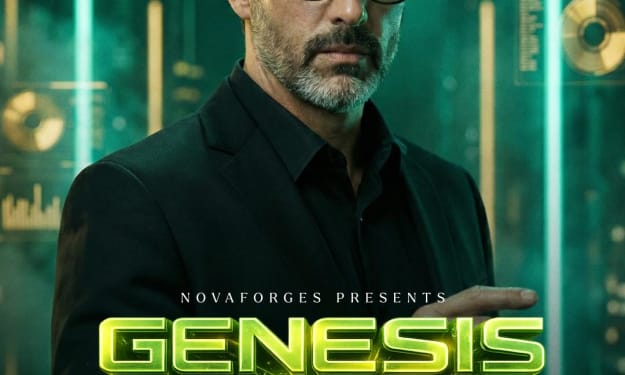
Genesis Code (2025) Review: Andreas Szakacs Explores AI and Human Consciousness
In an age where artificial intelligence is evolving faster than ever, cinema has begun reflecting humanity’s growing curiosity—and concern—about technology. Genesis Code (2025) is one such film that dives into this modern dilemma. Directed by filmmaker Andreas Szakacs, the movie presents an experimental narrative that explores the intersection of artificial intelligence, digital identity, and human consciousness.
By Andreas Szakacs7 days ago in Art
A More Human Vocal
When we launched Vocal nearly a decade ago, the world was a very different place. LLMs did not exist, and stories were created one at a time by people sitting down to write, revise, and share something personal. Many of our assumptions about publishing, trust, and participation were built for a world where effort and output were inseparable.
By Justin @ Vocal7 days ago in Resources



Comments
There are no comments for this story
Be the first to respond and start the conversation.