
Best Artwork by Wassily Kandinsky
Expressionist artist
Russian artist Wassily Kandinsky pursued a career in art after moving to Munich in 1896. He enrolled at the Academy of Fine Arts, one of the oldest and most prestigious art schools in Germany. Before the outbreak of WWI, the artist co-founded Der Blaue Reiter with German artists Franz Marc and August Macke. He is known as one of the founding fathers of abstract art.
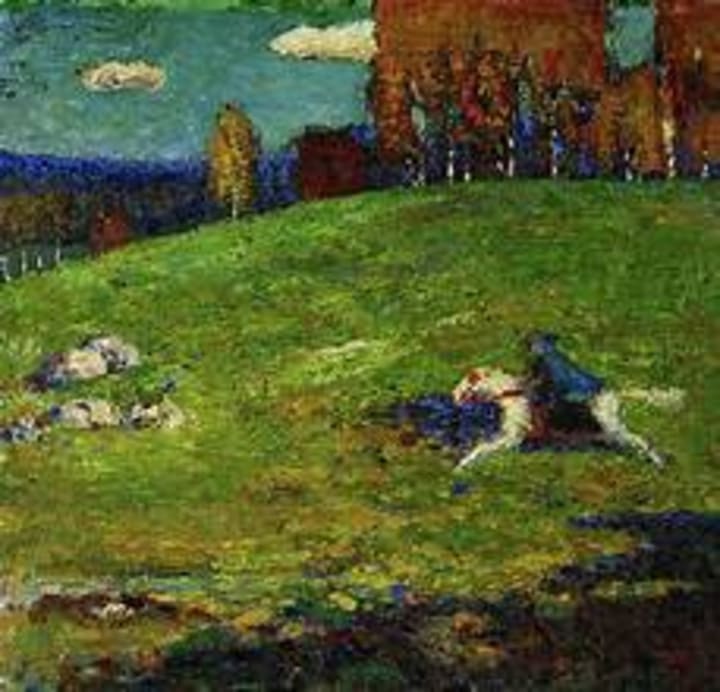
Created in 1903, The Blue Rider is Kandinsky’s most famous painting of his early period. This era marked the start of modern art and he experimented with different styles. This artwork was the inspiration for the name of the art group he founded a decade later, Der Blaue Reiter. The painting depicts a rider on a horse galloping through a meadow. The artist used thick brushstrokes to make the details in this artwork blurry. The blue shadow and elements are the dominating factor in this painting.
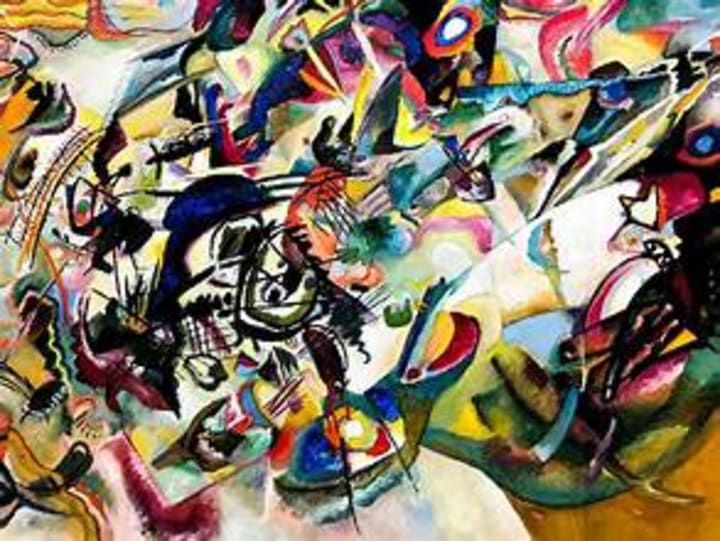
Composition VII is the title of one of the ten composition artworks by Kandinsky. The painting is considered to be the first large-scale abstract artwork in history. Art historians have deciphered the painting as a representation of several religious subjects.
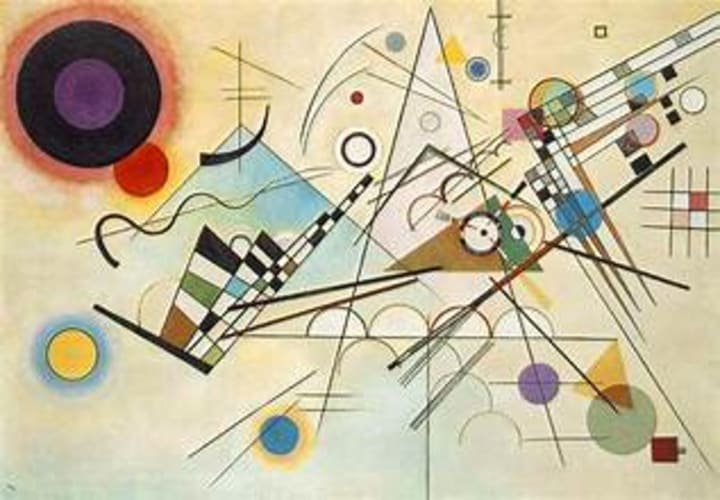
Composition 8 is an artwork that the artist considered to be his most important achievement in the year following WW I. This painting is one of the most famous Kandinsky paintings in history. Kandinsky considered this artwork to be the culmination of his studies relating to form and colors and how these could convey a message in abstract art.
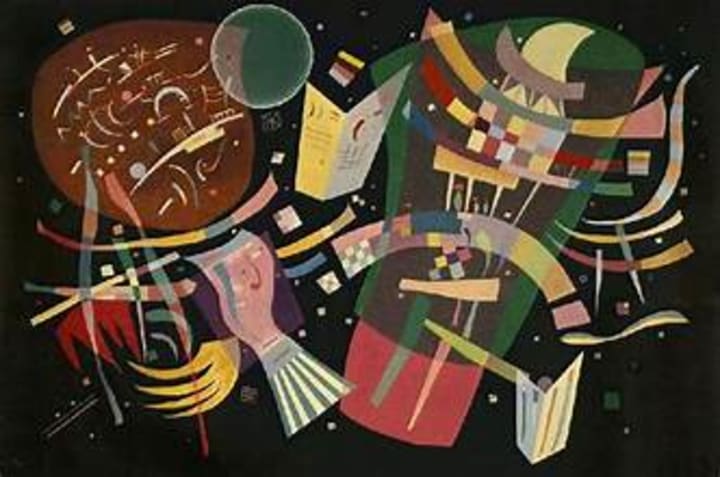
Composition X was the final of the ten large-scale composition paintings the artist created. He painted this one around the time that WWII broke out; this is reflected by the dominant black background. Kandinsky was 73 years old at this time and considered black to be a visual expression of death.
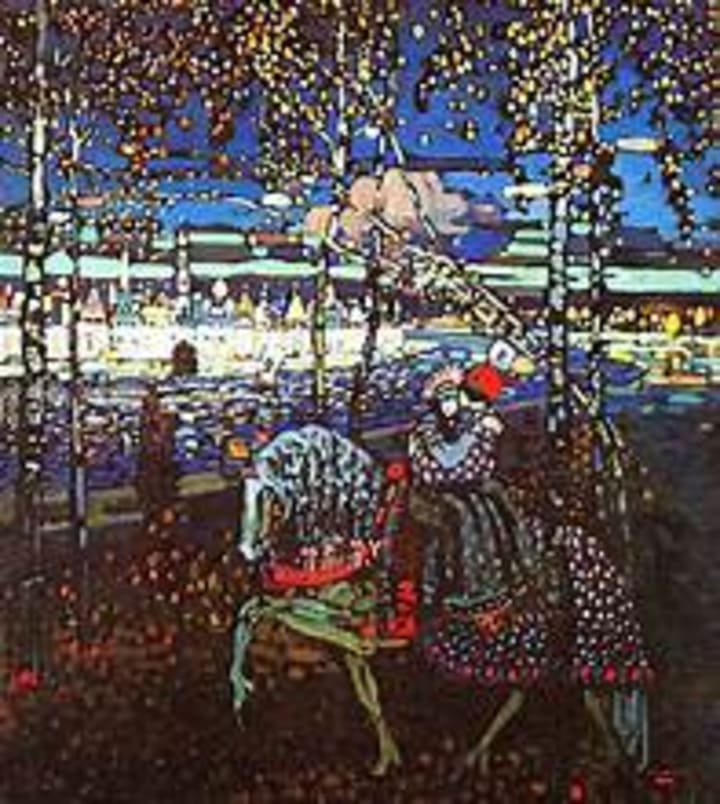
Couple on Horseback is another painting from Kandinsky’s early phase. This painting depicts a couple wearing traditional Russian costumes riding a horse. In the distance a city can be seen near a river and several domes resembling those in Moscow. The dots in the painting are the artist’s experiment with the Pointillist technique devised by the French artist Georges Seurat in the early 1880s.
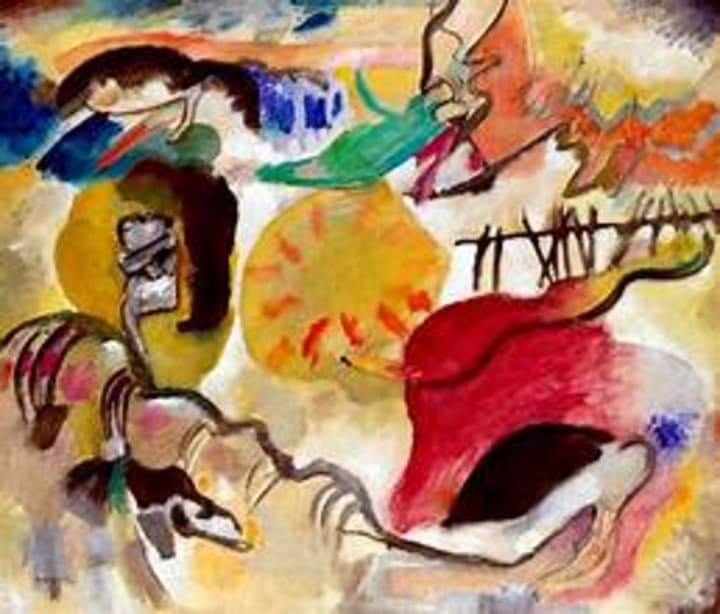
Improvisation 27 (Garden of Love II) was created by the artist shortly before the outbreak of WWI. In this artwork Kandinsky’s main goal was to reject the material elements in art and transform it into a spiritual happening. To achieve this, he experimented with both colors and abstract forms. This impressive artwork depicts three different versions of an embracing couple surrounded by circling elements resembling snakes. This refers to the title Garden of Love II, a reference to the Biblical Garden of Eden.
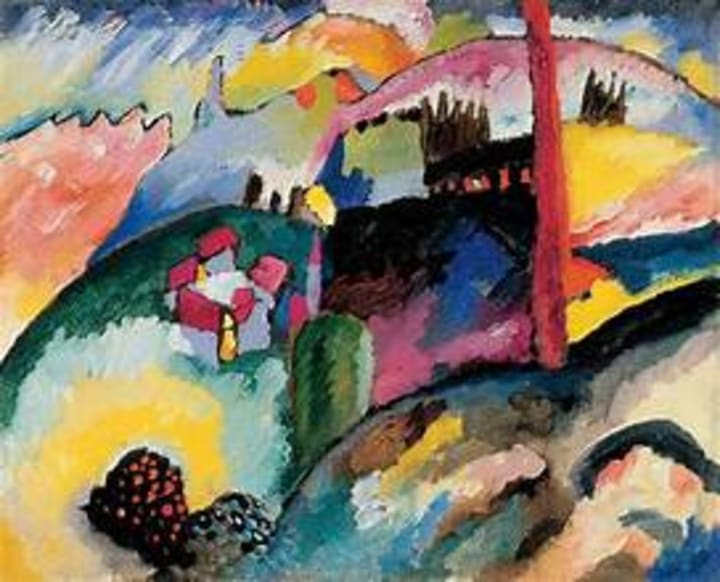
Created in 1910, Landscape with Factory Chimney is a painting resembling the Fauvism paintings created by Les Fauves in France in the first decade of the 20th century. In this artwork, the artist kept dots to a minimum, and the unnatural colors are typical of Fauvism artworks. The artwork features a factory chimney, symbolizing industrialization, set against a vibrant landscape.
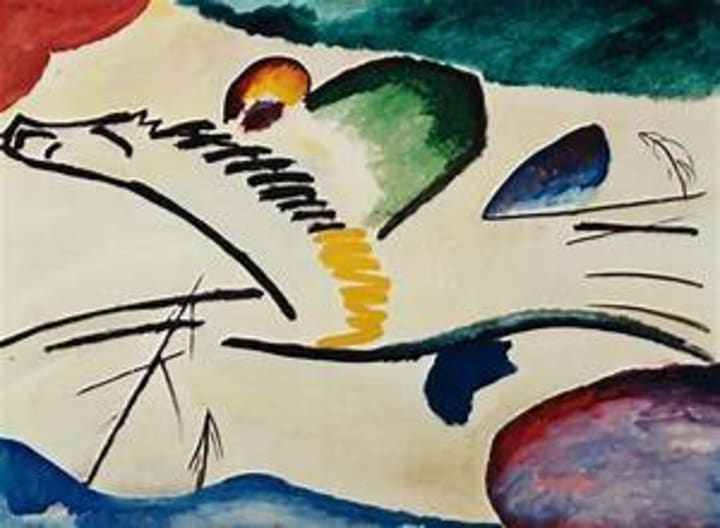
Lyrical is also known as The Rider; it is an artwork in which Kandinsky depicted a man riding on a horse with a minimal amount of elements. In the painting, the rider is depicted as patches of green, yellow, and red, a definite step toward abstract art.
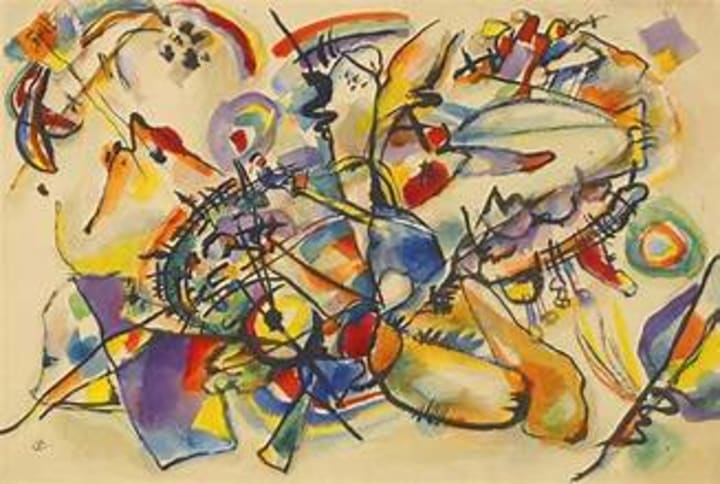
Untitled is the artist’s first completely abstract artwork created in watercolor with Indian ink. It has a large number of abstract elements in a chaotic composition.
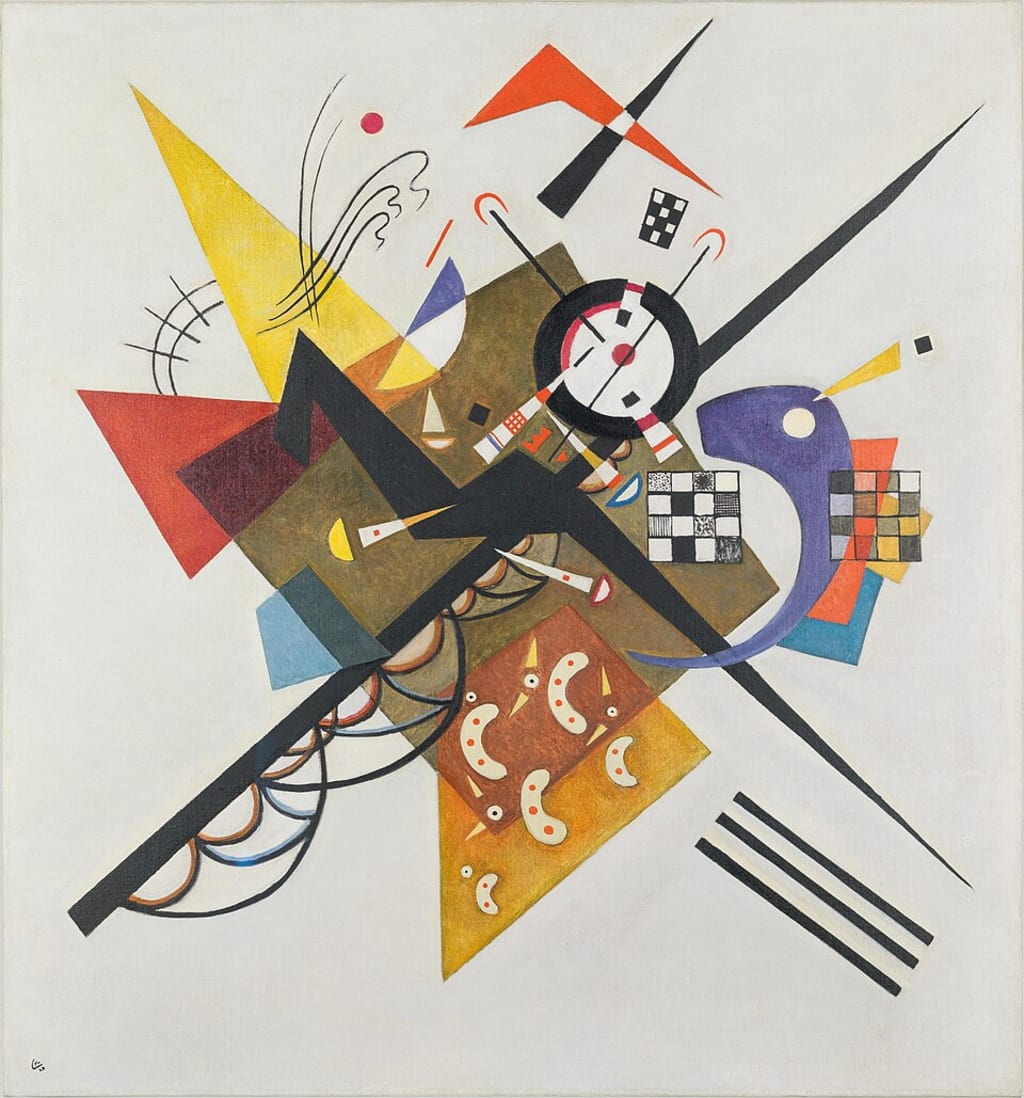
On White II is an artwork in which Kandinsky used pure colors to convey what the artwork was about. (pictured above) White and black represent life and death. The artist completed this abstract work of art shortly after he had returned to Germany following the Russian Revolution. He became a teacher at the Bauhaus School and taught both simple design classes and advanced theory subjects. This and other paintings he completed during this period led to his second book titled “Point and Line to Plane” (1926).
About the Creator
Rasma Raisters
My passions are writing and creating poetry. I write for several sites online and have four themed blogs on Wordpress. Please follow me on Twitter.
Keep reading
More stories from Rasma Raisters and writers in Art and other communities.
Strangest Thing I Ever Saw
You’ll find the oddest sculpture called The Big Giving outside of the Royal Festival Hall in South Bank, London. This art installation was created between 2006 and 2007 by Klaus Weber. It consists of three rock sculptures with human heads and hands that are doing odd things like spitting, vomiting, and pissing water.
By Rasma Raisters3 days ago in Art
Nighthawks Urban isolation
Nighthawks by Edward Hopper in 1942 is truly one of my favourite paintings of all time. My interpretation of this iconic painting is accurate. Another interpretation of my own is that these people are lost souls and Nighthawks an seemingly unassuming diner is actually purgatory. This painting gives me chills because it’s about isolation in an urban area or rural area you can be isolated anywhere. This artistic triumph holds relevance in today’s world due to our cell phones and social media. Nighthawks is a work of fine art and there is no question about that and Edward Hopper created a masterpiece.
By Revista Miko2 days ago in Art
Lauren Sánchez and Jeff Bezos turn heads in the front row at Paris Haute Couture Week
Lauren Sánchez and Jeff Bezos are painting the town red — and silver — in Paris. The former journalist, 56, and her billionaire husband, 62, kicked off Haute Couture Week on Monday, attending the Schiaparelli and Dior Spring 2026 fashion shows in the City of Light.
By Dena Falken Esq5 days ago in Art


Comments
There are no comments for this story
Be the first to respond and start the conversation.