
Basic engraving tool usage and their care
Basic engraving tool usage and their care

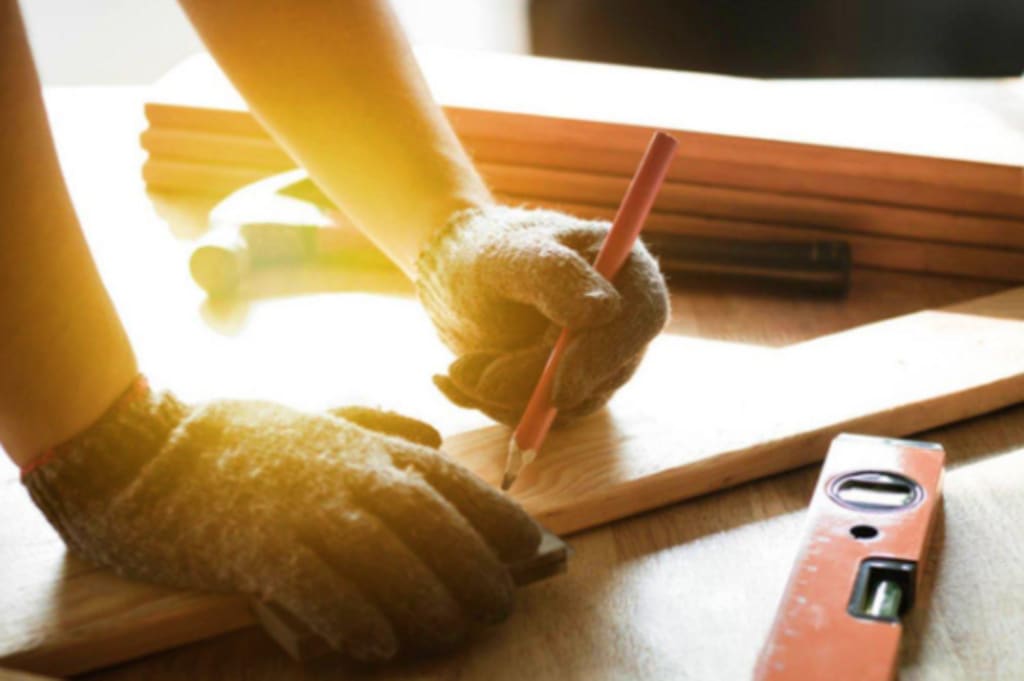
The most important thing that a master carver possesses is the way he uses his engraving tools. Only by learning to use engraving tools correctly can you continue to improve your engraving skills. Only good engraving tools. Without good manipulation techniques, you will only let your engraving level stagnate. Therefore, about the usage of some engraving basic tools, is the engraving enthusiasts must know. This is an indispensable part of artistic creation and engraving production. Next, this article will introduce some points of using basic engraving tools.
Basic engraving tool usage
First of all, we need to know a few commonly used engraving tools, what is the basic usage of each of them.
Flat Knife
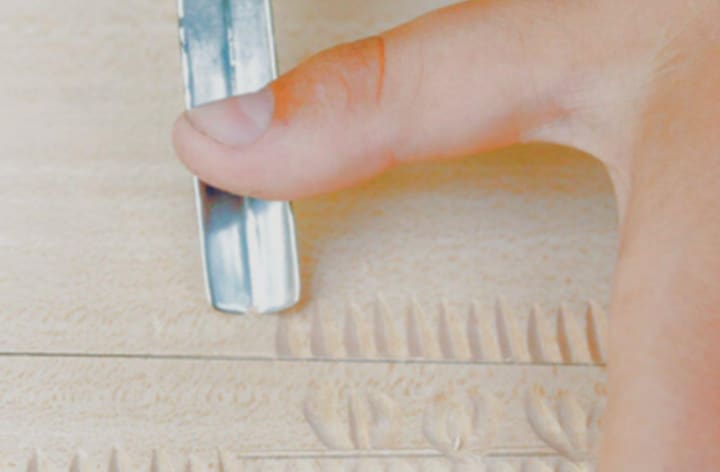
A flat knife has no curvature to the blade, it is a flat, sharp piece of iron. The blade is sharp enough to cut accurately through the surface of the wood.
It is suitable for engraving flat surfaces, engraving delicate lines and patterns according to the design. In industry, flat knives are mostly used for flattening wood or for mortise and tenon work, as they have a straight blade, which makes it easy to trim large areas.
Circular knives
The main difference between a rounded knife and a flat knife is that a rounded knife has a semi-circular curved edge. And there is a difference between front and back, the concave line part is the front side and the convex part is the back side. It is suitable for engraving curved surfaces and rounded contours of materials, shaping a soft texture. In daily life, it is mainly used to make small engraving crafts and some rounded decorations.
Beveled Knife
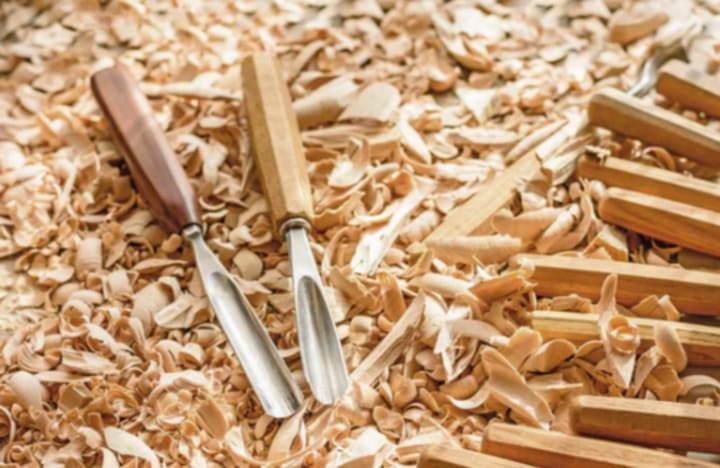
The beveled knife has a “V” shaped curve, which is suitable for detailing and trimming during the engraving process. The miter knife should be sharpened before use to keep the blade sharp. The blade and the engraving surface need to maintain a 45 degree angle of inclination before engraving. You also need to choose the right strength and angle based on the hardness and grain of the material you are engraving. For example, softwoods need to be carved with the grain, while hardwoods are the opposite.
Chisels and hammers
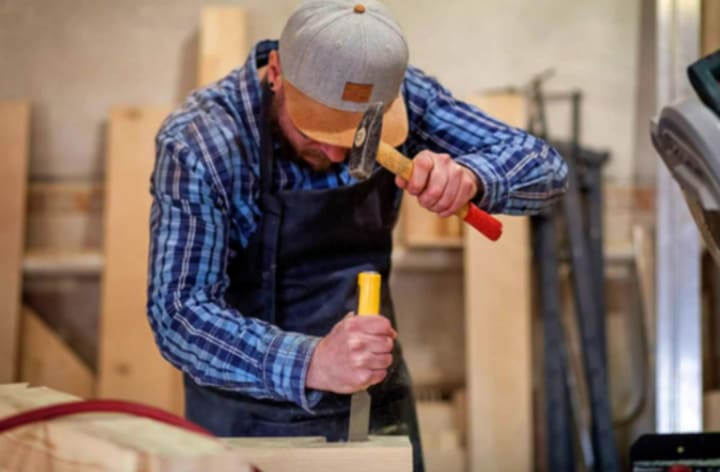
Mainly used in large engraving creations. For example, engraving voluminous wood or stone engravings. The carver is required to use a marker to mark the location of the engraving and the portion of excess material to be removed from the engraving material. A hammer is then used to drive the chisel's blade into the material and then forcefully remove the excess material.
Auxiliary Tool Usage
Engraving Machine
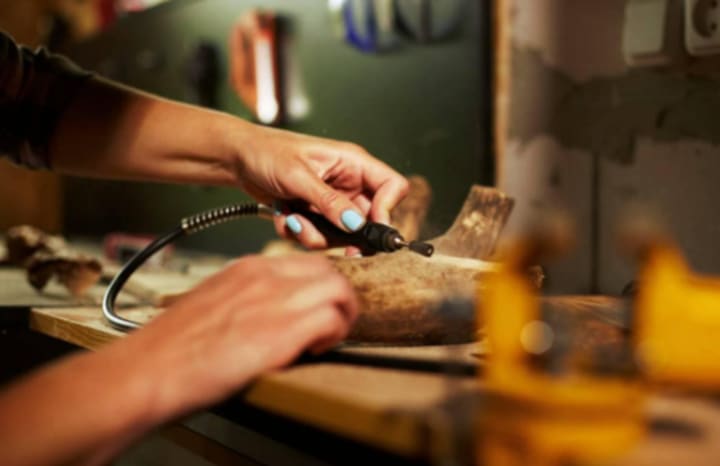
Engraving machines can greatly improve the efficiency of engraving, especially for large or complex engraving works, is an indispensable tool. There are many different types of engraving machines. If you insist on engraving by hand but want to save effort, you can choose a pneumatic engraving machine as your auxiliary tool. If you want to create flat engravings, you can simply purchase a laser engraver. Transfer the pattern you want to the computer, even if it is very complex engraving machine can be produced, the only disadvantage is that there is no three-dimensional sense. Pneumatic engravers carve three-dimensional works in order to give a perfect three-dimensional effect.
Sandpaper and whetstone
Purchasing sandpaper of different densities can help the carver to make finishing touches on engravings of different materials. Sandpaper can be used to easily erase some of the imperfections that appear when engraving (such as barbs and uneven, sharp places), and to polish cleanly to facilitate the subsequent coloring work. Sharpening stone, is used to polish the engraving tools, the sharper the engraving knife to use, in order to carve more smooth and delicate traces.
Consider the type of engraving
Understanding the use of various basic engraving tools is only the foundation for learning the art of engraving. Different engraving creations use different basic engraving tools. Once you have purchased your engraving tools, you can start practicing your grip and engraving methods to determine what type of engraving you want to learn. For example, if you specialize in fine engraving, then purchasing a complete set of engraving tools will be your best choice; while if you are engaged in the type of creation that requires large areas of material to be trimmed, then a pneumatic engraving machine or a set of flatten knife, chisels, and hammers will be more suitable for you. Understanding your needs is the key to choosing the right engraving tools.
Caring for your engraving tools
Engraving tools are subject to wear and tear during use. In order to avoid quick damage to your engraving tools and achieve long-lasting use. Here are some maintenance items that can extend the life of your engraving tools.
Keep tools clean: clean residue from blades after each use to prevent rust or corrosion.
Regularly check and sharpen the blades: make sure the engraving blades are sharp.
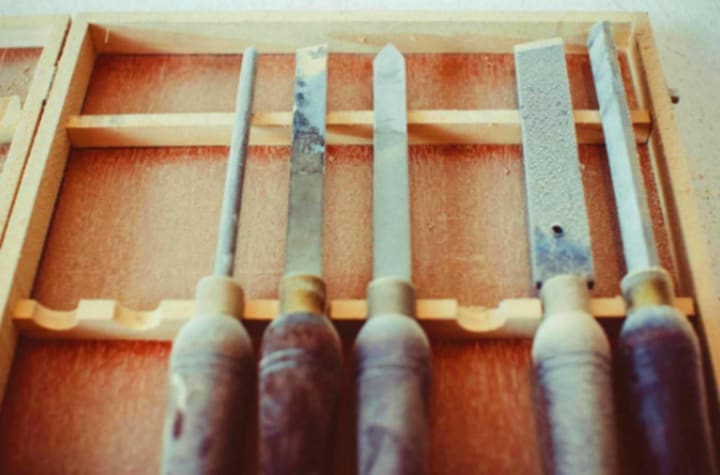
Store tools correctly: Store engraving tools in a special storage box to avoid collision or extrusion damage to the blade.
Apply rust preventive oil: Rust preventive oil can effectively maintain the sharpness of engraving tools.
Summarize
In short, mastering the use of basic engraving tools and maintenance methods is the key to improving engraving technology. Only by practicing and accumulating experience can we go farther and farther on the road of engraving.
About the Creator
Keep reading
More stories from Malik Zain and writers in Art and other communities.
How to choose the right carving tools?
Carving is a craft that combines technology and art and has a very deep and long history and culture. The right carving tools will make carving twice as effective with half the effort and better carving results. Whether you want to add more decoration or want to make the piece more personalized, carving is a great way to express your creativity.
By Malik Zainabout a year ago in Art
Quote of the Day by Eleanor Roosevelt: “A woman is like a tea bag – you can't tell how strong she is…”
Eleanor Roosevelt, former First Lady of the United States, diplomat, and humanitarian, was one of the most influential voices of the 20th century. Her life was defined by courage, advocacy, and the relentless pursuit of social justice. Among her many memorable sayings, one has resonated across generations:
By Salaar Jamali5 days ago in Art



Comments
There are no comments for this story
Be the first to respond and start the conversation.