

This article will touch somewhat on Dana Stewart's excellent 'Art is Life or Life is Art?' which was Top Story recently here on Vocal and which I recommend.
Lecturing in English literature, I would frequently throw the following lines at a class and tell them to make sense of it. It's from a review by Carol Chillington Rutter of Kenneth Branagh’s 1996 film of Hamlet, published in Shakespeare Quarterly...
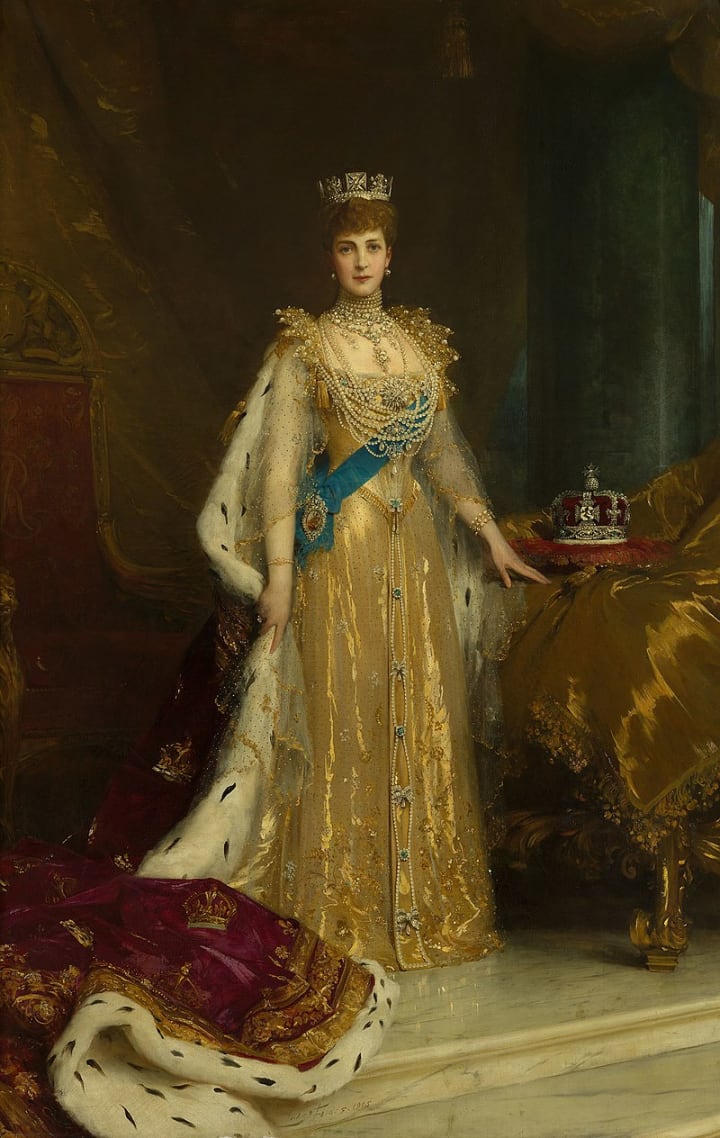
"Winslet’s flame-haired, Pre-Raphaelite Ophelia moves from Queen Victoria’s Princess Alexandra as she might have been drawn by George Du Maurier to William Holman Hunt’s fallen woman in The Awakening Conscience. Finally, though, I think Winslet’s Ophelia belongs to Bram Stoker."
Why did I do this? To be cruel to my students? Well, that's what they said, but here's what I would say in reply...
Note how Rutter does not begin her review with “Shakespeare was born in 1564,” or “Hamlet Prince of Denmark is William Shakespeare’s most famous tragedy.” This is because she’s aware that readers who want to learn more about Kenneth Branagh’s new version of Hamlet will already be aware of details like this. Therefore her introduction (which I know you can't see, but you should read the whole review, it's spot-on!) takes it for granted that the reader is familiar with “the film history of Ophelia in performance,” and specific elements of the play itself such as the graveyard scene. The readership of Shakespeare Quarterly is, after all, made up of Shakespeare scholars.
Do you see where I'm going with this yet, students?
Yes, Rutter's taking it for granted that her readers know their Shakespeare. But that's not all.
She's also taking it for granted that they know, along with several other subjects, their art.
Let me show you what I mean. Scroll back now to the quote at the start of this article, and you'll notice the whole of it (aside from “flame-haired”) is written in artistic, literary or historical allusions. Rutter is assuming her readers will know what each of these proper names signifies. A reader who doesn’t would find it impossible to gain any impression of what Kate Winslet actually looks like when she’s playing Ophelia in this film. To work through it all in order, then...
1) “Queen Victoria’s Princess Alexandra” refers to Alexandra of Denmark (fittingly enough, for an article on Hamlet!) who became Princess of Wales during Victoria’s reign.
2) George du Maurier, grandfather of Daphne the novelist, was a cartoonist of the same era.
3) The Awakening Conscience is a painting by the artist William Holman Hunt, completed in 1853. Holman Hunt was part of a so-called "brotherhood" who attempted revive artistic styles dating to before the influential Renaissance Italian painter Raphael – hence the term “Pre-Raphaelite,” which Rutter uses in her review. Holman Hunt’s fellow Pre-Raphaelite, John Everett Millais, produced between 1851 and 1852 the most famous of all paintings of Ophelia from Hamlet. See Dana for more on this!

4) "Winslet’s Ophelia belongs to Bram Stoker” is a reference to Dracula, the vampire novel written by Stoker in 1897. Dracula became the core text for all vampire media that followed, and it has been filmed many times. Later in the review, Rutter goes on to observe that this “dense cinematic tradition” is director Kenneth Branagh’s main source for Ophelia’s final scene. Like Hamlet, Dracula contains a graveyard sequence in which the exhuming of bodies plays a pivotal part. In the latter, a beautiful young girl named Lucy Westenra is bitten by a vampire and becomes one herself, that the heroes must dig up her coffin and drive a wooden stake through her heart. For Rutter, the graveyard scene in Branagh’s film of Hamlet resembles this part of Dracula so closely that Ophelia seems to become a “vampire bride,” and the film “throws its achievement away.” This mismatched “image of Ophelia as Lucy Westernra” is, according to Rutter, the film’s greatest failing and the reason her review is negative.
The language of literary allusion does not confine literature to some kind of impenetrable academic bubble. A student who falters and prevaricates and frets over such questions as: "Can I talk about that? Surely that's art, and my course is English?" hasn't yet grasped how their subject works. As Dana has already observed, there are a wealth of ways in which literature has influenced art, and art in turn has influenced literature. A good scholar is not only aware that intertextuality regarding the other arts is necessary to what he or she does, but proceeds on the assumption fellow-scholars know this too.
That's why no lecturer in English literature can afford to be without a grounding in art. And as long as I'm doing the job, my students won't be allowed to go without one either!
You can read Carol Chillington's original review, ‘Snatched Bodies: Ophelia in the Grave’, in Shakespeare Quarterly 49:3 (Autumn 1998) pp. 299-319.
About the Creator
Keep reading
More stories from Doc Sherwood and writers in Art and other communities.
When Wolds Collide, Chapter Two
Joe roamed the damp deserted dunes. For reasons besides the obvious he’d left his friends to their own devices, and one was that the letter troubled him still. As far as Joe was aware, nobody by the name of Mini-Flash Pseudangelos had ever lived at his house. Correspondence addressed to her there showing up in his desk was an odd enough occurrence to be going on with.
By Doc Sherwood3 years ago in Fiction
Love Is Folly 2016
Love Is Folly 2016: Peter Ayolov Between Cinema, Education and Memory In 2016, at the International Film Festival Love Is Folly in Varna, Dr Peter Ayolov—lecturer in screenwriting at Sofia University St. Kliment Ohridski and author of the book Медийният сценарий (2026)—was invited to serve as a member of the festival jury. His participation marked not only a professional recognition of his work in media and narrative theory, but also placed him at the intersection of Bulgarian cinematic history and contemporary film education.
By Peter Ayolov7 days ago in Art
Veil of Subconscious Awakening
Images slide behind my eyelids like film cadres, bursting with meanings. In one moment, I’m speeding down the highway, making the speedometer swing wildly like a frantic pendulum. The next moment, I’m plunging from a falling plane, slowly crashing earthward. At home, I meet black cat’s green, googly eyes staring at me from the cavernous hollowness of the kitchen. When I turn for a moment, it disappears, and all I can see is a pair of blue suede shoes set up against the wall. I pick them up and put them on. When I glimpse at them again, they’ve become black as night, making me blink and flinch.
By Moon Desert7 days ago in Fiction



Comments (4)
Art and literature definitely go hand in hand. You are absolutely spot on about this!
I haven't really read that story yet but after reading your article I am definitely going to read it. I must admit the old-fashion English and History together are fascinating provoking the reader to know more.
O-So-D ~ Who better than a bonafide 'Lit Prof' to unleash-dated Brit-Romping in your 'Special' Hanky-Panky way. Way above my paygrade; but, I so Git-U! O-D, Yes, for some reason parts, if not all, of your messages are not reaching me - including the last one - I don't get-it we're not saying anything naughty? You said something about your Birthday but the content was 1/2 cut off? When is it? It would be Sooo my pleasure to credit-card-call-in a batch of Tooty-Fruity ice cream at your favorite establishment and all you would have to do is scoot over to retrieve it: No kidding - It would be my Treat-2-U. Doc KnickerLess ~ I was so shocked 2/C they made mention of me on the new 'LeaderBoard' that I just blabbed out a comment; They'll probably retract my mention for spouting off like that! As we've communicated many times; it's so lovely that others reach out to us 'Seniors' as we do with the Newbies; fair exchange. You're my Brit-Bud- Thanks for the Old-Fashion-Learnin' Good-God our English Lit Prof Sis would BrowButt us into reading these authors ~ And, would stack them in front of us ~ I Sh*t-u-not 'J'
I look forward to reading more articles from this talented writer.