
AI in Creative Industries: Can Machines Replace Artists?
Artificial Intelligence is making waves in art industries, generating pictures, music, and literature at an astonishing pace. With tools that use AI in creative industries, like generated paintings, deepfake videos, and machine-written stories, it is common to wonder: can artists be replaced by AI?

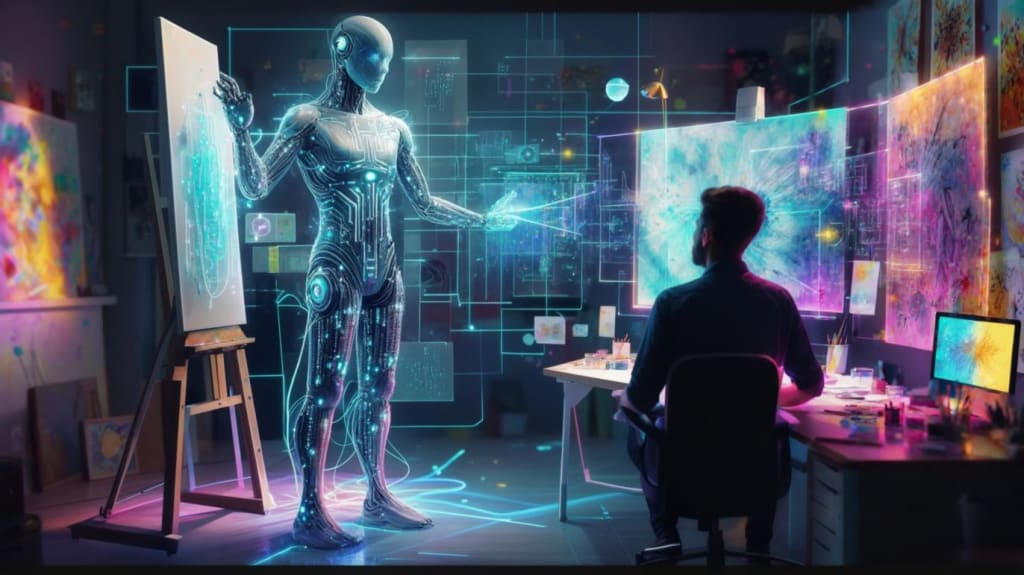
Artificial Intelligence is making waves in art industries, generating pictures, music, and literature at an astonishing pace. With tools that use AI in creative industries, like generated paintings, deepfake videos, and machine-written stories, it is common to wonder: can artists be replaced by AI? However, despite AI’s advancements, human creativity remains irreplaceable, and the moment when AI replace artists is hardly imaginable. From ethical dilemmas to AI’s limitations in true innovation, there are many reasons why AI cannot fully replace artists, and here are some more thoughts on this topic.
Why Replacing Artists with AI Is Impossible?
While AI is a powerful tool for assisting in creative work, it lacks the fundamental qualities that make human artistry unique. Here’s why AI art replacing artists’ original works seems impossible.
AI Trains on Existing Content, And That Becomes a Problem
AI models rely on existing human-made works for training. They cannot create something truly original without rearranging patterns from past data. This leads to two major problems:
Lack of true originality – AI cannot invent a completely new artistic movement or a style that has never been seen before.
AI trained on AI – If generative AI in creative industries start using AI-generated content instead of human works, the result is a decline in quality, originality, and creativity, creating a repetitive loop of derivative and uninspired outputs.
AI Follows Patterns, Humans Break Them
Creativity is not just about following patterns, but about breaking them. AI works by predicting the most likely next step based on statistical probabilities, while human artists think outside the box, breaking conventions to create something unexpected and groundbreaking.
Ethical and Moral Issues in AI-Generated Art
AI models are trained on copyrighted material without the consent of artists, raising concerns about plagiarism and intellectual property theft.
Artists struggle to protect their work when AI can generate imitations in their style without permission.
There’s an ongoing debate over who owns AI-generated content. Whether it is the artist, the developer, or no one at all?
AI tools are often considered unethical, just as any automation. For example, in games, using a bot or an AI-driven bot to complete hard levels is significantly less fair than using a human-provided service, like a mythic boost in Warcraft.
The Emotional Depth of Human Creativity
Great art, music, and storytelling evoke emotions, tell deep personal stories, and reflect human experiences. AI, no matter how advanced, does not have:
Lived experiences that shape personal artistic expression.
Emotional intuition to understand the nuances of grief, joy, passion, or struggle.
Symbolism and intent, which make art meaningful and profound.
The Danger of Over-Reliance on AI
If AI-generated art becomes the dominant form of content creation, it could:
Lead to a decline in human creative skills, as fewer people develop their own artistic abilities.
Reduce diversity in creative works, as AI models produce formulaic and predictable content.
Devalue creative professions, making it harder for human artists, musicians, and writers to earn a living.
While AI can assist and enhance creativity, it cannot replace human artistic expression. The unique ability of humans to think beyond patterns, create with intent, and infuse emotions into their work makes artistry something that machines will never fully replicate.
Human + AI Collaborations: How Can They Look?
Rather than replacing artists, AI can serve as a tool to enhance human creativity. Ethical AI use in artistic production means empowering creators instead of taking their place. Here are some ways AI and artists can collaborate:
1. AI as a Creative Assistant
Instead of generating entire pieces, AI can assist artists by:
Enhancing efficiency – Automating repetitive tasks like color correction, background generation, or sound mixing.
Boosting inspiration – Suggesting ideas or variations that spark new creative directions.
Speeding up workflows – AI tools can help musicians, designers, and writers refine their projects faster.
2. Ethical AI Training Practices
To ensure AI supports rather than replaces artists, developers should:
Train AI models on public domain works or licensed content, respecting copyright laws.
Allow artists to opt in or out of AI training datasets.
Ensure AI-generated works are clearly labeled, preventing deception and plagiarism.
3. AI as a Tool, Not a Creator
AI should be treated like a paintbrush, not a painter. These models are just means to assist human creativity rather than a replacement for human thought. Some examples include:
AI-generated drafts that artists refine and personalize.
AI-powered music composition tools that offer melodies for musicians to modify and develop.
AI-driven visual effects in filmmaking, enhancing scenes without removing human direction.
4. Interactive and Adaptive Art
AI can create dynamic and evolving artistic experiences when paired with human creativity, such as:
AI-driven video games that respond uniquely to each player’s style.
Generative art installations that adapt based on viewer interaction.
AI-assisted storytelling, where writers use AI to generate plot ideas or dialogue but retain full creative control.
AI is changing creative industries, but it cannot replace human artists. True art is more than just repeating known patterns — it carries intent, emotion, and unique human experiences that AI just summarizes. Instead of seeing AI as a threat, ethical collaborations between humans and AI can enhance artistic expression while respecting creativity and originality. The future isn’t about choosing between humans and machines, but it’s about finding the right balance where technology serves as a tool, not a replacement.
About the Creator
Keep reading
More stories from writers in Art and other communities.
Smart phones, Humans and Aliens.
WARNING. I will be tapping into one of your favorite creative tensions: The absurdity of humans worshipping their glowing rectangles as if they were tiny oracles. There’s something deliciously poetic about that contradiction, and it lends itself beautifully to an instructive proviso.
By Novel Allen7 days ago in Poets



Comments
There are no comments for this story
Be the first to respond and start the conversation.