
Africa Music and Culture Revolution.
The Ancient Rhythms
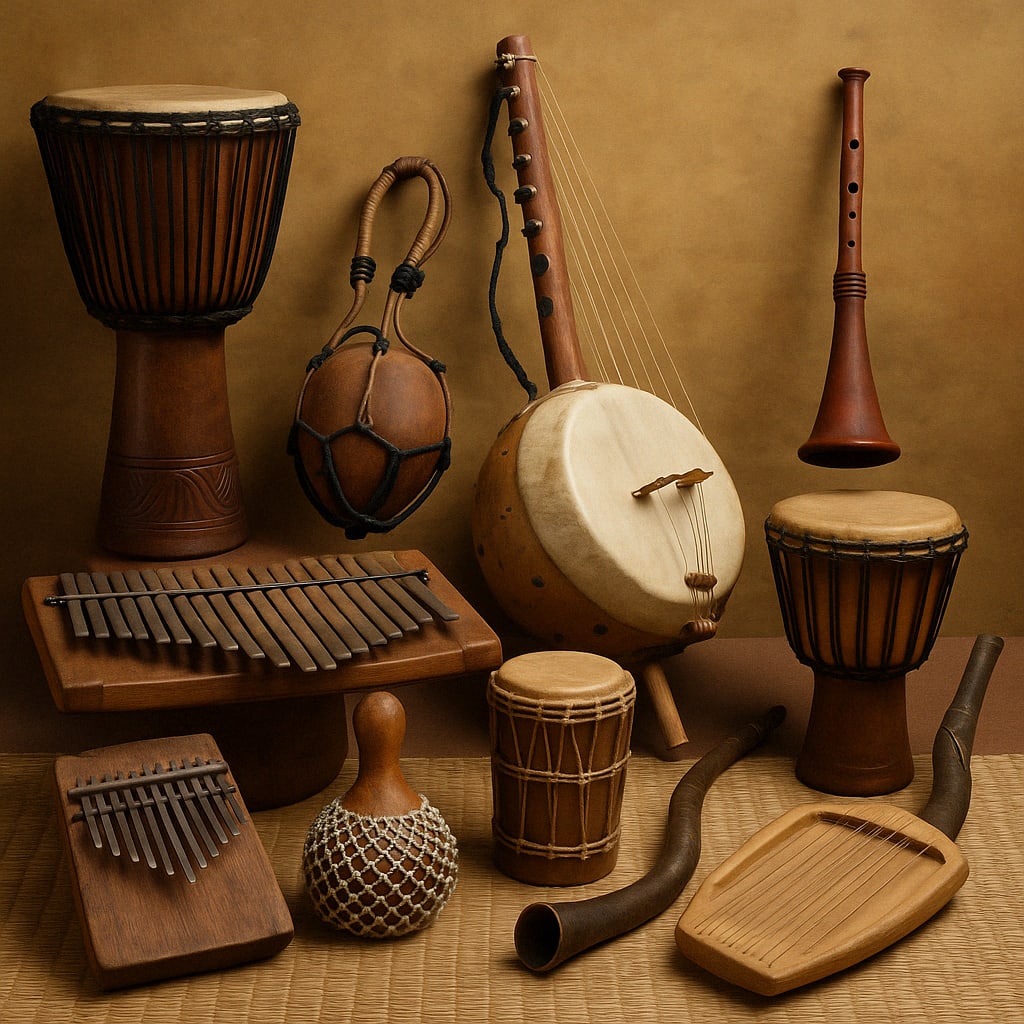
The Ancient Rhythms
Before colonization, before globalization, African societies used music as a form of communication, healing, celebration, and storytelling. Instruments like the djembe, kora, talking drum, and balafon weren’t just tools for rhythm — they were extensions of language and soul.
Cultural Expressions Through Dance & Dress
Music is rarely separated from movement and fashion in African traditions. Ceremonial dances like the Zulu Indlamu or the Yoruba Bata celebrate ancestry, rites of passage, and seasonal harvests. The attire worn during these performances reflects pride, spirituality, and a deep connection to heritage.
The Global Rise of Afrobeats
In recent years, African music has exploded onto the global stage. Artists like Burna Boy, Wizkid, Tems, and Davido are no longer just local heroes — they’re global icons. But what the world hears as “Afrobeats” is just a glimpse of the rich variety Africa offers, from Amapiano in South Africa to Bongo Flava in Tanzania.
Culture as Resistance and Healing
From Fela Kuti’s protest songs to the griots of West Africa who preserved history during colonial rule, African music has always been more than entertainment — it’s been a form of resistance, a call for justice, and a tool for healing.
A New Generation, A Global Culture
Today’s African youth are blending tradition with modernity — fusing ancient rhythms with digital beats, wearing Ankara with sneakers, and rapping in pidgin over trap beats. African culture is no longer just local — it’s global, and it’s redefining the future.
Conclusion (Powerful Ending):
African music and culture aren’t just trends. They are living, breathing legacies. They remind us of who we are, where we come from, and what we’re capable of. As long as the drum beats, Africa speaks.
st Africa)
A dried gourd covered with a net of beads or seeds, shaken or hit against the hands. Common in dance and religious ceremonies.
Udu (Nigeria - Igbo people)
A clay pot drum with an air hole. It creates deep, watery tones and is used mostly by women in traditional rituals.
Kudu Horn (Southern Africa)
Made from the horn of the kudu antelope, this wind instrument was used in ceremonies, hunting rituals, and spiritual practices.
Ngoma Drums (Central and Southern Africa)
Large barrel drums used by the Bantu people for dances, tribal gatherings, and communication. The word “ngoma” also means "music" or "drum" in several African languages.
Algaita (West Africa - Hausa people)
A double-reed wind instrument similar to the oboe. Used in Islamic ceremonies and palace music.
Lokole (Congo Basin)
A slit drum carved from a tree trunk. Used for communication across distances — like a drum-based telephone system.
Inanga (Great Lakes Region - Rwanda, Burundi, Uganda)
A traditional zither played in storytelling and royal courts.
About the Creator
Aliu Abdul Wahab
Storyteller. Cultural archivist. Voice of the Motherland.I use words to honor African roots, amplify unheard voices, and explore the soul of a continent rich in rhythm, wisdom, and resilience.
Keep reading
More stories from Aliu Abdul Wahab and writers in Art and other communities.
The Rise of African Cinema: From Untold Stories to Global Glory"
Africa is a continent rich in stories. From ancient kingdoms to modern-day struggles, from mythologies to political revolutions, the soil of Africa is soaked in narratives that deserve to be seen and heard across the world. Yet, when people think of global cinema, Hollywood, Bollywood, and South Korea’s film industry often take the spotlight. Africa, though full of potential, is still fighting for its place on the world stage.
By Aliu Abdul Wahab10 months ago in Art
Project Hail Mary
The anticipation for the Project Hail Mary film adaptation in 2026 is absolutely massive! Andy Weir’s story is a masterclass in 'competence porn,' and seeing Ryland Grace brought to life on the big screen is going to be a cinematic treat. Translating that level of scientific problem-solving to film is a highly strategic process—much like the focus and timing required in a top-tier ice fishing slot game in the UK—you have to get every detail right to make the 'catch' truly satisfying for the audience
By StanleyGreen7 days ago in Art




Comments (1)
I really loved to read this. Awesome.