


"sabad" or "kawara" grass baskets are made in rural areas of Afghanistan, particularly in the Kandahar province. This craft provides a source of income for rural communities, especially for women.
Where Afghan grass baskets are made :
While basket weaving is a widespread craft in Afghanistan, certain projects and provinces are recognized for their output:
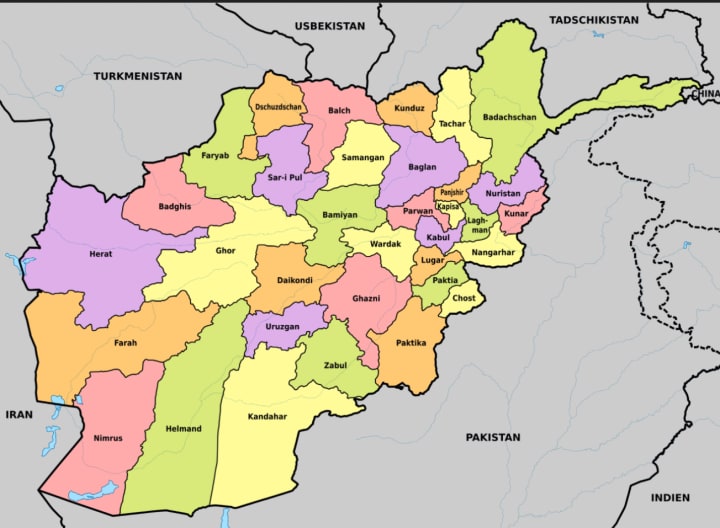
Kandahar province: Rural artisans, particularly in the Arghandab district, use newly sprouted branches to make baskets for transporting and storing goods.
Baghlan province: In the city of Puli Khumri, training programs have taught women to weave specialized "gabion" baskets. These are made of thick wire mesh and filled with stones for flood and erosion protection, and the skill provides a source of income for participants.

Kabul, Jawzan, and Balkh provinces: Artisan projects have connected 3,000 female weavers in these provinces with international markets to help them generate income for their households.
Materials used :
Unlike the elephant grass used in some African baskets, Afghan artisans use locally available materials:
Branches: The traditional Kandahari baskets are woven from newly sprouted, flexible branches.
Wire: For specialized gabion baskets designed for flood control, a thick wire mesh is used.
Impact on communities :
For many Afghan women, particularly those in rural areas, basket weaving is a critical way to earn income and support their families. Non-governmental organizations, like Afghanaid, support these artisans by connecting them to markets and providing training that allows them to generate a steady stream of income.

Pomegranates; a Source of Fruit and Craft -natural dye colors.
grass baskets are primarily made in rural areas of Afghanistan.
Artisans often use locally sourced materials, such as reeds and grasses.
The weaving techniques are traditionally passed down through generations.

Many baskets are crafted in provinces like Badakhshan and Takhar.
The baskets are often made for both functional use and decorative purposes.
Local markets serve as key venues for selling these handmade products.
‘Then, importers get involved and open up those markets around the world which the weavers can not reach. We are such one importer.

I met an Afghani basket and Kilim rug trader in California, and purchased some of his baskets and plates that he had. He was born in Northern Afghanistan and emigrated to the U.S. 46 years ago. The Russians had just pulled out of Afghanistan and the Islamic funamentslides were on the rise, making life unbearable. He saw the writing on the wall, and left the country, settling in California.
He had contacts with basket and rug weavers in Afghanistan, and kept in contact with them. Although the actual basket weavers live in Afghanistan, in Kandahar province, right at the southern border , and make the baskets in the villages there, with native grasses collected in fields by their village. (a lot of them live now in refugee camps just across the border in Pakistan, where they escaped too since the American invasion of Afghistan to rout out the Taliban terrorists and supporters of Osama Bin Laden, and the subsequent war that ensued.)and provide a local source and market for the weavers who stayed in Afghanistan, smuggling them over the border so they can sell them.
‘It’s a very porous border, mountainous, isolated, wild, and from their villages to the refugee camps and are so close that it is not a problem for the Afghani refugees to get the baskets and sell them in Pakistan.
most of the weavers are women, and the smugglers and sellers are men.


Because they sell the baskets in Pakistan, they say they are “Made in Pakistan”, where in fact they are made in Afghanistan. Either the refugee sellers don’t want to the Pakistani authorities to know they are smuggling the baskets over the border, or the local Pakistani authorities insist on them doing this for the revenue they can collect in taxes. Either way, by us meeting the Afghani trader who explained what is happening on the ground in the refugee camps in Pakistan and in the villages on the border in Kandahar province, Afghanistan, we now know the real story of Pakistani baskets, which we have always ignored. They are really Afghani baskets.
as I am writing this in October 2025, the Pakistan government is expelling 1.4 million Afghans refugees from these camps back to Afghanistan to face the Talban.
About the Creator
Guy lynn
born and raised in Southern Rhodesia, a British colony in Southern CentralAfrica.I lived in South Africa during the 1970’s, on the south coast,Natal .Emigrated to the U.S.A. In 1980, specifically The San Francisco Bay Area, California.
Golden Journey
Once in a small town named Willow Creek, something extraordinary was about to happen. The sun was setting, casting long shadows and a golden glow across the landscape. Among the townspeople was a curious boy named Ethan. A dreamer with bright green eyes and messy brown hair, Ethan was often lost in his thoughts. He wanted to explore worlds beyond his own, driven by the tales of adventure his grandmother used to tell him.
By Hamad Afridi a day ago in Art


Comments
There are no comments for this story
Be the first to respond and start the conversation.