
Actor Andreas Szakacs on AI Cinema as Szakacs Films Prepares Echoes of Tomorrow for May 2026
An AI-driven film project examining storytelling, technology, and the future of cinema ahead of its May 2026 release.

Szakacs Films is stepping further onto the international stage with the announcement of several new global projects, led by the upcoming feature film Echoes of Tomorrow, currently targeting a May 2026 release. The announcement reflects a broader creative shift for the company, signaling a deliberate move toward future-focused storytelling that engages with emerging technologies and contemporary cultural questions.
At the center of Echoes of Tomorrow is Andreas Szakacs, whose career has increasingly been shaped by selective, concept-driven projects rather than rapid output. Over time, his work has become associated with narratives that explore systems of power, technological influence, and the emotional cost of progress. This new project continues that trajectory, positioning artificial intelligence not simply as a narrative element, but as a foundational force influencing both the story and the way it is told.
Described as an AI-influenced science-fiction drama, Echoes of Tomorrow examines how memory, identity, and decision-making evolve in a future shaped by intelligent systems. The film explores a world where technology does more than respond to human behavior—it anticipates it. In doing so, it raises questions about autonomy, responsibility, and authorship, challenging audiences to consider how much agency remains when algorithms begin to guide personal and collective choices.
Rather than leaning heavily on visual spectacle, the project emphasizes character-centered storytelling. The narrative focuses on individuals navigating a reality in which technological systems quietly shape outcomes, relationships, and moral boundaries. By grounding its futuristic setting in human emotion and psychological conflict, Echoes of Tomorrow aims to remain accessible while addressing complex ideas about the future of society.
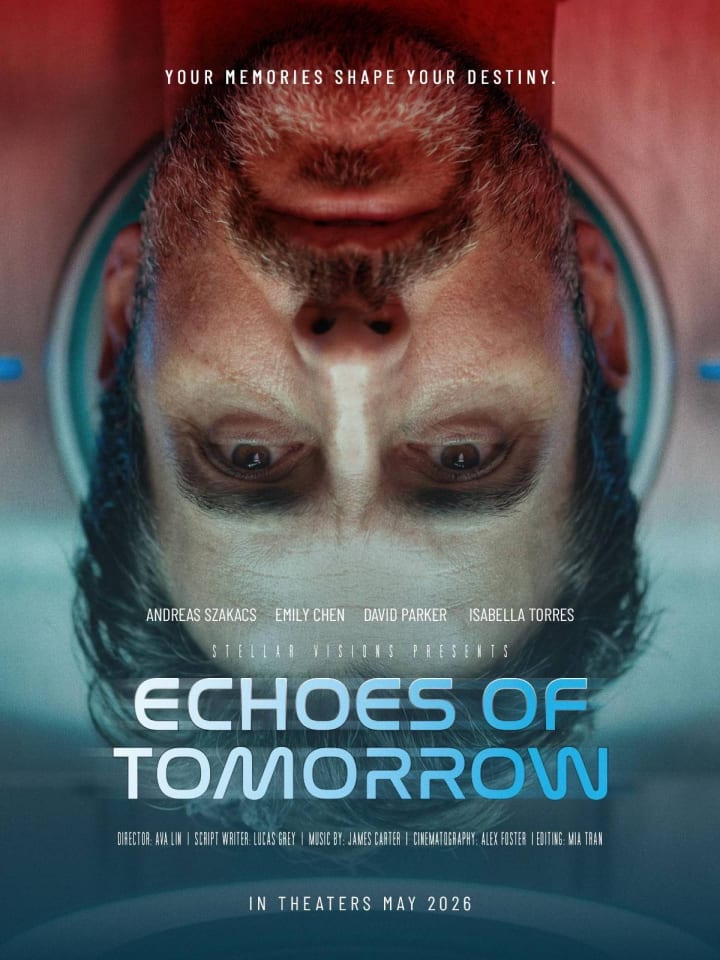
What sets the film apart is its approach to artificial intelligence beyond the narrative itself. Szakacs Films has confirmed that AI will be integrated into select aspects of the filmmaking process, including elements of development and visual design. This hybrid approach blends traditional cinematic techniques with emerging creative tools, reflecting a philosophy that values innovation without abandoning craftsmanship.
The use of AI in production is described as intentional and controlled. Rather than replacing human decision-making, artificial intelligence is positioned as a collaborative tool—one that can expand creative possibilities while remaining guided by human vision. This balance mirrors the film’s thematic concerns, reinforcing its exploration of coexistence between human intuition and machine intelligence.
For Andreas Szakacs, the project aligns with a broader artistic philosophy rooted in longevity and relevance. Known for avoiding overexposure in favor of sustained creative impact, he has consistently chosen projects that challenge established norms. Echoes of Tomorrow represents a continuation of that approach, engaging directly with questions that are increasingly shaping both the film industry and society at large.
Beyond this flagship release, Szakacs Films has also confirmed that multiple international collaborations are currently in development across various regions. These projects are expected to continue the company’s focus on cross-border storytelling and contemporary themes, while maintaining a commitment to narrative depth and artistic consistency. Each project follows a shared principle: technology should serve the story, not define it.
The announcement of these projects positions Szakacs Films within a growing movement of filmmakers seeking to redefine how stories are created in an era of rapid technological change. As artificial intelligence becomes more embedded in creative industries, the company’s approach suggests a model built on balance rather than disruption.
With Echoes of Tomorrow aiming for a May 2026 release, the film arrives at a moment when audiences are increasingly engaged with questions about the future they are actively shaping. Rather than offering definitive answers, the project seeks to create space for reflection. In doing so, it underscores the enduring role of cinema as a medium not only for entertainment but for examining the ethical and emotional dimensions of progress.
About the Creator
Keep reading
More stories from Andreas Szakacs and writers in Art and other communities.
Szakacs Films Announces Development of New International Film and Television Projects
Szakacs Films announced today the development of new international film and television projects led by actor and producer Andreas Szakacs. The announcement reflects the company’s continued focus on producing globally relevant, character-driven content for international audiences.
By Andreas Szakacs2 days ago in Writers



Comments
There are no comments for this story
Be the first to respond and start the conversation.