
A Revolutionary Epoch in Art History
A Short History Of Cubism
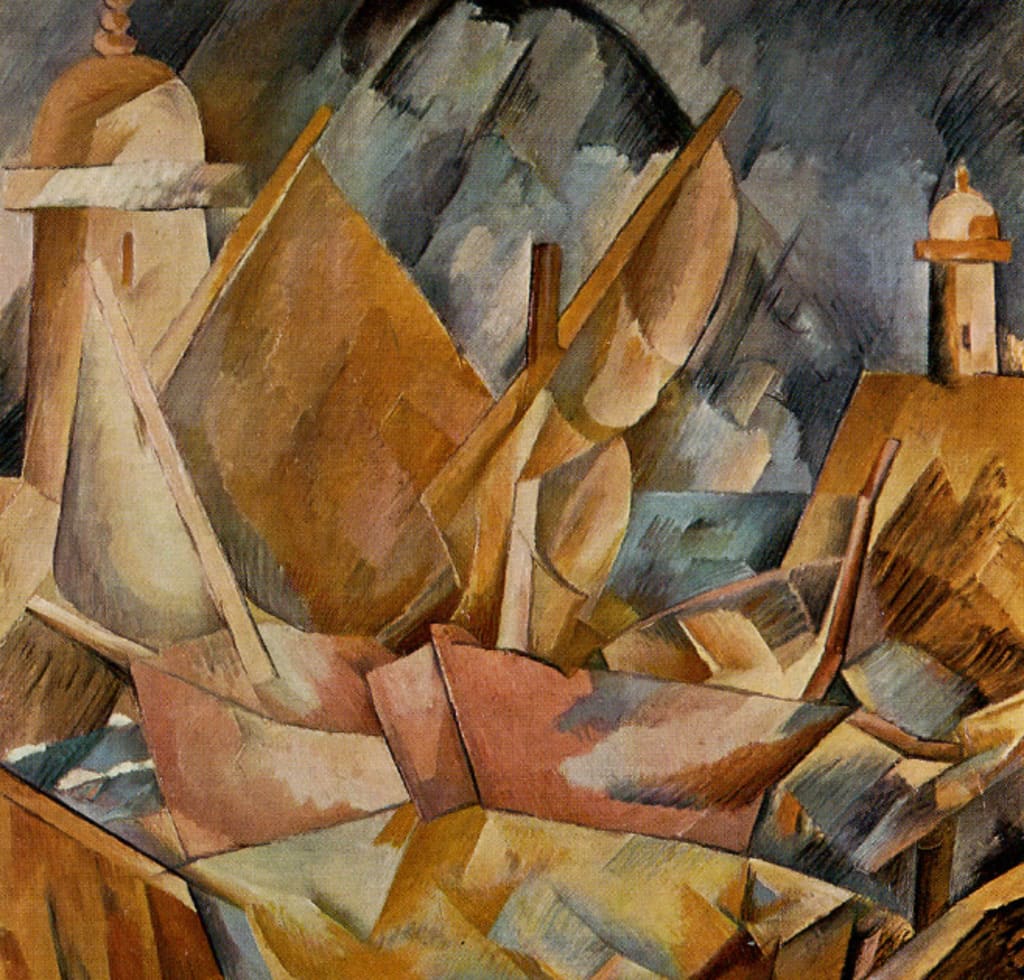
In the early 20th century, amid the bustling streets of Paris, a seismic shift was underway in the world of art. Traditional modes of representation were being challenged, and a new avant-garde movement was poised to redefine the very essence of visual expression. This movement was Cubism, a revolutionary style that shattered conventions, fragmented perspectives, and transformed the way we perceive reality.
The roots of Cubism can be traced back to the pioneering work of two visionary artists: Pablo Picasso and Georges Braque. Influenced by the vibrant cultural milieu of Paris and inspired by the geometric simplicity of African and Iberian art, Picasso and Braque embarked on a collaborative journey that would forever alter the course of art history.
The seminal moment came in 1907 with Picasso's groundbreaking painting, "Les Demoiselles d'Avignon." Departing from traditional modes of representation, Picasso presented the viewer with a startling array of angular forms and disjointed figures. This bold departure from naturalism marked the birth of Cubism, laying the groundwork for a radical reimagining of pictorial space.
At its core, Cubism sought to capture the essence of objects and scenes from multiple viewpoints simultaneously. Artists dissected and reassembled the visual world through a prism of geometric shapes and overlapping planes, challenging the viewer to engage with the fragmented reality presented before them. This analytical approach to form reached its zenith in the years leading up to World War I, as artists like Picasso and Braque deconstructed objects into their basic geometric components, presenting them from various angles within a single composition.
Parallel to analytical Cubism, another variant known as synthetic Cubism began to emerge. Spearheaded by Picasso and Braque, this phase introduced elements of collage and mixed media into their work. By incorporating everyday materials such as newspaper clippings, fabric, and even sand into their compositions, artists sought to blur the boundaries between art and reality, further challenging traditional notions of representation.
The impact of Cubism extended far beyond the confines of the art world, influencing a diverse array of disciplines including literature, music, and design. Writers such as Gertrude Stein drew inspiration from Cubist principles in their experimental prose, while composers like Igor Stravinsky sought to capture the fragmented rhythms and dissonant harmonies of Cubist art in their musical compositions.
Despite its revolutionary impact, Cubism was not without its detractors. Traditionalists dismissed it as incomprehensible and chaotic, while some critics accused it of reducing the human form to a mere collection of abstract shapes. Nevertheless, Cubism continued to thrive, its influence extending well into the 20th century and beyond.
In the aftermath of World War I, Cubism underwent a period of evolution and transformation. Artists like Juan Gris and Fernand Léger embraced the principles of Cubism while infusing their distinctive styles and sensibilities. Gris, in particular, brought a sense of order and harmony to Cubist compositions, utilizing precise lines and vibrant colors to create dynamic and balanced compositions.
As the 20th century progressed, Cubism continued to evolve, influencing movements such as Futurism, Constructivism, and even Surrealism. Its legacy can be seen in the works of artists as diverse as Salvador Dalí, Marcel Duchamp, and Piet Mondrian, each of whom drew inspiration from Cubist principles in their unique ways.
Today, Cubism stands as a symbol of artistic innovation and creative freedom. Its legacy continues to inspire generations of artists to push the boundaries of visual expression, challenging conventions and redefining the very essence of art itself. From its humble beginnings in the studios of Picasso and Braque to its enduring impact on the global artistic landscape, Cubism remains an enigmatic and indelible chapter in the annals of art history.
About the Creator
Janie
Passionate about unraveling the intricate tapestry of art history and contemporary artistic expressions. Beyond brushstrokes and colors, into the mental and physical struggles of artists.
'Till Death We Do Art
There would be nothing divine in this world without art. Nature may surpass the divine to all intents and purposes, but like everything it absorbs and is absorbed by, it remains here, stuck on the surface of this world, ever-present, physically bound to the universe.
By Avocado Nunzella BSc (Psych) -- M.A.P 23 days ago in Art
Heavenly Harmonies and Heavy Criticisms: The Complex Rise of Bethel Music
Heavenly Harmonies and Heavy Criticisms: The Complex Rise of Bethel Music Walk into almost any contemporary Christian church on a Sunday morning—whether in London, Lagos, or Los Angeles—and you are almost guaranteed to hear their music.
By Nivard Anna3 days ago in Art


Comments