
A Dive into the Timeless World of Wooden Boats
The historical evolution of wooden boats is a fascinating topic that spans thousands of years and different cultures. Here is a brief overview of some of the main stages of wooden boat development

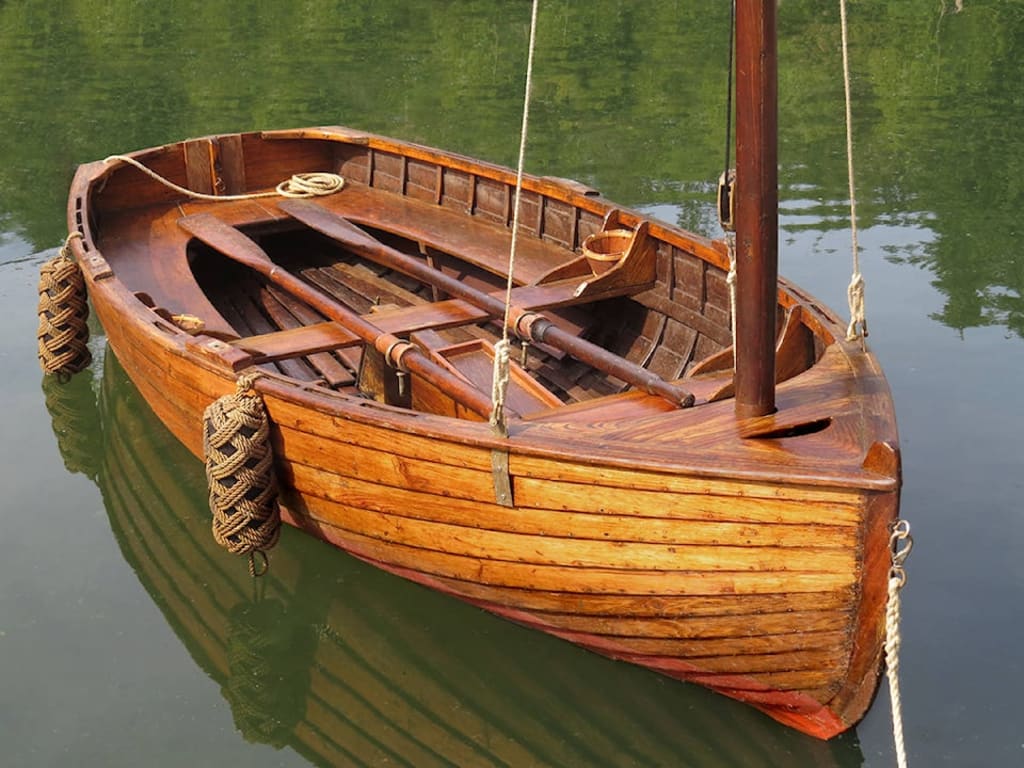
Historical Evolution
The historical evolution of wooden boats is a fascinating topic that spans thousands of years and different cultures. Here is a brief overview of some of the main stages of wooden boat development:
• Thousands of years ago, Allah sent a prophet to earth whose name was Sayyidunā Nūḥ عَـلَيْـهِ الـسَّـلَام. This well-known prophet tried to guide people to the factual path, the path of ALLAH. However, only 80 people accepted his message. Eventually, ALLAH Almighty informed him that a powerful storm would sweep away the malevolent people and that he should build a ship to save himself and the believers. 2000 years still remained before the arrival of the storm, and he needed wood to build a special ship called an ark. To obtain wood, he planted some trees called Sagwan whose wood is very durable. These trees took 100 years to grow, after which he and the believers started building the world's first ship. It took around 100 years to build this ship. This boat was 300 yards long, 50 yards wide and 300 yards in height.
• Around 2500 BC, the ancient Egyptians began to build wooden boats that were able to withstand sailing across oceans. They used planks of cedar wood, joined by pegs and ropes, and added sails and rudders. In 1550 BC, the Phoenicians of the ancie nt Canaan civilization used galleys, which were long and narrow wooden boats propelled by oars and sails. The Greeks and Romans improved the design and performance of galleys, by adding multiple decks, rams, and catapults in 800 BC. Around 700 AD, the Vikings of Scandinavia built wooden boats called longships, which were fast, agile, and seaworthy. They had a single mast and a square sail, and could carry up to 60 warriors. Around 1400 AD, the Chinese developed wooden boats called junks, which were large and sturdy, and had multiple masts and sails. They had a flat bottom and a stern rudder, and could carry up to 1000 tons of cargo. Around 1500 AD, the Europeans began to build wooden boats called caravels, which were small and maneuverable, and had triangular sails and a keel. They were ideal for ocean voyages, and were used by explorers such as Christopher Columbus and Vasco da Gama. Around 1600 AD, the Dutch invented wooden boats called fluyts, which were large and economical, and had a wide hull and a narrow deck. They were designed for carrying cargo, and were the first ships to be mass-produced. Around 1700 AD, the British and the French developed wooden boats called ships of the line, which were powerful and majestic, and had multiple decks and cannons. They were the main warships of the naval battles of the 18th and 19th centuries, such as the Battle of Trafalgar. Around 1800 AD, the Americans invented wooden boats called clippers, which were fast and sleek, and had a sharp bow and a large sail area. They were used for transporting passengers and goods, such as tea, spices, and gold, and set many speed records.
These are some of the most notable examples of wooden boat evolution, but there are many more types and variations of wooden boats that have been used throughout history and across the world. Wooden boats are part of a rich cultural heritage that should be preserved and promoted. They can also inspire innovation and creativity in the field of naval architecture and marine engineering.
Iconic Wooden Boat Designs.
Iconic wooden boat designs, such as the Riva Aquarama and Chris-Craft Runabout, are maritime masterpieces, seamlessly blending classic aesthetics with meticulous craftsmanship. These vessels transcend time, embodying elegance, luxury, and a deep connection to the rich heritage of wooden boat construction, creating a timeless and unforgettable on-water experience. Some of the most iconic wooden boat designs are:
• The Dory a simple, flat-bottomed boat with a pointed bow and stern, usually propelled by oars or sails. The dory is one of the oldest and most versatile wooden boats, used for fishing, hunting, and recreation. It originated in France and Portugal, and was popularized by American fishermen in New England and Canada.
• The Kayak a narrow, streamlined boat with a co ver ed deck and a cockpit for the paddler, usually made of wood or skin over a wooden frame. The kayak is a traditi onal boat of the Inuit and other Arctic peoples, used for hunting, fishing, and transportation. It is also a popular sport and recreational boat, with many modern variations and materials.
• The Gondola a long, slender boat with a flat botto m and a curved prow and stern, propelled by a single oar at the rear. The gondola is a symbol of Venice, Italy, where it has been used for centuries as a means of transport and tourism. It is also a romantic and elegant boat, often decorated with ornaments and fabrics.
• The Schooner a sailing boat with two or more masts, typically with a fore-and-aft rig and a gaff sail on the main mast. The schooner is a fast and seaworthy boat, used for exploration, trade, and warfare. It was widely used by the Americans, British, and French in the 18th and 19th centuries, and is still a popular choice for sailing enthusiasts.
• The Hacker-Craft a classic American runabout, with a sleek and elegant mahogany hull, a powerful engine, and a triple- cockpit design. The Hacker-Craft is a descendant of the boats designed by John Hacker, who craft and boats for the rich and famous during the Roaring Twenties. The Hacker-Craft is a high-performance and luxurious boat, ideal for cruising, racing, and water sports.
Craftsmanship and Artistry
Craftsmanship and artistry of wooden boat are the qualities that make wooden boats stand out from other types of boats. Wooden boat builders use their skills, creativity, and passion to create boats that are not only functional, but also beautiful, unique, and durable. Wooden boat building is both a science and an art, as it requires knowledge of wood properties, boat design, engineering, and naval architecture, as well as aesthetic sense, artistic vision, and attention to detail. Some of the aspects of craftsmanship and artistry of wooden boat are:
• Wood Selection and Preparation: Wooden boat builders choose the best wood species for their boats, depending on the desired characteristics, such as strength, weight, durability, and appearance. They also prepare the wood by cutting, shaping, bending, and joining it using various tools and techniques, such as saws, planes, chisels, clamps, steam, and glue.
• Boat Construction: Wooden boat builders use different methods of boat construction, depending on the type and size of the boat, such as plank-on-frame, strip-planking, cold-molding, or stitch-and-glue. They also add various features and components to the boat, such as keel, stem, frames, ribs, planks, decks, cabins, masts, sails, rudders, engines, and fittings.
• Boat Finishing: Wooden boat builders apply various finishes to the boat, such as varnish, paint, stain, or oil, to protect the wood from water, weather, and insects, and to enhance its beauty and shine. They also add decorative elements, such as carvings, inlays, or ornaments, to personalize the boat and express their artistic style.
Types of Wood Used
There are many types of wood that can be used for wooden boat building, depending on the desired characteristics, such as strength, weight, durability, and appearance. These are some of the most common types of wood used for wooden boat building, but there are many more types and variations of wood that can be used for different boat projects:
• Mahogany: A hardwood that is strong, durable, and rot-resist ant. It has a reddish-brown color and a fine grain, making it attractive and easy to work with. It is widely used for boat hulls, decks, and interiors.
• Cedar: A softwood that is lightweight, buoyant, and rot -resistant. It has a pleasant aroma and a yellowish-brown color, making it appealing and aromatic. It is often used for boat planking, especially for strip-planking and cold-molding methods.
• Oak: A hardwood that is hard, heavy, and strong. It has a light brown color and a coars e grain, making it sturdy and durable. It is often used for boat frames, keels, and stems, as it can withstand bending and stress.
• Pine: A softwood that is cheap, abundant, and easy to work with. It has a pale yellow color and a straight grain, making it versatile and adaptable. It is often used for boat masts, spars, and oars, as it is flexible and resilient.
• Teak: A hardwood that is expensive, rare, and exotic. It has a dark brown color and an oily texture, making it elegant and luxurious. It is often used for boat decks, cabins, and furniture, as it is resistant to water, weather, and insects.
• Spruce: A softwood that is light, strong, and durable. It has a white or yellow color and a fine grain, making it smooth and uniform. It is often used for boat masts, spars, and rigging, as it has a high strength-to-weight ratio and a good resistance to fatigue.
Cultural Significance
Wooden boats have a cultural significance in many parts of the world, as they reflect the history, traditions, and identity of the people who built and used them. Wooden boats are often associated with the heritage and values of the coastal communities, such as fishing, trading, exploring, and sailing. Wooden boats are also expressions of art and craftsmanship, as they showcase the skills, creativity, and passion of the boat builders. These are some of the examples of the cultural significance of wooden boats, but there are many more types and variations of wooden boats that have been used throughout history and across the world:
• Greek Wooden Boats: These boats have a proud and long-standing tradition of sailing the Aegean Sea, dating back to the prehistoric times and the Viking era. They are part of the Greek boat building culture, which has evolved over the centuries and adopted diverse elements from different civilizations. The most common type of Greek wooden boat is the caïque, which was used for fishing and trawling in the Mediterranean. Today, they are mostly used for tourist boat rides on the islands.
• Norwegian Wooden Boats: These boats are a tradition that has endured in Norway for almost 2,000 years, since the clinker technique was introduced in the 3rd or 4th century AD. The Vikings used this technique to build their longships, which were fast, agile, and seaworthy. They used these boats for exploration, raiding, and colonization. The most famous type of Norwegian wooden boat is the Oselvar, which was named after the Os River where it was first built 250 years ago. The Oselvar workshop is dedicated to preserving the old artisan craft of boat building that has been passed down from generation to generation.
• Chinese wooden boats: These boats have a long and rich history of trade and exploration, reaching as far as Southeast Asia, India, and Africa. The most distinctive type of Chinese wooden boat is the junk, which was large and sturdy, and had multiple masts and sails. The junk had a flat bottom and a stern rudder, and could carry up to 1000 tons of cargo. The junk was also used for warfare and piracy, and was a symbol of the naval power of China.
Challenges and Preservation Efforts
Wooden boats face many challenges in the modern world, such as wood rot, maintenance, caulking, cracking, and environmental regulations. These challenges can threaten the survival and preservation of wooden boats, which are part of a rich cultural and historical heritage. However, there are also many efforts and initiatives to preserve and protect wooden boats, such as:-
• 3D Modeling: This is a technique that uses digital tools to create a three-dimensional representation of a wooden boat, based on photographs, measurements, and drawings. 3D modeling can capture the shape and details of a wooden boat at a specific moment in time, and can be used for documentation, restoration, or replication purposes.
• Wooden Boat Festivals: These are events that celebrate the beauty, diversity, and craftsmanship of wooden boats, and bring together wooden boat enthusiasts, builders, owners, and admirers. Wooden boat festivals can showcase various types of wooden boats, such as sailboats, rowboats, canoes, kayaks, and more, and can also offer workshops, demonstrations, races, and tours.
• Wooden Boat Museums: These are institutions that collect, display, and educate the public about the history, culture, and art of wooden boat building and sailing. Wooden boat museums can feature exhibits, collections, and archives of wooden boats, as well as offer programs, activities, and events for visitors of all ages.
Modern Innovations in Wooden Boat Design
Modern innovations in wooden boat design are the ways that wooden boat builders incorporate new technologies and materials to improve the performance, efficiency, and sustainability of their boats. Some of the modern innovations in wooden boat design are
• Electric Propulsion: This is a system that uses electric motors and batteries to power the boat, instead of conventional gas or diesel engines. Electric propulsion can reduce noise, emissions, and fuel consumption, and can also offer more flexibility and control. Some examples of wooden boats that use electric propulsion are the Boesch 860, the Spirit Geist, and the Hacker-Craft Restless.
• Hydrodynamic Design: This is a technique that optimizes the shape and structure of the boat hull to reduce drag and increase speed and stability. Hydrodynamic design can also enhance the handling and maneuverability of the boat, and can reduce the impact of waves and wind. Some examples of wooden boats that use hydrodynamic design are the Grand Craft Burnham 26, the Lyman-Morse Hood 57 LM, and the Hacker-Craft Navy Destroyer.
• Mathematical Optimization: This is a method that uses mathematical models and algorithms to find the best solutions for various aspects of the boat design, such as weight, strength, cost, and performance. Mathematical optimization can help wooden boat builders to achieve the optimal balance between different criteria and constraints, and to explore different possibilities and scenarios. Some examples of wooden boats that use mathematical optimization are the Spirit Geist, the Boesch 860, and the Lyman-Morse Hood 57 LM.
Sustainability in Boatbuilding
Sustainability in boatbuilding is the concept of creating boats that have a minimal negative impact on the environment, both during their production and operation. Sustainability in boatbuilding can involve using renewable or recycled materials, reducing waste and emissions, improving energy efficiency, and designing for durability and recyclability. Some of the benefits of sustainability in boatbuilding are:
• Environmental: Sustainable boats can help preserve the natural resources and ecosystems that are essential for life on Earth. They can also reduce the contribution of the marine industry to climate change and pollution, which can have harmful effects on human health and biodiversity.
• Economic: Sustainable boats can lower the operational and maintenance costs for boat owners and operators, as they can save fuel, water, and electricity. They can also create new markets and opportunities for boat builders and suppliers, who can innovate and differentiate themselves from the competition3.
• Social: Sustainable boats can enhance the quality of life and well-being of the people who use them, as they can offer more comfort, safety, and enjoyment. They can also raise awareness and education about the environmental issues and challenges facing the marine sector, and inspire more responsible and ethical behavior.
Stories of Seafaring Adventures
If you are looking for some stories of seafaring adventures of wooden boats, you might enjoy reading some of the books that I found for you. Here are some of the titles and summaries of the books:
• Sea Change - Alone across the Atlantic in a Wooden Boat by Peter Nichols: A memoir that recounts the author’s solo voyage across the Atlantic Ocean in his 27-foot wooden boat, Toad. He describes the challenges, dangers, and joys of sailing alone, as well as the personal and emotional changes he undergoes during his journey.
• The Voyage of the Narwhal by Andrea Barrett: A historical fiction novel that follows a group of explorers who embark on a wooden ship to search for a missing Arctic expedition in the 1850s. They encounter hardships, conflicts, and discoveries, as well as the beauty and mystery of the Polar Regions.
• The Riddle of the Sands by Erskine Childers: A spy novel that tells the story of two British yachtsmen who sail their wooden boat to the German coast, where they uncover a secret plot to invade England. They use their sailing skills and intelligence to evade and expose the enemy.
• The Old Man and the Sea by Ernest Hemingway: A classic novella that depicts the struggle of an old Cuban fisherman who sails his wooden boat to catch a giant marlin in the Gulf Stream. He faces a series of obstacles and dangers, as well as his own doubts and fears, as he pursues his dream.
• The Life of Pi by Yann Martel: A fantasy novel that narrates the survival story of a young Indian boy who is stranded on a lifeboat with a Bengal tiger after a shipwreck. He uses his wit, faith, and imagination to cope with his extraordinary situation, as he sails across the Pacific Ocean.
Wooden Boat Communities
Wooden boat communities are groups of people who share a passion for wooden boats, whether they are builders, designers, owners, or enthusiasts. They often interact with each other through online platforms, such as the Wooden Boat Community, which offers various tools and resources for wooden boat lovers, such as forums, events, plans, kits, and more. They also participate in local or global gatherings, such as shows, regattas, and festivals, where they can showcase their wooden boats, exchange ideas and information, and celebrate the beauty and craftsmanship of wooden boats. Some of wooden boat communities are:
• The Wooden Boat Association of North Texas, which is a non-profit organization that promotes the preservation and enjoyment of wooden boats. They organize monthly meetings, workshops, outings, and an annual wooden boat show.
• The Wooden Boat Foundation, which is a part of the Northwest Maritime Center in Port Townsend, Washington. They aim to inspire people of all ages and backgrounds to connect with the maritime heritage and culture through education, exhibition, and celebration. They host the Wooden Boat Festival, the largest wooden boat event in North America, every September.
• The Wooden Boat Centre, which is located in Franklin, Tasmania, Australia. They are a living museum, a school, and a workshop that teaches and preserves the art and skills of wooden boat building. They also offer boat hire, tours, and accommodation for visitors who want to experience the wooden boat culture of the Huon River.
Conclusion
The wooden boat stands as a timeless testament to the marriage of craftsmanship, natural materials, and the indomitable spirit of exploration. In a world increasingly dominated by modern materials and technologies, the wooden boat retains a unique charm, embodying a connection to tradition, artistry, and the rhythmic dance between human ingenuity and the raw beauty of nature. Each wooden boat carries within its grain the echoes of countless hours of labor, where skilled hands coax life from timber, transforming a simple material into a vessel that defies the currents and sails toward adventure. The creaking of the hull, the scent of varnish, and the rhythmic slap of waves against wood compose a symphony that transcends time, narrating tales of seafaring heritage and the human desire to conquer the open waters. Beyond its aesthetic appeal, the wooden boat symbolizes sustainability and an intimate understanding of the environment. Craftsmen, often inheriting age-old techniques, carefully select and shape wood, creating vessels that exist in harmony with the ecosystems they navigate. In an era where ecological consciousness is paramount, the wooden boat whispers a reminder that technology need not divorce itself entirely from nature; rather, it can dance in step with the environment, propelled by the wind and guided by the stars. The allure of a wooden boat lies not only in its functionality but also in its ability to evoke a sense of nostalgia and romanticism. Whether gliding gracefully across serene lakes or braving the mighty swells of the open sea, these vessels carry with them the dreams of sailors, adventurers, and artists. They embody the poetry of exploration, inviting us to cast off the moorings of the familiar and venture into the unknown, where discovery and self-discovery await on the horizon. In a world where progress often equates to speed and efficiency, the wooden boat invites us to embrace a slower pace, to savor the journey as much as the destination. It is a floating testament to the enduring beauty of simplicity and the elegance of traditional craftsmanship. So, as the sun sets and the wooden boat finds its resting place, let us not merely see it as an artifact of the past but as a living testament to the enduring spirit of human creativity, resilience, and the eternal call of the sea.
About the Creator
Keep reading
More stories from Muhammad Waheed Asghar and writers in Art and other communities.
Disadvantages of Artificial Intelligence: Navigating the Challenges of AI
Artificial Intelligence (AI) has revolutionized industries, transformed everyday life, and opened up new frontiers of technology. However, as with any powerful tool, AI comes with its own set of challenges and drawbacks. While its potential benefits are vast, the disadvantages of AI must be carefully considered to ensure it is developed and deployed responsibly. Here are some key disadvantages:
By Muhammad Waheed Asgharabout a year ago in Futurism
2026 Commercial Space Design:How Fbierglass Sculpture Drives Traffic
Today, offline commercial spaces are facing continuous pressure. With e-commerce offering convenient and fast services, physical stores must showcase unique features to attract customers. In this context, fiberglass sculptures are no longer merely decorative items; they have become visual focal points in shopping malls, brand stores, pop-up shops, and mixed-use commercial projects, playing a crucial role in increasing foot traffic.
By Shenzhen Ruiheng Crafts3 days ago in Art
Why Strategic Branding Is Essential for Long-Term Business Growth
In today’s fast-paced digital environment, businesses face constant pressure to stand out. Consumers are exposed to endless choices every day, making attention harder to earn and trust harder to keep. While quality products and services are important, they are no longer the only factors that determine success. Strategic branding plays a key role in helping businesses grow steadily and remain relevant over time.
By Ayush Bagwari3 days ago in Art
Ludacris and Nelly draw backlash over bookings at MAGA-coded music festival
Ludacris and Nelly headlining a mostly right-wing event is good for them. It’s also great for the genre of hip hop. The two rap veterans have showcased their talents on other stages. Why can’t they perform for mostly MAGA folks and grab that bag?
By Skyler Saunders4 days ago in Beat




Comments
There are no comments for this story
Be the first to respond and start the conversation.