
Winter Weather Driving Tips 2023
"Stay safe on the road: some essential tips for driving in winter weather"

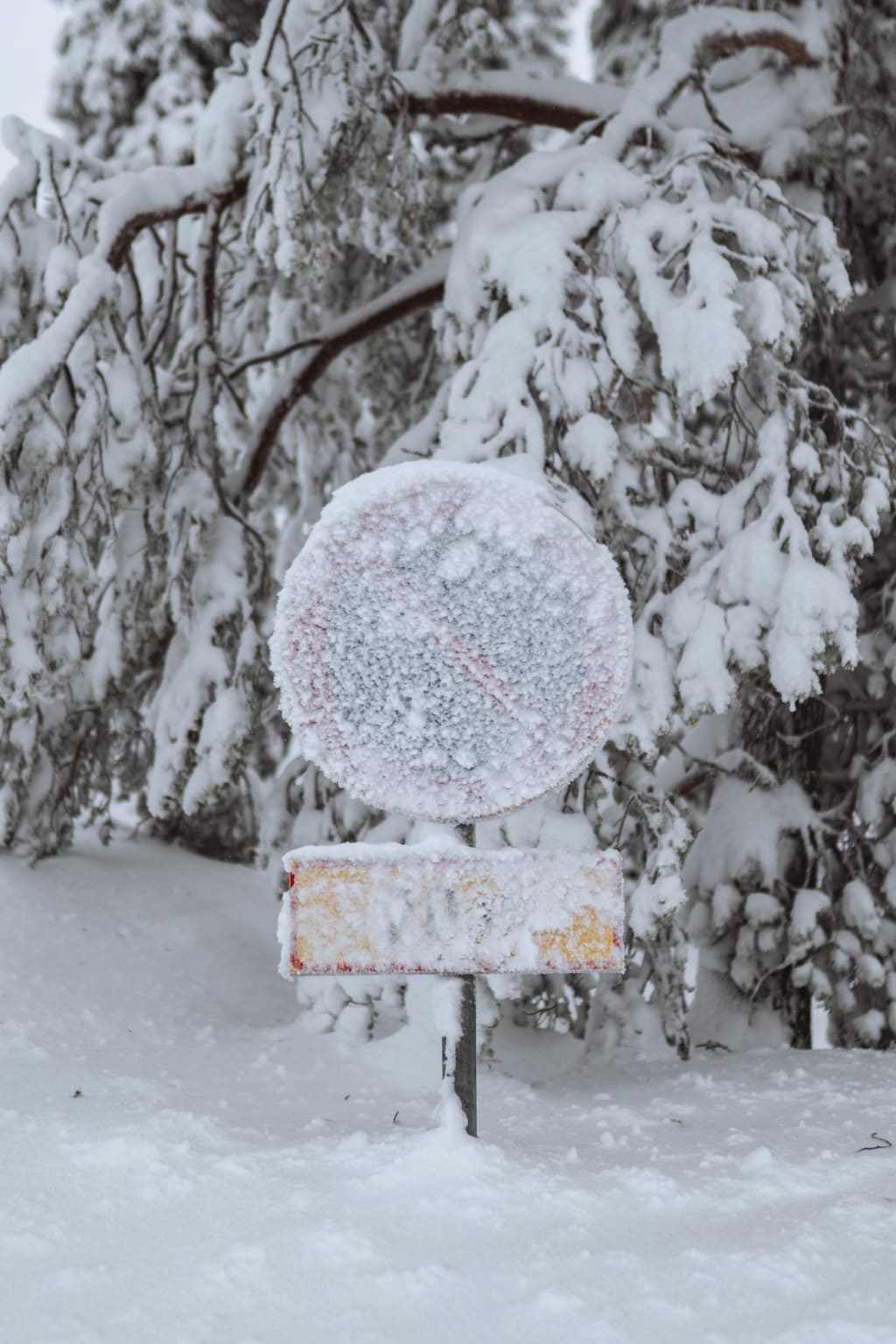
Avoid sudden movements or braking.
When driving in winter weather, it is important to avoid sudden movements or braking as it can cause loss of traction on slippery roads. Sudden movements such as jerking the steering wheel or hitting the brakes too hard can cause the wheels to lose contact with the road and result in a skid or spin out. Slow down and brake gently and smoothly, use both brake and accelerator pedals gradually. This will help maintain control of the vehicle and increase the chances of avoiding an accident.
Keep your gas tank at least half full to avoid gas line freeze.
Keeping your gas tank at least half full during winter weather can help prevent gas line freeze. When the temperature drops, the gasoline in the tank can expand and freeze, clogging the fuel lines and causing the engine to stall. Keeping the tank at least half full reduces the space for the gasoline to expand, reducing the chances of freezing. It also provides you with an ample amount of fuel in case of unexpected situations or getting stranded in cold weather.
Be extra cautious on bridges and overpasses, as they tend to freeze before road surfaces.
It is important to be extra cautious when driving on bridges and overpasses during winter weather as they tend to freeze before road surfaces. Bridges and overpasses are typically exposed to colder temperatures and are more susceptible to freezing because of the surrounding air and lack of insulation. This means that they can freeze before the rest of the road, creating icy and slippery conditions. Drivers should approach these areas with caution, reduce speed, and be prepared for sudden stops. Additionally, be aware of black ice, which can be difficult to see and can cause loss of control of the vehicle.
Watch out for snow plows.
When driving during winter weather, it is important to watch out for snow plows. Snow plows can create dangerous conditions on the road, as they can kick up a lot of snow, reducing visibility and making it difficult to see. Additionally, they can also create icy conditions, especially when they spread salt or other deicing materials on the road. To stay safe, it's important to keep a safe distance from snow plows, and be prepared for sudden stops. Also, do not try to pass a snow plow, they are working on clearing the road and you can get in their way. Be patient and wait for them to clear the road.
Check weather forecast and road conditions before starting your trip.
Checking the weather forecast and road conditions before starting a trip during winter weather is important for ensuring a safe journey. The weather forecast will provide information on any expected snow, ice, or freezing temperatures, which can help you plan your route and be prepared for any adverse conditions. Similarly, checking the road conditions will provide information on any closures, detours, or other issues that may impact your trip. This can help you avoid dangerous areas, plan an alternate route, or even delay your trip if necessary. It can be done by checking the website of the Department of Transportation of your state, or by listening to the weather forecast on the radio before starting your trip.
Watch out for black ice, which can be difficult to see and can cause loss of control of the vehicle.
Watching out for black ice is an important safety tip when driving during winter weather. Black ice is a thin layer of ice that forms on road surfaces, often appearing as a glossy or transparent area. It can be difficult to see, and can cause loss of control of the vehicle if a driver is not aware of it. To avoid black ice, it's important to be aware of the weather conditions and to look for signs of it, such as a sudden decrease in temperature, a change in the color of the road, or a sudden drop in visibility. If you suspect that the road may be icy, slow down and drive with caution. Also, be extra cautious on bridges and overpasses, as they tend to freeze before road surfaces. It's also a good idea to keep a safe distance from other vehicles, as they can kick up snow and ice, reducing visibility and making it difficult to see black ice.
Use your defroster.
Using your defroster while driving during winter weather is an important safety tip. The defroster helps to clear the windshield and windows of snow and ice, which can accumulate quickly in cold temperatures. This will improve visibility and allow you to see the road more clearly, helping to avoid accidents. To use your defroster, turn on the heater and adjust the fan speed and temperature to the highest setting. To clear the windows, direct the airflow to the front and side windows. Use the defrost setting to clear the windshield, it will direct the airflow to the windshield and the front side windows. It is important to note that it may take a few minutes for the defroster to fully clear the windows, so give it some time before starting your trip.
Use your seat warmer and steer warmer.
Using your seat warmer and steer warmer while driving during winter weather can help you feel more comfortable and drive more safely. The seat warmer and steer warmer will help to keep your hands and feet warm, which in turn will help you to maintain better control of the vehicle. To use the seat warmer, look for a button or switch on the dashboard or in the door panel. Some cars have multiple settings, some have low, medium and high, while others have a simple on/off switch. To use the steer warmer, look for a switch or button on the steering wheel or on the dashboard. It is important to note that, while seat and steer warmers can make your driving experience more comfortable, they will not replace proper clothing for the winter weather. Always wear warm clothes, gloves, and boots to protect yourself from the cold.
Have a bag of sand or cat litter in your trunk for extra traction if you get stuck in snow.
Having a bag of sand or cat litter in your trunk can be useful if you get stuck in the snow while driving. The sand or cat litter can be spread around the drive wheels of your vehicle to provide extra traction and help you get out of a stuck situation. Sand is heavier and will provide more weight to the vehicle, which can help to improve traction. Cat litter, on the other hand, is abrasive and can help to create friction between the tires and the snow, improving traction as well. It's a good idea to keep a bag of either material in your trunk, just in case you need it. Be sure to use the sand or cat litter sparingly, only enough to get your vehicle moving again. Once you've regained traction, remove the remaining material from around your tires and drive to a safe location.
About the Creator
Antony Jebinraj
Be the first or be with the first...
Keep reading
More stories from writers in 01 and other communities.
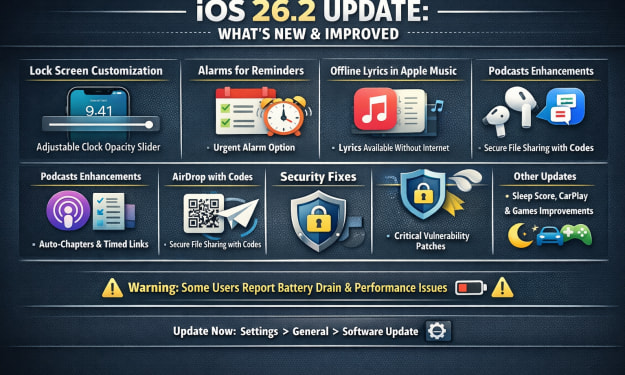
Apple iOS 26.2 Update
Apple officially released iOS 26.2 in December 2025 as a free over-the-air update for compatible iPhones (iPhone 11 and newer, plus second-generation iPhone SE). This second major point update for iOS 26 brings a mix of new features, system enhancements, customization options, security patches, and app upgrades aimed at refining the user experience following the launch of iOS 26 earlier in the year.
By USA daily update 2 days ago in 01
What Tampa Startups Learn After Shipping Their First App?
Ryan Matthews remembers the launch day clearly. The app went live. Friends shared the link. Early users signed up. A few congratulatory messages came in from investors and mentors. For a brief moment, it felt like the hardest part was over.
By Mary L. Rodriquez4 days ago in 01
Living in a hemp house
Hemp, a multi-purpose crop that delivers fibres, shivs, seeds, and pharmaceuticals is currently used in insulation materials and bio-composites for a more sustainable construction industry. Russ Martin and his wife Karon Korp tell their story as owners of the first hemp house in the U.S.
By Susan Fourtané 5 days ago in Interview
TUS NUA - ch 49
TUS NUA – ch 49 New Beginnings – Mia and Midnight (*)(*)(*) As Mia spoke on the phone to Ali’s sister, Ellen, Finola slipped quietly away and walked to the stream behind Tus Nua. Carefully, she put a block on her family so no one could know what she was about to do.
By Margaret Brennan6 days ago in Fiction



Comments
There are no comments for this story
Be the first to respond and start the conversation.