
Venus Callipyge meaning “Venus of the beautiful buttocks”. 1st or 2nd century BC. National Archaeological Museum of Naples
Venus Callipyge meaning “Venus of the beautiful buttocks”. 1st or 2nd century BC. National Archaeological Museum of Naples

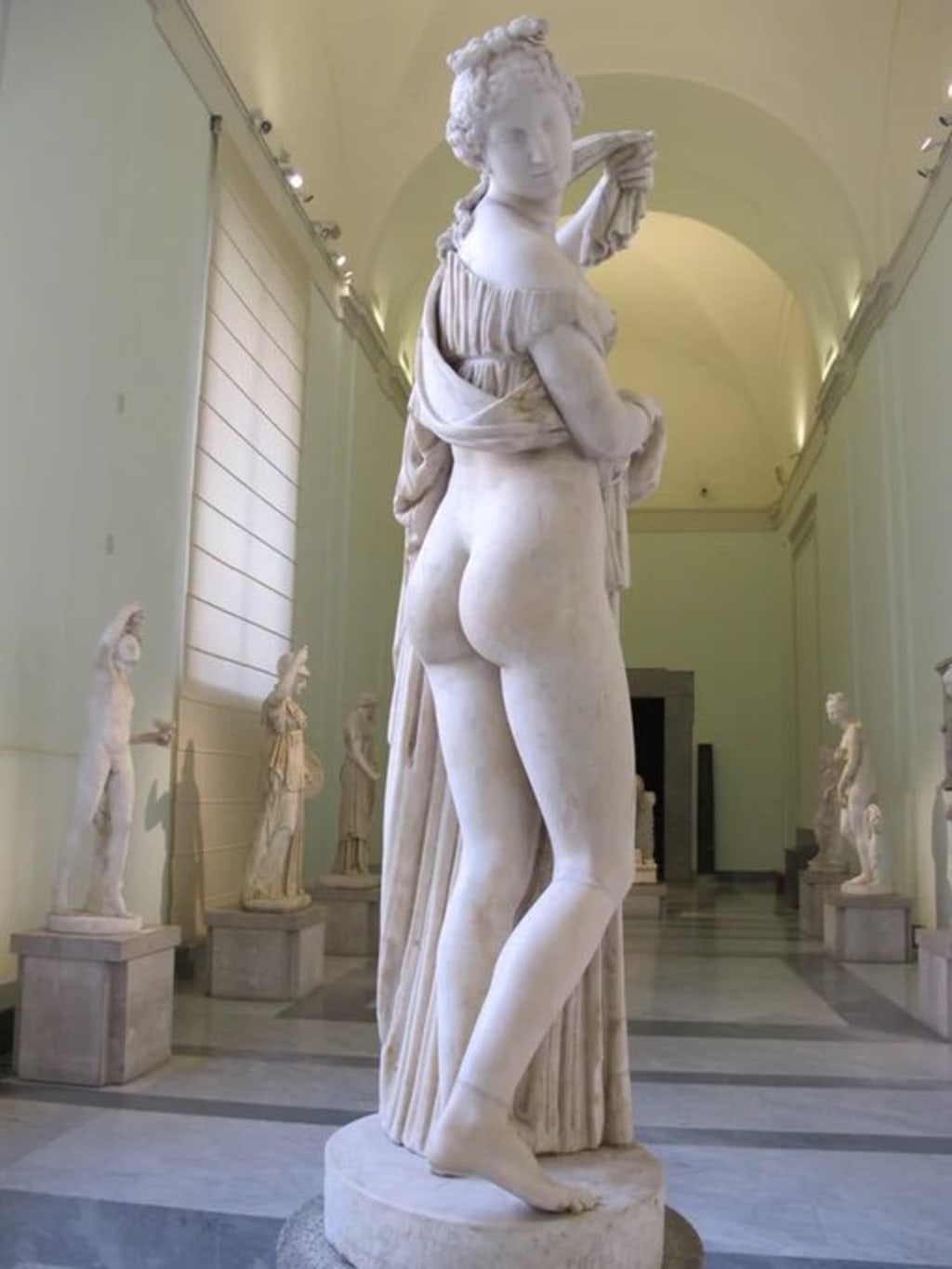
Venus Callipyge: The Goddess of the Beautiful Buttocks
The Venus Callipyge, also known as the "Venus of the Beautiful Buttocks," is an ancient Roman marble statue that exudes grace, sensuality, and an appreciation for the human form. Dating back to the 1st or 2nd century BC, this stunning sculpture is housed in the National Archaeological Museum of Naples, where it continues to captivate art enthusiasts and historians alike. Rooted in Greek artistic traditions and mythology, the Venus Callipyge stands as a remarkable testament to ancient ideals of beauty, eroticism, and storytelling.
Origins and Artistic Influence
The Venus Callipyge is a Roman copy of a lost Greek original, likely sculpted during the Hellenistic period. The term "Callipyge" comes from the Greek "kalli" (beautiful) and "pyge" (buttocks), a direct reference to the statue's most striking feature. The sculpture is believed to be inspired by Aphrodite, the Greek goddess of love and beauty, who was frequently depicted in various sensual and alluring poses.
Greek sculptors of the Hellenistic era were known for their exploration of dynamic movement, sensuality, and naturalistic anatomy, which is evident in the Venus Callipyge. Unlike the more restrained and idealized depictions of the Classical period, Hellenistic sculptures often displayed a playful, almost theatrical quality, emphasizing movement and emotion. The Venus Callipyge perfectly embodies this approach with her turned head, revealing an expression of self-admiration, as she gently lifts her drapery to expose her well-formed buttocks.
The Legend Behind the Statue
The story associated with the Venus Callipyge comes from ancient sources, particularly Athenaeus, a Greek rhetorician of the 2nd century AD. According to the legend, two sisters from Syracuse, a city in ancient Sicily, were engaged in a lighthearted competition regarding their beauty. They argued over who had the most attractive buttocks and decided to seek judgment from a young man passing by. The man was so enamored by their figures that he informed his brother, and both siblings fell in love with the sisters. Eventually, the young men married them, and in gratitude for their beauty, the women dedicated a temple to Aphrodite Callipyge, the goddess of beautiful buttocks.
This story reflects the Greek appreciation for the human body and its aesthetic appeal, particularly in relation to divine beauty. It also underscores the idea that physical beauty was considered a gift worthy of veneration, leading to the establishment of temples and religious cults.
Symbolism and Cultural Significance
The Venus Callipyge represents more than just an appreciation for the female form; it encapsulates ancient ideas of beauty, fertility, and divine grace. Aphrodite, as the inspiration behind the statue, was not merely the goddess of love but also a symbol of fertility and sensual pleasure. The statue’s exaggerated pose, with the figure looking over her shoulder, suggests an element of self-awareness and confidence—an artistic choice that may have resonated with both ancient and modern viewers.
In Roman society, depictions of Venus often carried political and cultural connotations. Emperors and influential families frequently linked themselves to Venus to emphasize divine favor and legitimacy. The Roman elite, who admired Greek art and often commissioned replicas, would have found the Venus Callipyge particularly appealing due to its blend of elegance and sensuality.
Artistic Features and Style
The Venus Callipyge stands as a prime example of Hellenistic sculptural technique, characterized by its fluidity, naturalism, and dramatic composition. The sculptor meticulously captured the softness of flesh, the gentle drapery folds, and the curvature of the body, making it an extraordinary study of human anatomy.
Key elements that define the statue’s artistic merit include:
Contrapposto Stance – The figure is depicted in a contrapposto pose, with weight shifted onto one leg, creating a naturalistic curve in the hips and spine. This positioning adds dynamism and grace to the composition.
Expressive Gesture – The act of lifting the drapery suggests movement and playfulness while drawing attention to the primary focus of the sculpture—the buttocks.
Fine Detailing – The statue exhibits a high level of craftsmanship, with delicate carvings that emphasize the softness of the flesh and the flowing nature of the fabric.
Psychological Engagement – Unlike many other depictions of Venus, where the goddess faces forward or gazes downward, this sculpture presents her in an introspective moment, as if admiring her own beauty.
Rediscovery and Legacy
The Venus Calliope, like many ancient sculptures, was lost for centuries before being rediscovered during Renaissance-era excavations. By the 18th century, the statue had found its place in the National Archaeological Museum of Naples, where it remains a cherished artifact of antiquity.
During the Renaissance and Baroque periods, artists and intellectuals admired classical sculptures, often using them as references for their own works. The Venus Calliope, with its bold yet elegant pose, influenced numerous painters, sculptors, and poets who sought to capture the essence of classical beauty.
Today, the Venus Callipyge continues to inspire discussions about body image, artistic expression, and the shifting perceptions of beauty through time. In contemporary culture, where discussions around body positivity and self-love are prominent, this ancient statue serves as a reminder that admiration for the human form transcends eras and civilizations.
Conclusion
The Venus Calliope is more than just a statue—it is a celebration of beauty, sensuality, and artistic mastery. Its origins in Greek mythology, its exquisite craftsmanship, and its enduring appeal make it one of the most fascinating sculptures of antiquity. As it stands proudly in the National Archaeological Museum of Naples, it continues to mesmerize audiences, inviting them to reflect on the timeless allure of the human form and the artistic genius of ancient sculptors.
Venus Callipyge meaning “Venus of the beautiful buttocks”. 1st or 2nd century BC. National Archaeological Museum of Naples
About the Creator
How to Choose the Best Website Maintenance Company in India for UK Businesses
In today’s fast-paced digital world, a company’s website is often its most important business asset. For UK businesses, maintaining a high-performing, secure, and up-to-date website is critical to attracting customers and staying competitive. However, managing website upkeep in-house can be resource-intensive and time-consuming. This is why many UK businesses turn to professional website maintenance companies in India.
By Dyna Gilbert4 days ago in 01
What are Development Miami Trends Every Leader Should Know
In 2026, most CEOs in Miami no longer treat mobile apps as supporting tools. The app is often the brand, the revenue engine, or the operational backbone. When it slows down, breaks, or fails compliance checks, the impact lands at the executive level. This is the moment when trend awareness stops being a curiosity and becomes a responsibility.
By Mary L. Rodriquezabout 23 hours ago in 01
Miss Persephone's Manual to a Seemingly Ordinary Life
Miss Persephone was found at the dining table, her blue eyes swollen, her tears arriving and retreating like the tides of the ocean. Earlier that day, her family had visited her in the retirement home where she had lived for eight years. It was her eightieth birthday.
By Imola Tóth5 days ago in Fiction




Comments
There are no comments for this story
Be the first to respond and start the conversation.