
The brain of a man converted into glass by Vesuvius ash cloud
The brain of a man converted into glass by Vesuvius ash cloud

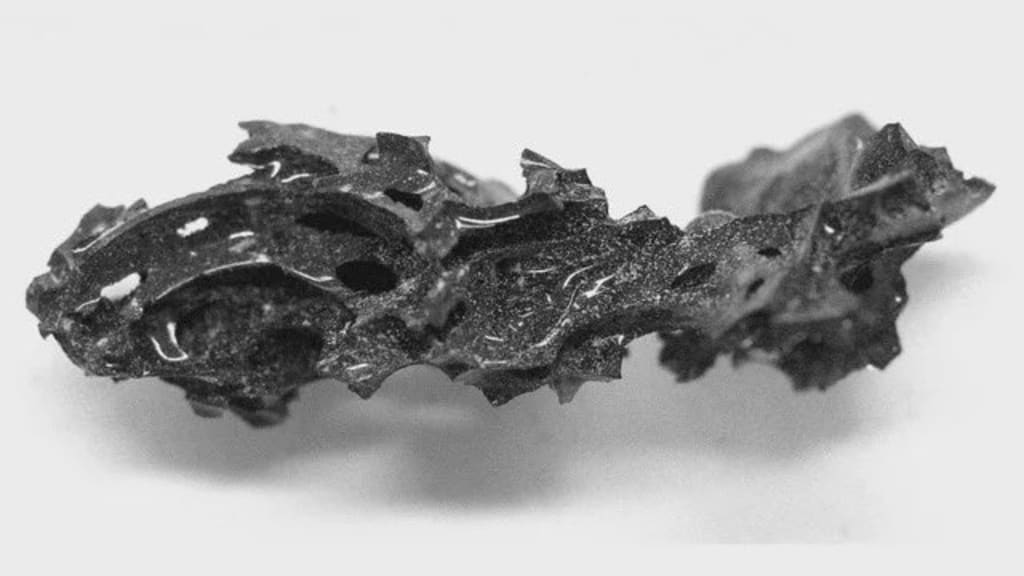
The story of a man's brain being converted into glass by the eruption of Mount Vesuvius is a fascinating and eerie tale from history, combining archaeology, science, and tragedy.
The Eruption of Vesuvius (79 AD)
On August 24, 79 AD, Mount Vesuvius erupted violently, sending a massive ash cloud and pyroclastic flows over the Roman cities of Pompeii and Herculaneum. While Pompeii was buried in ash and pumice, Herculaneum suffered a different fate—hit by pyroclastic surges of extreme heat, reaching temperatures between 500-1000°F (260-540°C). This intense heat instantly vaporized soft tissues and carbonized bodies, preserving them in haunting detail.
The Victim: The Custodian of the College of Augustales
In 2018, archaeologists discovered the remains of a man in Herculaneum’s Collegium Augustalium (College of the Augustales), an elite religious and political institution. This man, believed to be the custodian of the building, was found lying face-down on a wooden bed, buried under volcanic debris.
While studying his remains, scientists made a shocking discovery—fragments of black, glassy material in his skull. Chemical analysis revealed that this material was vitrified brain tissue, meaning his brain had turned to glass due to the extreme heat.
How Did His Brain Turn to Glass?
The process of vitrification (glass formation) happens when organic matter is exposed to extreme heat, melts, and then cools rapidly, solidifying into a glass-like substance. Researchers believe that:
The intense heat from the pyroclastic surge boiled the man’s bodily fluids almost instantly.
His brain, composed mostly of fat and water, ignited and partially liquefied.
The sudden cooling of the surrounding environment then solidified parts of the brain into a glassy substance.
The Scientific and Historical Significance
This was the first confirmed case of vitrified human brain tissue found in archaeology. The discovery provided new insights into how the extreme heat of Vesuvius affected people in Herculaneum. It also gave scientists a rare opportunity to study ancient human brain matter preserved in an extraordinary way.
A Haunting Legacy
The custodian’s fate is one of the most chilling stories from the Vesuvius disaster. His death was almost instantaneous, but the preservation of his remains, including the transformation of his brain into glass, makes him a unique figure in the history of archaeological discoveries. The story serves as a powerful reminder of the sheer destructive force of nature and how one of history’s greatest disasters left behind hauntingly well-preserved victims.
Would you like me to add any details, such as the archaeological techniques used or more about Herculaneum’s destruction?
The Brain of a Man Turned to Glass by Vesuvius: A Tale of Fire, Ash, and Preservation
In the year 79 AD, one of the most infamous volcanic eruptions in human history obliterated the Roman cities of Pompeii and Herculaneum. Mount Vesuvius, an imposing stratovolcano looming over the Bay of Naples, erupted with catastrophic force, sending torrents of superheated gases, ash, and molten rock cascading upon the unsuspecting inhabitants below. While Pompeii was buried in layers of ash and pumice, Herculaneum suffered an even more extreme fate—consumed by pyroclastic surges of incomprehensible heat and speed. It was within this fiery inferno that the body of a man, believed to be the custodian of the Collegium Augustalium, would undergo a transformation unlike any other. Over 1,900 years later, archaeologists would discover his remains, unlocking a mystery that would captivate both scientists and historians alike: his brain had been turned into glass.
The Eruption of Mount Vesuvius
The eruption of Vesuvius was sudden and violent. It began with an explosion that sent a column of ash and gases nearly 20 miles into the sky. This phase, known as the Plinian phase, lasted for hours, raining pumice and debris upon Pompeii and the surrounding areas. However, the fate of Herculaneum was sealed when the volcano’s eruptive power transitioned into its deadliest stage: the pyroclastic surges. These fast-moving currents of superheated gas, ash, and rock, traveling at speeds exceeding 100 miles per hour, swept through Herculaneum, incinerating everything in their path.
The temperatures within these pyroclastic flows were extreme—estimated to have reached between 500-1000°F (260-540°C). Human bodies caught in these surges were subjected to near-instantaneous thermal shock, causing soft tissues to vaporize, bones to crack under the heat, and organs to ignite. The people of Herculaneum did not have the prolonged suffering of those in Pompeii, who died under collapsing buildings and suffocating ash; instead, they perished in an instant, their bodies frozen in the postures of their final moments.
The Discovery of the Custodian
In 2018, archaeologists excavating Herculaneum’s Collegium Augustalium—the headquarters of a religious order devoted to Emperor worship—unearthed the remains of a man lying face-down upon a wooden bed. Unlike the typical skeletal remains found in volcanic disaster sites, his skull contained something utterly unique: fragments of a black, glassy substance. Upon closer examination, scientists realized they had made an astonishing discovery—this was the vitrified brain tissue of an ancient Roman.
The Process of Vitrification
Vitrification is a process in which organic material is transformed into glass-like structures under extreme heat. Typically, when human remains are subjected to fire, soft tissues either burn away completely or carbonize into brittle remnants. However, in exceedingly rare circumstances—such as those seen in Herculaneum—the heat is so intense and rapid that the brain melts but then cools and solidifies before it can fully decompose.
The custodian’s brain was likely exposed to the pyroclastic surge, which vaporized most of his internal organs and boiled his bodily fluids almost instantaneously. His brain, which consists largely of fat and water, underwent a dramatic transformation. The rapid cooling that followed caused the liquefied matter to solidify into a vitrified state, preserving microscopic structures that could offer scientists unprecedented insights into ancient neural tissue.
Scientific and Archaeological Significance
The discovery of vitrified brain tissue in Herculaneum was the first of its kind in archaeological history. While ancient human remains have been found in states of mummification, carbonization, and even desiccation, the transformation of brain matter into glass had never before been documented. Scientists analyzed the black, glass-like fragments using electron microscopy and found evidence of fatty acids and proteins unique to brain tissue, confirming its origins.
This discovery was not only significant in terms of archaeological preservation but also in the study of extreme heat effects on human bodies. It provided invaluable data for forensic science, helping researchers understand how high temperatures interact with organic matter at a molecular level. The findings also shed light on the conditions of the Vesuvius eruption, giving historians a clearer picture of the disaster’s immediate effects on Herculaneum’s inhabitants.
The Man Behind the Glass Brain
While we may never know his name, the custodian of the Collegium Augustalium was likely an important figure in the religious and administrative affairs of Herculaneum. His presence in the building suggests that he had responsibilities tied to the functioning of the order, which honored the divine status of the Roman emperors. He may have been resting or seeking shelter when the eruption struck, unaware that his final moments would be among the most violent ever recorded in human history.
His fate is a stark contrast to many of the other victims found in Herculaneum. Hundreds of people were discovered huddled inside boathouses near the shoreline, where they sought refuge, only to be overtaken by the pyroclastic flows. The custodian, however, was alone, lying on a bed, likely killed before he had time to react to the approaching surge.
A Legacy Encased in Glass
The story of the glass-brained man of Herculaneum is a chilling reminder of nature’s raw power and the fragility of human existence. His brain, once the seat of thought, memory, and emotion, was transformed into an artifact of destruction—an object of scientific wonder and historical significance. In death, he has provided a rare glimpse into the catastrophic events of that fateful day and the haunting preservation that followed.
Today, the discovery continues to be studied by archaeologists, forensic scientists, and historians, offering new perspectives on the destructive capabilities of volcanic eruptions and the extreme conditions under which life—and death—can be preserved in ways never thought possible.
As Mount Vesuvius continues to loom over the Bay of Naples, its past serves as a warning for the present. Cities like Naples, built in the shadow of the volcano, remain at risk of a future eruption. The glass brain of Herculaneum is not just a relic of the past—it is a testament to the unpredictable and unforgiving force of nature, a force that can, in an instant, turn life into legend.
About the Creator
The Weight of Envelope
My brother, Mateo, used to say that hope was the heaviest thing a person could carry. He wasn’t being poetic. He was a carpenter, and for him, weight was a literal thing, the heft of a two-by-four, the drag of a toolbox across a job site. But the day he got the thin envelope from the Canadian government, the one with the maple leaf watermark, he stood in our kitchen and held it like it was made of lead.
By Jordan Belforda day ago in 01
App Development Costs and Timeline in St. Louis 2026
The landscape for App Development Costs and Timeline in St. Louis 2026 has shifted. It changed significantly as the region's tech corridor matured. St. Louis-based enterprises now face a new reality. Startups must also navigate a complex ecosystem. Building a custom application is no longer just about hiring one coder. It is about specialized engineering talent. It also involves evolving AI-integrated workflows.
By Del Rosario6 days ago in 01



Comments
There are no comments for this story
Be the first to respond and start the conversation.