
Understanding the Symbiotic Partnership of Blockchain and Salesforce
Blockchain and Salesforce now work hand-in-hand to redefine secure data management and protect customer information.

In the current digital transformation era, data security is a big concern for enterprises, especially in sectors with floods of customer data. For certain businesses, customer relationship management (CRM) systems such as Salesforce are a backbone that stores and manages high volumes of sensitive customer data.
Salesforce have deployed a diverse range of storage and data security measures, but users still face security issues, such as lack of identity verification, data breaches, poor data integrity, and unauthorized data access. With cyber threats becoming more frequent and sophisticated, enterprises seek additional security layers to protect their customer data. One such technology that is winning the security game is blockchain.
Known for its role in cryptocurrencies, blockchain is an immutable digital ledger built on the principles of decentralization, transparency, and security, making it a promising solution for enhancing the data security of Salesforce instances. By integrating these two technologies, CRM data security has evolved to include tamper-proof records and secure data sharing. In this article, we will explore how blockchain and Salesforce work hand-in-hand to redefine secure data management.
What Is Salesforce Blockchain?
Salesforce is a prominent leader in the CRM landscape, and Salesforce Blockchain has paved the way for a symbiotic conglomeration of CRM and blockchain technology to help businesses navigate the new era of complex data management.
Salesforce Blockchain has not only emerged as the answer to the above-mentioned challenges but also as a viable option to meet the growing need for trustable and secure data transactions within industries.
By embedding advanced blockchain technology with a highly flexible Salesforce platform, businesses can leverage Salesforce's capabilities of holistic customer relationship management and blockchain's decentralized, resilient nature.
Understanding the Basics of Blockchain Technology
The groundbreaking blockchain technology is the core of Salesforce Blockchain. Also known as a decentralized ledger, a digital record-keeping system, or a shared database, this technology gained traction with the rise in cryptocurrency. However, its capabilities go beyond digital currencies. As its foundation, blockchain provides a unique way to record any digital interaction or transaction in a highly transparent, secure, efficient, and outage-resistant manner.
Think of Blockchain as several digital “blocks” in a chain format. Each block comprises data or transactions and is linked to the previous block through a highly secure linkage known as a cryptographic hash.
Another key aspect of blockchain is its decentralized nature. Legacy record-keeping systems store the data in a central database; a single failure point can bring down the entire system. On the other hand, blockchain distributes multiple ledger copies across a network of nodes (computers).
Each node has a copy of the entire blockchain, meaning if a part of the network fails, the data remains accessible. This out-of-the-box architecture extends several benefits:
- Security: With data stored across multiple nodes network, the security risk associated with a centralized database is reduced.
- Transparency: A participant has full visibility over the complete ledger, making data highly accessible and openly verifiable.
- Immutability: Once data is stored in a specific block, it cannot be changed without the entire network’s consensus, making it a highly reliable source of truth.
These core principles are the underlying power of the Salesforce Blockchain that helps it extend its CRM capabilities while introducing an additional layer of security and trust in business operations.
The Key Components and Blocks of Salesforce Blockchain
Blockchain technology came to the rescue when Salesforce required a highly secure yet decentralized solution for managing various CRM tasks.
Back in 2019, when businesses started considering blockchain for its various benefits, Salesforce leveraged the technology to develop a platform that would bring its transformative capabilities to the CRM. The aim was to create a blockchain that is secure, robust, and easy to use while being available to a wider audience from diverse industries.
Salesforce Blockchain comes with three key components that help businesses use this platform to design blockchain networks, smart contracts, and applications through its low code capabilities.
- Blockchain Builder: A set of different tools to build and maintain decentralized blockchain apps, which makes the development easier.
- Blockchain Connect: A component that allows a Salesforce user to integrate blockchain actions with Salesforce applications while ensuring seamless data exchange between the two systems.
- Blockchain Engage: A component that allows users to invite third parties to newly developed blockchain apps within the Salesforce environment.
Additionally, the foundation blocks of Salesforce Blockchain are:
- Hyperledger Sawtooth: A blockchain-based protocol serving as the foundation of Salesforce Blockchain. As an open-source blockchain business platform, Sawtooth distributes ledgers and ensures the efficiency and security of smart contracts for enterprise operations.
- Consensus Mechanism: Similar to other blockchain networks, Salesforce provides many consensus protocols, aiding networks in deciding which operation works optimally as per their requirements.
- Smart Contract APIs: Through smart contracts, businesses can easily design, develop, and deploy new business models based on automation. Smart contract APIs help blockchain developers build specific sets of business rules and workflows across the network.
5 Key Features of Salesforce Blockchain
Salesforce Blockchain is changing the way businesses build and manage blockchain networks. Here are five key features that make Salesforce Blockchain a game-changer for organizations.
1. The ‘Low-Code’ Approach
One of the most notable features of Salesforce Blockchain is its low-code platform.
The low-code platform democratizes the platform, making it easily available and usable to a wider range of audiences – even for those who don’t possess technical expertise.
2. Smart Contracts
Smart contracts can be defined as self-executing contracts, where terms and conditions are directly written into the code.
These smart contracts are the building blocks of the various automated processes on the blockchain. For Salesforce, these contracts are programmed to strictly enforce logic across workflows like service agreements, payments, or procurement.
Blockchain Builder tool simplifies this process, allowing teams to create tailored smart contracts that are further integrated with the existing CRM workflows.
3. Trusted Partner Networks
Out of all five features, this is one of the most interesting; Salesforce can easily integrate the blockchain data with the existing CRM data. For instance, if a customer purchases the blockchain, then the transaction can be linked to the purchase data present in the CRM platform.
Data interoperability is essential in business ecosystems with multiple parties and stakeholders such as distributors, suppliers, and customers. Salesforce Blockchain facilitates seamless data exchange between different parties without compromising the integrity and security of data. This empowers businesses to manage shared ledgers and ensure all parties see and access the same data.
4. Data Security and Decentralization
For Salesforce Blockchain, security is imperative. By utilizing cryptographic security and data storage that has been pre-built into blockchain technology, the Salesforce Blockchain platform protects transactions and data.
This feature is of utmost importance in industries where data privacy and security are priorities, such as finance and healthcare. The decentralized blockchain architecture fused into Salesforce distributes data across the nodes, ensuring that all transactions and records are securely verified and immutable.
Each transaction is governed by cryptographic techniques, ensuring that confidential data cannot be changed with the consensus of the entire network.
5. Integration with Salesforce Products
The entire process of integrating Salesforce Blockchain with the existing Salesforce applications and product suite is swift and uncomplicated.
Several factors make this integration a big advantage – the first one being the ability to extend the blockchain capabilities and data directly into the Salesforce CRM. This strengthens the CRM from a data security viewpoint and makes it more of a one-stop shop for transactions and customer interactions.
Catalyzing Business Growth With Salesforce Blockchain Integration
Bringing Salesforce Blockchain into an organization's Salesforce ecosystem requires meticulous planning and fine execution for optimal performance and ROI. The following steps are the key methodologies to ensure a seamless integration.
Step 1: Environmental Setup
- Provision a Salesforce Blockchain Network: Get in touch with Salesforce or a Salesforce partner to establish a Salesforce Blockchain network on the required Salesforce platform.
- Connect the Blockchain Network and Salesforce: Create a highly secure communication channel between the blockchain network and the organization’s Salesforce instance through Salesforce Blockchain Shield API. This step includes configuring authentication credentials and connection details.
Step 2: Data Processing
- Select Relevant Data: Choose Salesforce data fields and objects to be stored on the blockchain. Perform data cleansing and standardization to ensure greater data quality and accuracy.
- Define Smart Contracts: Use the Salesforce Blockchain Develop Contract tool to create smart contracts for automation and deploy these on the blockchain network. This includes code writing in Hyperledger Composer or Solidity.
Step 3: Integration Techniques
- Use Low Code Tools: Use Process Builder/Flow to configure actions or triggers to initiate data exchange between the blockchain and Salesforce. These can be automated to push data to the blockchain whenever a record is created, updated, or a specific field is altered.
- Develop Custom Apex Code: For any scenarios not supported by Process Builder/Flow or in cases involving complex integrations, write custom Apex code that interacts with Salesforce Blockchain Shield API. This code manages data manipulation, error handling, and communication with the blockchain network.
- Use Third-Party Connectors: Opt for various pre-built, third-party connectors available on the Salesforce AppExchange to facilitate communication between blockchain and Salesforce instance. This provides other expansive capabilities while simplifying the integration process.
Step 4: Security Configuration
- Define User Permissions: Lay down micro access controls within the blockchain network and Salesforce instance. Define users who have read/write access to the data, based on their roles and responsibilities.
- Implement Encryption: Encrypt the confidential data fields before migrating them to the blockchain. This provides an additional security layer for sensitive data.
- Monitor Activity: Keep a close watch on the blockchain network for any unauthorized access attempts or suspicious behavior. Utilize additional security measures such as intrusion detection systems to mitigate any potential data breach threats.
Step 5: Testing and Deployment
- Sandbox Testing: Test the integration thoroughly in a dedicated Salesforce sandbox. This helps simulate real-world scenarios and pinpoint issues with data transfer, access controls, or smart contract functionality before moving on to production.
- Phased Rollout: Deploy integration in phases, initiating with a small data subset or users. This allows for controlled testing while reducing the chances of potential system breakdown.
- Monitor and Optimize: Monitor the performance and overall effectiveness of the integration. Utilize insights gained from usage data to fine-tune the integration process and optimize workflows for maximum output.
Final Thoughts
Salesforce Blockchain has set the stage for data storage that is transparent, efficient, and secure – and its impact will be seen beyond the Salesforce users. The integration could establish new data transparency benchmarks, prompting other pioneers to gear up.
We may witness new innovative approaches toward data management with secure data handling and decentralization at the core. For Salesforce users, blockchain’s capability of providing immutable records can prove to be a lifesaver in terms of evolving compliances and regulations.
The integration is a benchmark of user consent management since it gives users greater control over their data. Salesforce Blockchain is and will transform the way data is managed, stored, and accessed for both companies and customers.
About the Creator
Carol Dissusa
Carol Dissusa, a strategic leader with 15+ years of experience, drives marketing growth at Damco, shaping strategy and business generation.
Keep reading
More stories from Carol Dissusa and writers in 01 and other communities.
The Rise of AI Gigafactories: What They Are and How They Operate
Artificial Intelligence has become a defining force in technology, industry, and economic competition. That’s why every country wants to position itself as a leader in providing AI-ready compute infrastructure. And the European Union (EU) knows it can’t just afford to sit on the sidelines. So, Europe has taken a big step forward with something called AI Gigafactories to strengthen technological sovereignty.
By Shikharsparx2 days ago in 01
Asia Pacific Prebiotics Market Size and Forecast 2025
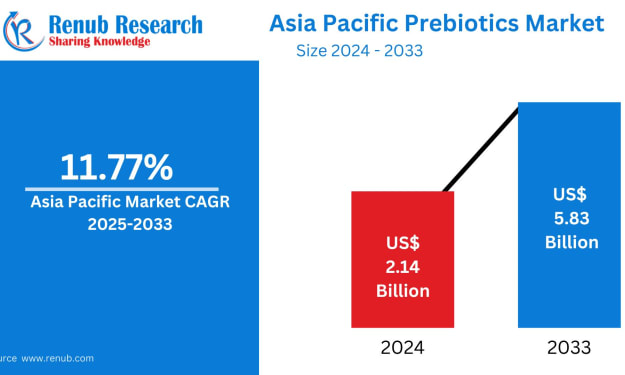
Asia Pacific Prebiotics Market: A Region Poised for Gut-Health Revolution The Asia Pacific prebiotics market is entering a transformative decade. With rising health awareness, aging populations, expanding functional food industries, and rapid advancements in biotechnology, prebiotics have become a central ingredient in modern nutrition strategies across the region. According to Renub Research, the Asia Pacific Prebiotics Market is expected to reach US$ 5.83 billion by 2033, growing from US$ 2.14 billion in 2024, at a robust CAGR of 11.77% from 2025 to 2033.
By Janine Root 6 days ago in 01
Autonomy Is The Real Privilege
Good morning, freedom-seekers! Today we’re gonna be looking at autonomy. A strange word, I know; one many would probably look at blankly and run away from on sight. We’re gonna figure out what it actually means, consider how it’s achieved, and decipher just how deeply most of us are tangled up in dependence without realising it.
By That ‘Freedom’ Guy2 days ago in Humans


Comments
There are no comments for this story
Be the first to respond and start the conversation.