
Uncovering The Tragedy
The Shipwreck That Surpasses The Titanic In Tragedy
They spoke of the Titanic as technologically advanced, unsinkable, and the subject of a movie after it sank. These were the main reasons why its disaster became world-famous.
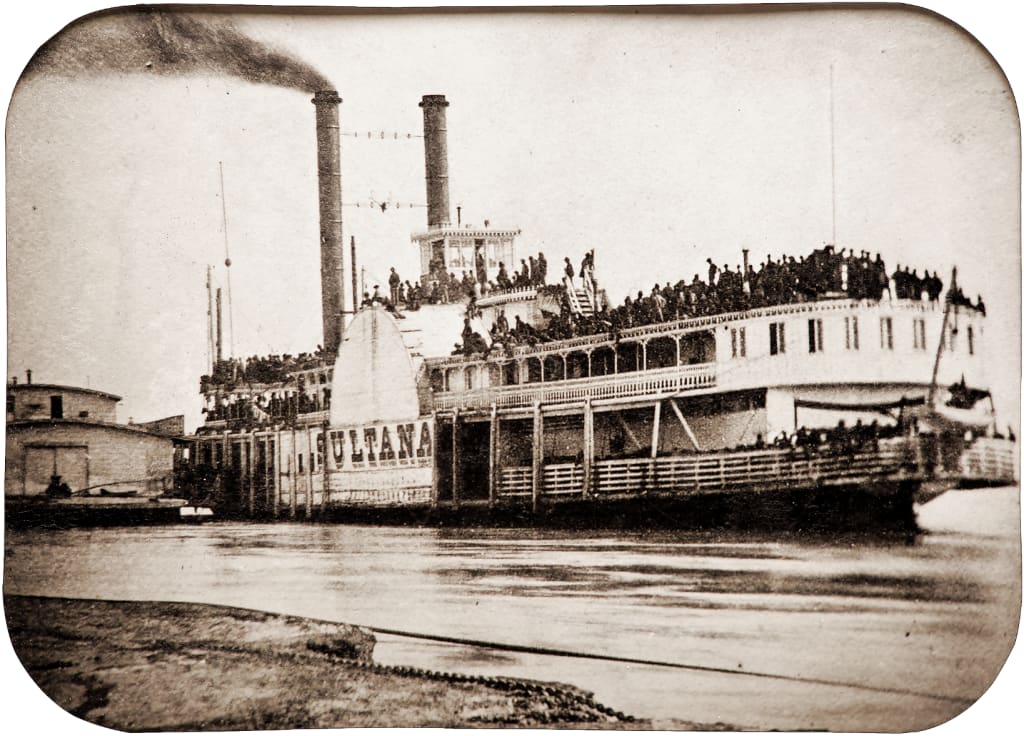
However, the Titanic was not the only large-scale shipwreck to occur, and there have been cases much worse than its tragedy. One of the worst disasters happened on April 27, 1865, when the Sultana Steamboat, a wooden vessel with three decks, was carrying passengers and cargo between St. Louis and New Orleans.
It was almost twice the size of a basketball court and could carry about 350 passengers. Unfortunately, on that fateful day, there were more than 2,000 people on board.
On April 23rd, while making a routine voyage from New Orleans, the Sultana broke down and docked in Vicksburg for repairs. The ship's captain, James Cass Mason, discovered an opportunity to earn a lot of money by transferring a large group of former prisoners to the north. Mason agreed to do it, but the boiler required much time to repair.
Fearing that his competitors would take the job, he decided to sail despite the malfunction. He patched up the holes in the boiler instead of making significant repairs and invited all the ex-prisoners on board.
The Sultana sailed for two days, but unfortunately, one of the biggest Mississippi floods in history began at this time. The river overflowed its shores, and the water level rose several feet, making the boiler work too hard.
On the evening of April 26th, the Sultana arrived in Memphis, Tennessee, and loaded more passengers and cargo, making it incredibly heavy. At midnight, the ship continued its journey and sailed to barges to load a shipment of coal.
However, at 2 am, the broken boiler, unable to withstand the load, exploded just seven miles north of Memphis. Unfortunately, few people survived that day as passengers tried to escape the fire and jumped into the cold river with a strong current.
The Sultana disaster is considered the most tragic shipwreck in the history of the United States. The exact number of those who didn't survive is still unknown, but according to various sources, this number was from 961 to 1,800 people.
In contrast to the Titanic tragedy, only a few people know about the Sultana disaster. However, there have been many catastrophes that have happened quite recently by historical standards. One of them occurred in 2002 when the ferry Le Joola, a Senegalese vessel, sank.
The ferry carried passengers who traded mango and palm oil along the coast of Dakar, and it made daily voyages without facing any severe problems. However, the ship's crew discovered a malfunction, and for almost a year, Le Joola was in a non-working condition, awaiting repairs.
Unfortunately, after poor maintenance, the ferry set off on its last voyage on September 26, 2002. Le Joola sailed between Southern Senegal and Dakar and headed toward Gambia, where a strong storm began at 11 pm.
The wind raised high waves, but this wasn't critical for the large passenger ship unless the number of people on board exceeded the established norm. Majula was supposed to carry about 500 passengers, but on that day, it had many more people on board.
The combination of two main factors, poor repairs, and a strong storm, caused severe problems for the ship. However, the main factor in the shipwreck was that Le Joola was only built for sailing in coastal waters, but that day it sailed far from the shore.
Big waves started rocking the boat, and at some point, it turned upside down. The ship's deck went underwater, and 64 people survived out of the more than 1,800 passengers and crew on board.
The sinking of the Le Joola was one of the worst maritime disasters in African history, and it raised questions about the safety and regulation of passenger ferries in the region. The incident prompted calls for improved safety measures and stricter enforcement of regulations.
It's important to remember that these tragedies are not isolated incidents, and they highlight the need for continued vigilance and improvement in maritime safety. While advances in technology and regulation have led to improved safety, there is still work to be done to prevent future disasters.
Ultimately, the lessons of these tragedies must be learned and applied to prevent similar incidents from occurring in the future. We must remain vigilant and work together to ensure the safety of all who travel by sea.
About the Creator
Keep reading
More stories from writers in 01 and other communities.
10 Companies Influencing Mobile App Development Costs in 2026
Google’s 2026 infrastructure pivot toward AI Retrieval has officially decoupled mobile development costs from traditional labor-hour models. We are witnessing a tectonic shift where Entity Accountability dictates market entry pricing rather than simple feature complexity.
By Del Rosarioa day ago in 01
How Memorial Benches Enhance the Visitor Experience in Cemeteries and Parks
Benches placed in cemeteries, parks, and other public spaces to memorialize someone who has passed on are quiet but powerful reminders that remembrance doesn’t have to be grand to be deeply meaningful. Unlike towering monuments or elaborate tombs, benches invite people to pause, sit, and spend time in a space.
By Andrew Lemieux4 days ago in 01
A Dart at Dusk
Seconds ago, the sullen sun set on the two of us… my exuberant furry companion and me. A fresh breeze embraces us, delivering welcome relief from the day’s oppressive heat. His typical stumbling and staggering along — apace with a sloth — has turned into trip-trapping, high-stepping, almost skipping along.
By Angie the Archivist 📚🪶3 days ago in Petlife



Comments
There are no comments for this story
Be the first to respond and start the conversation.