
How Memorial Benches Enhance the Visitor Experience in Cemeteries and Parks
The Role of Thoughtful Seating in Sacred and Public Spaces

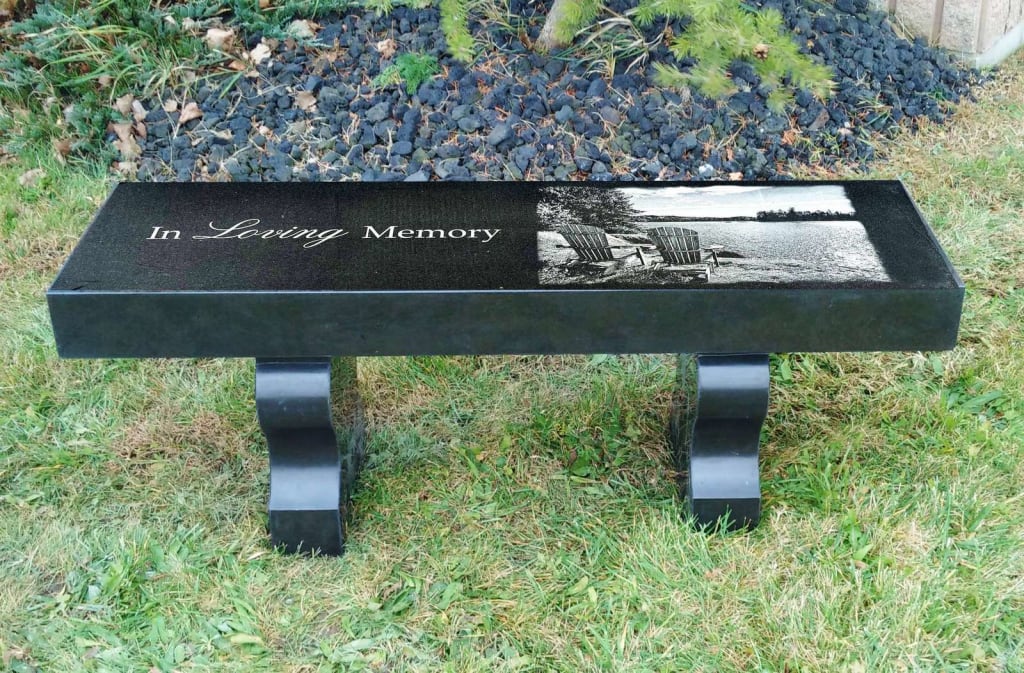
Benches placed in cemeteries, parks, and other public spaces to memorialize someone who has passed on are quiet but powerful reminders that remembrance doesn’t have to be grand to be deeply meaningful. Unlike towering monuments or elaborate tombs, benches invite people to pause, sit, and spend time in a space.
Whether placed beneath a tree, along a walking path, or overlooking a peaceful view, memorial benches enhance the visitor experience by combining remembrance with rest and reflection. These simple structures are an important way to honor loved ones while improving public spaces for everyone.
Pausing in the Space
One of the most meaningful roles of a memorial bench is the space it provides for pause and reflection. They offer park or cemetery visitors an invitation to stop and slow their pace. For someone visiting a grave, sitting down can make the experience feel less rushed and more personal.
In other public spaces, benches encourage people to linger, perhaps listening to birds, watching the light shift, or simply enjoying a quiet moment. Author Cheryl E. Preston writes about the importance of rest in achieving a healthy, long life, finding that her mood improves with the simple act of “bathing in the sunshine at a local park while seated on a bench.”
There’s a quiet irony in encountering that restorative pause on a memorial bench. In that moment, the visitor’s rest honors a life already lived while reinforcing the importance of living well.
Remembering in a More Human Way
Memorial benches feel approachable. They don’t demand attention like oversized monuments, but instead become a gentle part of the landscape. This is part of what makes them so effective.
Rather than standing as a monument to be observed, a bench is something to be used. People sit, talk, think, and rest. When a bench has been dedicated as a memorial, those everyday moments take on added meaning. Visitors quietly weave remembrance into the rhythms of daily life.
Some unique memorial benches incorporate thoughtful design elements that invite a direct sense of connection. Sculptural figures, artwork, and personalized inscriptions serve to humanize the space, subtly deepening the experience.
Blending Beauty With Meaning
Memorial benches also enrich visitor experience by contributing to the visual character of the spaces in which they’re situated. Designed with natural materials like wood and stone, they sit beautifully within gardens, walking paths, and scenic overlooks, blending with—yet never overpowering—the landscape.
When thoughtfully placed, a bench might:
- Frame a remarkable view
- Offer a cool place to rest under a shady tree
- Invite visitors into a secluded space for solitary reflection
Memorial benches enhance the visitor’s experience by drawing attention to both the beauty and the meaning of the space.
Enhancing Comfort and Accessibility
From a practical perspective, memorial benches also make cemeteries, parks, and public spaces more welcoming. Long walking paths, rolling terrain, and sprawling grounds can be tiring, especially for older visitors or for those with limited mobility.
Well-placed memorial benches can:
- Make longer visits more comfortable
- Encourage people to explore more of the space
- Allow visitors to rest without leaving the area
In this way, memorial benches support inclusivity while improving the overall visitor experience.
Giving Back Through Memorials
Although many memorial benches are purchased and placed by individuals, in some public spaces, they are used to fund maintenance and projects. In exchange for a donation, parks or community organizations may install memorial benches that both honor those who have passed and contribute to the upkeep of the site.
At the United States Navy Memorial visitor’s center, bench sponsorship supports the organization's mission to honor, recognize, celebrate, and inform. As an added layer of connection to the cause, a local veteran crafts each teak memorial.
In Napa, California, the city’s “ReLeaf Napa Fund” is supported in part by memorial bench sponsorship. Donations brought in by this fundraising effort go toward opening new trails and park spaces for the entire community to enjoy.
Programs like these allow families and friends to create a lasting tribute while directly supporting the space they and other visitors enjoy. In this way, memorial benches are more than just symbols of remembrance; they are meaningful ways to give back and enhance the public good.
Creating Meaningful Landmarks
In a review published on sciencedirect.com on the psychology of memorial sites, cultural psychologist Ignacio Brescó de Luna concluded, “Memorials play a pivotal role in shaping collective memory by transforming physical spaces into sites of shared remembrance, mourning, and meaning-making.” Memorial benches are one of the most accessible ways this transformation takes shape.
As infused as they are with meaning in and of themselves, many memorial benches have become landmarks of shared remembrance in their own right.
Central Park, New York
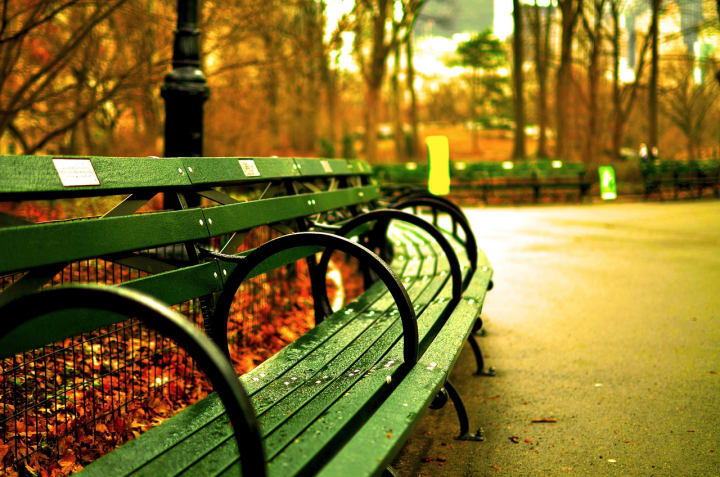
In the park’s Strawberry Fields, benches surround the famous “Imagine” mosaic dedicated to John Lennon. Many of these benches were donated as memorials, and visitors from all over the world sit there to reflect.
Warsaw, Poland
Here, a memorial bench features a sculpture of WWII Polish resistance member Jan Karski sitting on the left side of a large armchair. The empty space next to his figure invites visitors to sit beside him, quietly connecting the past and the present.
Seattle, Washington
Demonstrating that memorial benches need not be formally designed to be meaningful, several benches in Seattle’s Viretta Park have become de facto memorials to the late Kurt Cobain, who died in his nearby home. Fans leave messages and gifts to the rock icon, transforming simple benches into evolving sites of collective memory.
Hamden, Connecticut
When the town’s beloved 150-year-old white oak, known as the Door Tree for its unique, doorway-like opening, was felled by vandals in 2019, it was repurposed into two benches memorializing the historic tree. These benches now serve as beloved natural landmarks, as well as places for visitors to reflect on local history.
Leaving a Lasting Impact on Visitors With Memorial Benches
In a Psychology Today piece on how memory helps people cope with loss, Rodney Luster, Ph.D., notes that societal rituals, such as erecting memorials, “are a way of publicly honoring loved ones while allowing us to share their story with others.” At their core, that’s the lasting impact of memorial benches.
Whether marking the life of a loved one or becoming part of an often-visited public space, memorial benches enrich the visitor experience by connecting living people to the past in subtle, meaningful ways. They remind us that enduring remembrance doesn’t always have to stand tall to be deeply felt; sometimes, it simply invites us to sit.
About the Creator
Andrew Lemieux
Andrew is a creative writer, poet, and content strategist. He is passionate about literature, food, wine, travel, and sports. In his spare time he enjoys working on home projects and restoring the 1837 Greek Revival he and his wife own.
Keep reading
More stories from Andrew Lemieux and writers in 01 and other communities.
Wired or Wireless? How Your Smart Home Infrastructure Affects Resale Value and Long-Term Costs
Home automation services are a hot trend at the moment. But for homeowners, it’s not as simple as what brand to get or what level of automation to achieve. Homeowners also need to think a bit critically about whether to get hardwired networks or wireless protocols because this decision has a lasting impact.
By Andrew Lemieux22 days ago in 01
How Tax Outsourcing Companies Are Helping U.S. Businesses Stay Compliant and Profitable
Taxes are one of the most unavoidable parts of doing business in the United States. Whether you’re running a small startup or managing a growing company, tax compliance can quickly turn into a major headache. This is where Tax Outsourcing Companies have become a game-changer for businesses across the USA. By handing over complex tax responsibilities to professionals, companies are finding smarter ways to save time, reduce errors, and stay compliant with ever-changing tax laws.
By Outsourced Bookkeeping Solutions5 days ago in 01
Elon Musk called medical school "pointless," but Jeff Bezos wants Gen Z to finish college before starting their own companies — as AI threatens entry-level jobs
The job market is becoming volatile by the minute as generative AI becomes more prevalent and gains broad adoption across organizations worldwide. Last year, Salesforce CEO Marc Benioff revealed that the company is seriously debating hiring software engineers, citing "incredible productivity gains" from agentic AIs.
By Dena Falken Esq2 days ago in 01




Comments
There are no comments for this story
Be the first to respond and start the conversation.