
The Role of AI in Modern Logistics Software Development
How Artificial Intelligence is Revolutionizing Logistics Software with Smarter Routes, Predictive Insights, and Automated Supply Chain Solutions

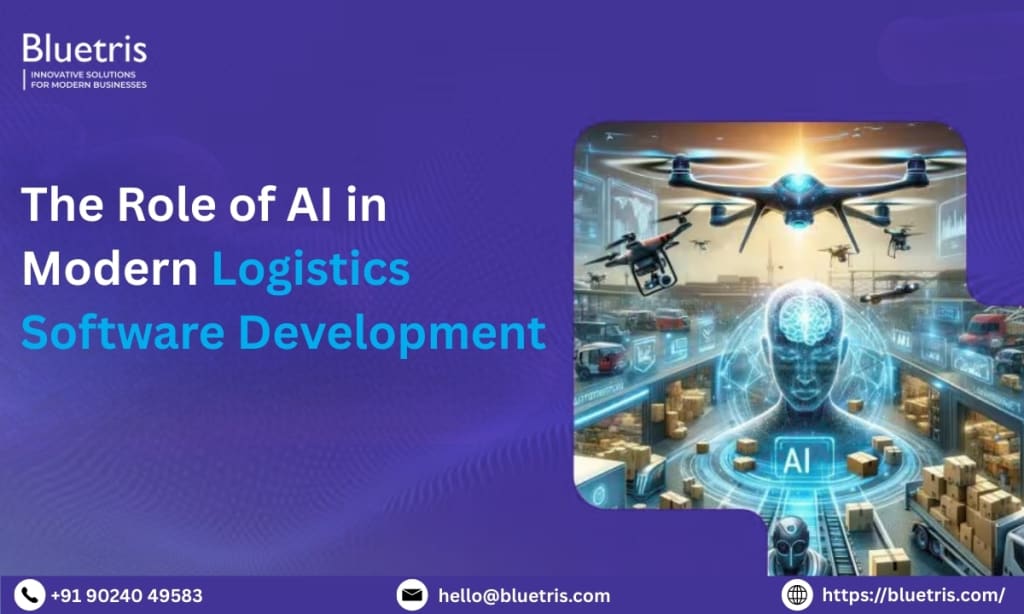
The transport and logistics sector is undergoing a massive change and Artificial Intelligence (AI) is playing a central role in this transformation. With more intricate global supply chains, modern logistics software development helps businesses simplify processes, lower costs, and distribute more efficiently. Artificial intelligence plays a critical part by introducing automation, predictive intelligence and real-time decision making in logistics operations that had been substantially dependent on manual intervention until now.
AI in Logistics: A Growing Necessity
According to Allied Market Research Report The logistics market size was valued at $10.2 trillion in 2023, and is estimated to reach $20.12 trillion by 2033, growing at a CAGR of 7.3% from 2024 to 2033. With such scale, even small inefficiencies can result in billions of dollars in losses. High customer expectations, global supply chain disruptions and cost pressures have companies looking for smarter approaches.
This is where AI is proving essential. According to McKinsey, AI-powered forecasting can cut supply chain errors by up to 50% and reduce lost sales by 65%. AI-powered logistics software is revolutionizing the industry, from route optimization and predictive maintenance to warehouse automation. It’s no surprise that Gartner expects by 2026, 75% of large enterprises to have applied AI around their logistics business processes. For companies that had previously manually planned logistics, AI is no longer optional; it’s foundational to a resilient, agile supply chain.
Smarter Transportation with AI
Transportation is one of the biggest cost drivers in logistics, and AI is tackling it head-on.
Route Optimization: AI examines traffic, weather and time from delivery to dynamically generate optimized routes. UPS’s ORION system, for instance, saves millions of miles and gallons of fuel each year and reduces delivery times by as much as 20 percent while reducing emissions.
Predictive Maintenance: AI analyzes sensor data to forecast when car parts are likely to fail, enabling preemptive repairs. This prevents unnecessary down time, and expensive standstills.
Load Optimization: Artificial intelligence determines how to optimally load trucks to maximize capacity usage. You are no longer wasting time, fuel (a valuable commodity I’m learning here) and resources.
AI in Warehousing Operations
Warehouses are at the heart of logistics, and AI is transforming how they function.
Inventory Management: Demand forecasting with AI allows businesses to balance inventory levels, reducing holding costs by 10–25% and order accuracy by up to 30%.
Automation and Robotics: In contemporary depots, it’s robots, AI-driven, that plucks, organizes and shifts goods at rapid speed with high level of accuracy. Amazon, for instance, employs more than 520,000 robots in conjunction with human workers to speed up fulfillment and reduce costs.
Slotting Optimization: AI gives skillful advice on the product placing strategy towards the shelf size and the order demand, less walking time and faster order picking.
Demand Forecasting and Supply Chain Visibility
AI’s ability to analyze massive amounts of data is a game-changer for supply chains.
Advanced Forecasting: AI unlike traditional models considers not only historical demand but also external forces such as market conditions, news, and even social signals that can be gleaned from various social media. That adds up to more-accurate forecasts that can help businesses keep their supply chains in sync with demand.
Real-time visibility: Using IoT sensor information, GPS, and enterprise system data, AI enables you to track logistics and inventory live in the field. The lead times for them are 25 % shorter with little disruption, according to users of these systems.
Risk Mitigation: AI predicts risks, such as supplier delays or extreme weather, and recommends preventive action. As Statista reports, 93% of supply chain leaders have cited end-to-end visibility as one of their most pressing needs, and AI-powered systems are now enabling companies to deliver on this.
Enhancing Customer Experience
In logistics, customer satisfaction often depends on the final mile of delivery. AI makes this critical stage more efficient and personalized.
Last-Mile Optimization: AI optimizes optimal delivery paths and gets goods delivered faster and safer by taking into account traffic, delivery densities, and customer availability. This results in higher precision of the delivery times, and increased reliability.
Personalized Delivery Options: AI can recommend customised delivery options or flexible re-scheduling by studying customer behavior. This leads not only to higher satisfaction but also to a stronger customer loyalty.
AI Chatbots: AI-enabled self-service chatbots answer the most frequently asked order status & return questions in real time. At a minimum, studies show that these bots can tackle 70% of typical customer needs, freeing up human agents to deal with the high-value stuff.
Challenges in AI Adoption
As good as this is, the use of AI in logistics is not without its challenges. Of course, data privacy and security are still paramount. AI integration with aging systems could be expensive and complicated, leading to a staged introduction. Firms also need to invest in training employees so they can work well with AI tools and so tech becomes a complement rather than a substitute for human expertise.
How Bluetris Helps in AI-Powered Logistics
Bluetris Technologies is a company building custom AI driven software solutions for logistics companies. Intelligent route planning and predictive maintenance, to advanced warehouse automation and real-time supply chain visibility, Bluetris develops solutions from the ground up - scalable, secure and with flawless integration into existing systems. Bluetris delivers an intelligent logistics and transportation platform, making companies more efficient, less costly, and improving customer service so that the smart decisions of the future are self-evident.
Looking Ahead: The Future of AI in Logistics
As AI advances, it will become increasingly powerful in logistics. The next generation of logistics software will probably be based a lot on machine learning, computer vision and natural language processing which will make logistics decisions smarter. Early adopter businesses implementing and integrating AI in their logistics software development, are going to achieve the competitive advantage not only in cost reduction but in maintaining the customers’ satisfaction and the business resilience.
Conclusion
AI in logistics software development is changing the way supply chains are handled, making them faster, smarter, and more customer-centric. The Companies that invest in AI today will be better prepared for tomorrow’s challenges. Bluetris Technologies draws on their roots in AI and automation to help logistics companies get the most out of their operations and to line up intelligent, future-proof supply chains.
For more info contact us at: +91 9024049583 / +1 (413)367-7769
Visit us at: https://bluetris.com/logistics-software-development/
About the Creator
Bluetris Technologies
Writing about technology, startups, and digital growth. I share insights on SEO, app development, and the future of AI to help businesses grow smarter.
Keep reading
More stories from writers in 01 and other communities.
Understanding Winter Clothing and Its Role in Women’s Fashion
Winter clothing has long served a practical purpose: protecting the body from cold temperatures, wind, and moisture. Over time, however, it has evolved into a reflection of culture, technology, and personal style. For women in particular, winter wardrobes balance insulation, comfort, and visual appeal, adapting to diverse climates and lifestyles.
By charliesamuel7 days ago in 01




Comments
There are no comments for this story
Be the first to respond and start the conversation.