
The Rise of Intelligent Machines: Understanding the Building Blocks of Machine Learning
A Deep Dive into Supervised, Unsupervised, and Reinforcement Learning and Their Role in Shaping Modern AI

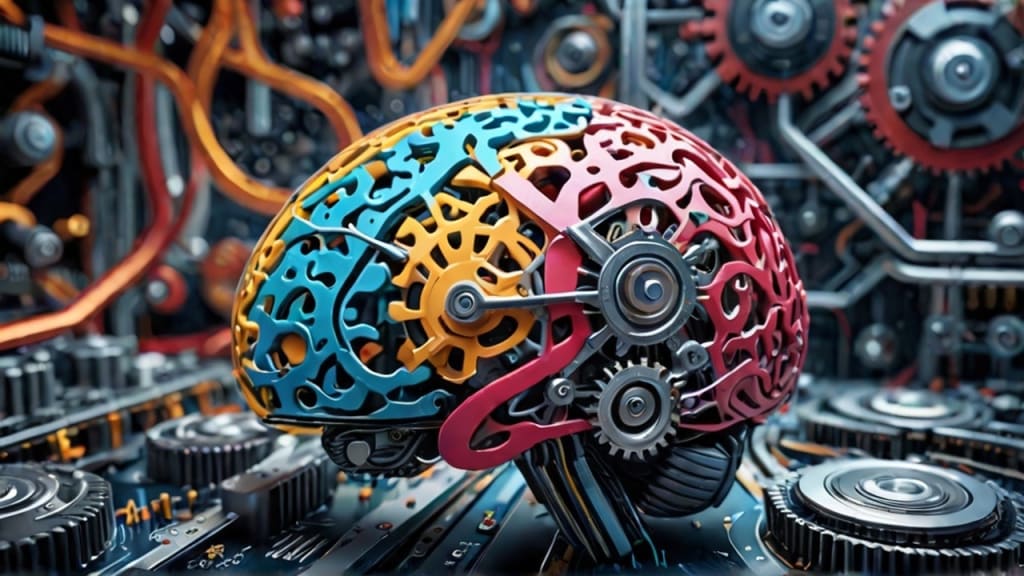
As we stand on the brink of an AI-driven future, understanding the fundamentals of machine learning is essential. Machine learning, a subset of artificial intelligence, equips machines with the ability to learn and adapt without being explicitly programmed. But what exactly does this mean, and how do machines actually “learn”? This story explores the three primary types of machine learning—supervised, unsupervised, and reinforcement learning—offering insights into how each approach powers the intelligent systems we interact with daily.
The Basics of Machine Learning
At its core, machine learning revolves around algorithms designed to identify patterns in data and use those patterns to make predictions or decisions. Imagine a child learning to recognize different animals. By showing the child labeled pictures of animals, like cats and dogs, they start to distinguish between the two based on features like size, shape, and color. Machine learning operates similarly, with each type of learning method tailored to a specific way of teaching machines.
Supervised Learning: Learning with a Guide
Supervised learning is the most straightforward approach. In this method, machines are trained using labeled datasets—examples with predefined outputs. For instance, if we want a machine to recognize images of cats, we would provide it with a dataset of labeled images, each marked as either “cat” or “not a cat.” The machine learns from these examples, adjusting its understanding with each new piece of labeled data.
Supervised learning is particularly useful for classification tasks, like identifying objects in images, and regression tasks, like predicting house prices based on previous sales. Its applications are widespread, powering technologies we use daily, from speech recognition systems in virtual assistants to predictive analytics in finance.
Unsupervised Learning: Finding Hidden Patterns
Unlike supervised learning, unsupervised learning deals with unlabeled data. The goal is not to predict an outcome but to uncover hidden patterns or structures within the data. Imagine being given a box of mixed buttons of different colors and sizes with no labels. Unsupervised learning would involve grouping these buttons based on similarities, like color or size, without knowing the exact “type” of each button.
This approach is commonly used in clustering, where data points are grouped based on shared characteristics, and in association tasks, where relationships between variables are identified. For example, e-commerce platforms use unsupervised learning to recommend products based on buying patterns, while medical researchers apply it to discover patterns in patient data, leading to new insights in treatment strategies.
Reinforcement Learning: Learning from Experience
Reinforcement learning takes a different approach by allowing machines to learn through trial and error. In this method, an AI agent interacts with an environment and makes decisions to maximize rewards or minimize penalties. Think of a robot learning to navigate a maze. At each turn, it receives feedback based on whether it chose the correct path or encountered a dead end. Over time, the robot learns to find the optimal path by reinforcing the positive actions that led to rewards.
Reinforcement learning has gained popularity in areas like gaming, robotics, and autonomous systems. It’s the driving force behind AI systems that can outperform humans in complex games, as well as the intelligence in self-driving cars that allows them to make real-time decisions based on their environment.
Comparing the Three Learning Types
Each type of machine learning has unique advantages and applications, and understanding their differences is key to grasping the broader landscape of AI. Supervised learning relies on guidance with labeled data, making it ideal for tasks requiring precise predictions. Unsupervised learning reveals patterns in unlabeled data, helping discover hidden relationships within large datasets. Reinforcement learning enables agents to learn through interaction, making it suitable for decision-making in dynamic environments.
Together, these methods form the building blocks of AI systems, each contributing to the development of smarter and more adaptable machines. From virtual assistants that understand human speech to robots that learn by doing, machine learning is at the heart of today’s technological revolution.
The Future of Machine Learning and Its Impact on Society
As machine learning continues to evolve, its impact on society becomes more profound. We’re already seeing its applications in fields as diverse as healthcare, finance, and transportation. In healthcare, machine learning is enabling personalized treatment plans tailored to individual patients, improving outcomes and reducing costs. In finance, it helps detect fraudulent transactions and manage investment portfolios with greater accuracy. In transportation, machine learning powers autonomous vehicles, making travel safer and more efficient.
The potential applications of machine learning are vast, touching nearly every aspect of modern life. By understanding the foundational types of machine learning, we can appreciate the advancements being made and the possibilities that lie ahead. This knowledge not only demystifies the workings of intelligent machines but also allows us to participate more actively in the conversations about AI’s role in shaping our future.
Machine learning is not just about programming machines to perform tasks; it’s about creating systems that can learn, adapt, and improve. As we continue to build upon these foundations, we are unlocking new ways to solve some of humanity’s most pressing challenges. The journey of machine learning is far from over, and its potential is limited only by our imagination.
About the Creator
The AI Prosperity Hub
Exploring the future of AI, technology, and innovation. The AI Prosperity Hub breaks down the latest in AI, robotics, and tech trends to keep you informed and inspired. Join us for insights that shape tomorrow’s world!
Keep reading
More stories from The AI Prosperity Hub and writers in 01 and other communities.
Revolutionizing AI Integration
In the age of rapid technological advancement, artificial intelligence (AI) is at the forefront of revolutionizing how industries operate. From healthcare to finance, AI has introduced powerful tools to streamline processes, improve decision-making, and enhance customer experiences. However, as businesses adopt more AI technologies, the challenge of integrating these diverse systems grows. Enter Mercury X1, a pioneering AI integration platform that promises to overcome these hurdles and transform the way AI is merged across industries.
By The AI Prosperity Hubabout a year ago in 01
Outlook Account Hack: Complete Guide to Crack a Password
The Reality of Email Account Vulnerabilities Microsoft Outlook accounts represent more than just email inboxes—they serve as gateways to personal data, professional communications, and often as single sign-on keys to numerous other services. With over 400 million active users worldwide, Outlook has become a prime target for cybercriminals employing increasingly sophisticated methods. This comprehensive guide examines the legitimate security landscape, revealing how attackers exploit vulnerabilities while providing actionable strategies to fortify your digital identity. Understanding these threats isn't about enabling malicious behavior—it's about empowering users and administrators with the knowledge needed to build impenetrable defenses in an era where email security is paramount to both personal privacy and organizational integrity.
By Alexander Hoffmanna day ago in 01
AI Agents in Action: Why Your Bot Still Sucks in 2026
I woke up this morning to my agent arguing with a flight carrier. It was glorious. No, seriously. In early 2024, we were all just playing with chatbots that hallucinated legal advice. Now, seeing ai agents in action is like watching a digital concierge with a chip on its shoulder.
By Sherry Walker4 days ago in 01



Comments
There are no comments for this story
Be the first to respond and start the conversation.