
The Rise of Immersive Experiences
When Reality Isn’t Enough Anymore

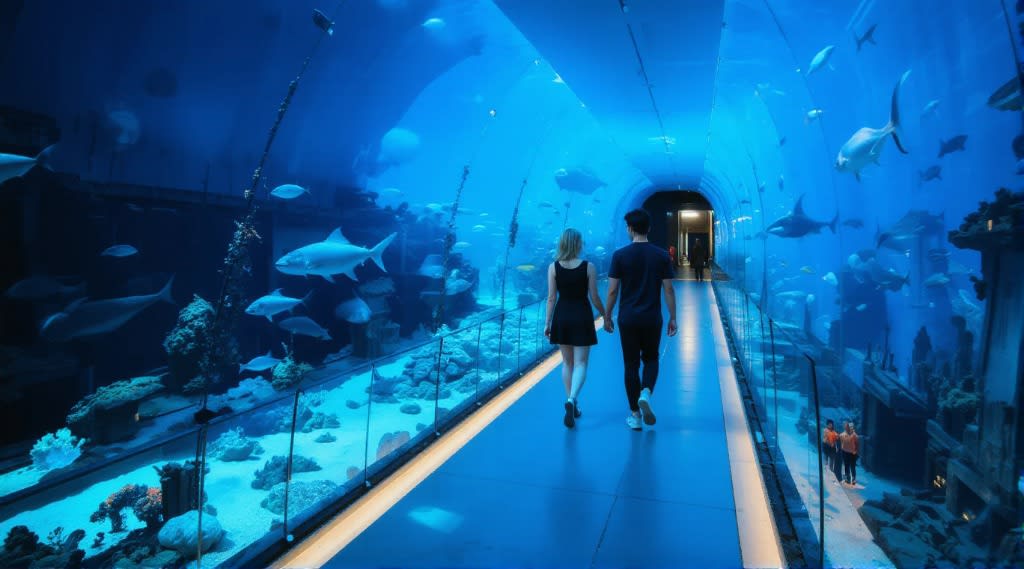
In the age of endless scrolling, where attention spans are shorter than ever, people are no longer satisfied with merely seeing or hearing — they want to feel. That’s where the new wave of immersive experiences comes in, and it’s currently one of the fastest-rising trends across Google searches in 2025.
From virtual reality (VR) headsets and augmented reality (AR) art galleries to multi-sensory concerts and digital museums, people are chasing moments that feel alive, interactive, and unforgettable. Search interest in “immersive experiences” has surged by nearly 950% in the last few months; and there’s a very clear reason why.
Why Everyone Suddenly Wants to “Immerse”
For decades, entertainment has been about observation. We went to the cinema to watch, to concerts to listen, and to museums to look. But now, we want to be inside the story. We crave experiences that respond to us — that change when we move, speak, or touch. Immersive experiences are not just about technology; they’re about emotion. They combine art, science, and human curiosity. When you walk through a digital forest that reacts to your footsteps or attend a concert where holograms dance around you, something shifts inside — your brain believes it’s part of the story. This shift isn’t limited to high-tech countries or luxury audiences. The idea is spreading fast; through mobile AR apps, affordable VR glasses, and even educational platforms. What once seemed futuristic now fits in a backpack.
A Blend of Art, Tech, and Human Senses
Immersive experiences blur the lines between physical and digital worlds. Imagine walking into a museum where Van Gogh’s Starry Night isn’t just hanging on a wall; it swirls around you in motion, lighting up the floor beneath your feet.
This isn’t a fantasy. It’s already happening in digital exhibitions across Paris, Tokyo, and New York. The Atelier des Lumières in France, for example, transforms classical art into living environments that move and breathe. Visitors don’t just look at art; they walk through it. That’s the power of immersion. It’s not about screens anymore; it’s about surrounding your mind with a story. And the best part? It’s spreading into every industry.
Education Meets Immersion
In classrooms, VR and AR are becoming revolutionary tools. Imagine a student in Afghanistan, India, or Kenya exploring the pyramids of Egypt without leaving their chair. Or a biology class where students can “step inside” a human cell to see how it functions. Immersive learning has been shown to dramatically improve memory and engagement. When people experience something instead of just hearing about it, they retain information better. It’s why simulation training works so well in aviation, medicine, and engineering. Now, imagine using this power for young learners worldwide; where an entire generation grows up not just reading about history or science, but living it through immersive education.
Business, Travel, and Beyond
Immersive technology is transforming far more than just art and education. The business world has jumped in with both feet. Companies now host virtual conferences where avatars meet in digital auditoriums. Retail brands are creating 3D shopping spaces that let customers walk around virtual stores from home.
Tourism has changed too. Before booking a hotel or visiting a destination, you can now experience it in virtual form. Want to see what it feels like to stand on the cliffs of Santorini? A 360-degree immersive preview will take you there; instantly. For many, these experiences are not just about fun; they’re about accessibility. People who can’t travel due to cost, health, or distance can still explore the world through immersive reality. That’s more than innovation; that’s empathy through technology.
The Emotional Power of Immersion
Immersive experiences also connect deeply with emotion. They trigger memory, excitement, and empathy in ways that flat screens never could. A study by PwC found that people trained through immersive simulations learned four times faster than in traditional classrooms. Their confidence increased by 275%. This shows something powerful: when your mind believes it’s inside the experience, it learns; and feels; differently.
Artists, filmmakers, and social activists are also using immersive storytelling to raise awareness about global issues like climate change, poverty, and mental health. Instead of showing statistics, they let audiences feel the story — standing in a flooded street, walking through refugee camps, or experiencing the anxiety of pollution firsthand through VR. That emotional connection is the heart of the immersive revolution.
Why 2025 Is the Year of Immersive Living
The recent explosion of interest isn’t random. It’s the result of several global factors aligning:
Technological affordability: VR headsets and AR devices are cheaper than ever.
Digital fatigue: People are tired of passive screen time — they want something real, engaging, and alive.
Experience-driven lifestyles: Younger generations prefer experiences over possessions.
Remote engagement: Post-pandemic, the demand for “presence” without travel keeps growing. Put these together, and you get a society that wants to live more vividly; even in digital form.
The Future: From Escaping Reality to Enhancing It
Some critics argue that immersive technology may push us further away from the real world. But others see it as the opposite; a tool to better understand and connect with our surroundings.
The future of immersion isn’t about escaping reality. It’s about enhancing it. The best immersive experiences don’t pull us out of life — they make us see it more clearly. In education, they bring lessons to life. In art, they make us feel beauty. In business, they build understanding. And in personal life, they remind us that technology, when used right, can make us more human, not less.
Final Thoughts
“Immersive experiences” aren’t just a passing trend; they’re a new language of communication; one where light, sound, and interaction tell stories better than words ever could.
Whether it’s a student exploring ancient civilizations in VR, a shopper walking through a 3D store, or an artist turning emotion into living color — the future is not just about watching anymore. It’s about stepping in.
About the Creator
Keramatullah Wardak
I write practical, science-backed content on health, productivity, and self-improvement. Passionate about helping you eat smarter, think clearer, and live better—one article at a time.
Keep reading
More stories from Keramatullah Wardak and writers in 01 and other communities.
Eleventh Dimension
Have you ever wondered whether reality ends where your senses stop working? We are born into a world that feels solid, measurable, and familiar. Length, width, and height define everything we touch. Time quietly moves forward and we accept it as the fourth dimension without much protest. But what if this comfortable picture is incomplete? What if the universe is far more layered than our minds are trained to accept?
By Keramatullah Wardak2 months ago in 01
Crypto Wallet App Development - 2026 Security Guide
The landscape of Crypto Wallet App Development has shifted. It moved from simple private key management to complex ecosystems. These ecosystems are multi-layered security environments. In 2026, the baseline for "secure" has been redefined. This change follows the growth of Account Abstraction (ERC-4337). It also follows the emergence of Post-Quantum Cryptography (PQC). PQC protects data against future quantum computer attacks. This guide provides a strategic framework for developers. It helps stakeholders navigate technical and regulatory requirements. Modern digital asset storage demands this high level of care.
By Del Rosario5 days ago in 01
Cutting Software Maintenance Costs by 30% in Long-Term Medical Device Lifecycles
In the fast-evolving healthcare technology landscape, medical device makers are under increasing pressure to deliver innovative, safe, and compliant solutions while keeping costs manageable over a product’s lifecycle. One of the biggest cost centers in long-term medical device operations is software maintenance—especially as devices become smarter, more connected, and driven by digital controls.
By Steve Waugh5 days ago in 01



Comments
There are no comments for this story
Be the first to respond and start the conversation.