
The Pleasure of Clapping Back
A Deep Dive into Wit, Humor, and Resilience

# The Pleasure of Clapping Back: A Deep Dive into Wit, Humor, and Resilience
In the age of social media and instant communication, the art of the clapback has emerged as a powerful tool for self-expression and defense. Whether in a face-to-face confrontation or a tweet gone viral, the pleasure of a well-timed, witty retort can bring satisfaction not only to the individual delivering it but also to those who witness it. This article explores the psychological, cultural, and social dimensions of clapping back, examining why it resonates so deeply in today’s society.
## The Origins of the Clapback
The term "clapback" is believed to have originated in the African American vernacular, with its roots in the expressive language of Black culture. While the exact etymology is unclear, the essence of the clapback is rooted in quick, clever comebacks that subvert negativity and reclaim power. Historically, marginalized communities have employed humor and wit as coping mechanisms, using them to address oppression and insult. In essence, clapbacks serve as a form of resistance, allowing individuals to regain control over narratives that seek to diminish their worth.
## The Psychology Behind the Clapback
At its core, the pleasure derived from clapping back is tied to psychological gratification. When faced with criticism, insults, or outright attacks, the immediate reaction is often one of defense. A well-crafted response can provide a sense of empowerment, transforming a moment of vulnerability into an opportunity for assertiveness. Here are a few psychological reasons why clapbacks can be so satisfying:
### 1. **Validation of Identity**
When individuals respond to criticism or ridicule, they often feel validated in their identity. A clever clapback can affirm one's self-worth, pushing back against the negative perceptions that others may hold. This validation reinforces the idea that one’s voice matters and that standing up for oneself is both necessary and commendable.
### 2. **Catharsis and Emotional Release**
Delivering a clapback can act as a form of catharsis. The pent-up frustration of dealing with negativity can find an outlet in a sharp response, allowing individuals to express their feelings in a controlled manner. This release can lead to feelings of relief and satisfaction, turning a potentially harmful interaction into a moment of personal triumph.
### 3. **Social Bonding and Group Dynamics**
Clapbacks often resonate within social circles, creating a sense of camaraderie among those who appreciate and support the retort. When one person delivers a clever response, it can trigger laughter and applause from others, fostering a sense of community. In a world that can often feel isolating, these shared moments of humor can strengthen social bonds and provide a sense of belonging.
## The Cultural Context of Clapbacks
The rise of social media has transformed the landscape of communication, making clapbacks more accessible and visible than ever before. Platforms like Twitter, Instagram, and TikTok have given individuals the ability to share their responses with a wide audience, amplifying the impact of their words.
### 1. **The Viral Nature of Clapbacks**
In the digital age, a well-executed clapback can go viral, reaching thousands or even millions of people in a matter of hours. This visibility not only elevates the individual’s voice but also establishes a cultural moment that others can rally around. Memes, gifs, and sound bites from popular clapbacks often circulate, further embedding these responses into the cultural zeitgeist. The viral aspect can enhance the pleasure associated with clapping back, as individuals bask in the recognition and validation from a broader audience.
### 2. **Influencers and Celebrity Culture**
The presence of influencers and celebrities has also contributed to the popularity of clapbacks. High-profile figures often engage in public feuds or witty exchanges, drawing attention and sparking conversations about societal issues. When celebrities clap back at their critics, they not only defend their own image but also engage their followers in a dialogue about larger cultural themes such as body image, race, and social justice. This dynamic can empower fans to embrace their own clapback moments, as they see public figures do the same.
## The Ethical Implications of Clapbacks
While the pleasure of clapping back can be intoxicating, it is important to consider the ethical implications. Not all clapbacks are created equal; some can perpetuate harm or contribute to toxic dynamics. Here are a few considerations:
### 1. **Intent vs. Impact**
The intention behind a clapback may be to defend oneself, but the impact can sometimes be harmful. Responses that escalate conflict or belittle others can create a cycle of negativity rather than resolution. It’s essential to balance the desire for a witty comeback with the potential consequences of those words.
### 2. **Empowerment vs. Bullying**
Clapbacks can empower individuals, but they can also border on bullying if not executed with care. The fine line between standing up for oneself and attacking others must be navigated thoughtfully. Encouraging a culture of support and understanding rather than one of hostility can help ensure that clapbacks remain a tool for resilience rather than a weapon for harm.
## The Future of Clapbacks
As society continues to evolve, so too will the nature of clapbacks. The increasing awareness of social issues and the power dynamics at play in communication will likely shape how individuals engage in these exchanges. Here are some potential trends to watch:
### 1. **A Shift Towards Constructive Engagement**
While the pleasure of a witty clapback will always hold appeal, there may be a growing movement towards more constructive forms of engagement. Individuals may seek to educate rather than insult, using their responses as opportunities for dialogue and understanding.
### 2. **Clapbacks as a Form of Activism**
As social media continues to be a platform for activism, clapbacks may evolve into a tool for social change. Individuals might use their responses to challenge harmful narratives, raise awareness about issues, and advocate for marginalized communities. This shift could transform the act of clapping back from a personal defense mechanism into a collective force for good.
## Conclusion
The pleasure of clapping back is a multifaceted phenomenon rooted in history, psychology, and culture. While it offers a means of empowerment and validation, it also requires careful consideration of its impact. As society continues to navigate the complexities of communication in the digital age, the clapback will undoubtedly remain a relevant and powerful tool for self-expression. Whether as a form of humor, resistance, or activism, the art of the clapback reflects the human desire to be heard, valued, and understood.
About the Creator
The I in the Internet
# The I in the Internet: Exploring Identity in the Digital Age In a world increasingly defined by connectivity and digital interaction, the concept of identity has undergone a profound transformation. The phrase "The I in the Internet" invites us to examine how individuals express, shape, and experience their identities online. This exploration delves into the multifaceted nature of digital identity, the interplay between online personas and real-life selves, and the implications for personal and societal dynamics.
By Someoneabout a year ago in Unbalanced
A Historic Declaration
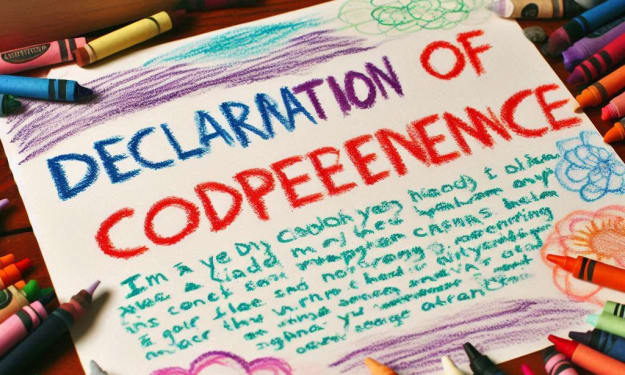
We the People of the Husbands of the United States of America, in Order to form a more perfect Union, and I mean you...with me...establish Justice, insure domestic Tranquility, provide for the common defence, promote the general Welfare, and secure the Blessings of Liberty to ourselves, after Puberty, do ordain and establish this Declaration of Co-Dependence.
By Gerard DiLeo5 days ago in Humans


Comments
There are no comments for this story
Be the first to respond and start the conversation.