
Native Mobile Development: Pros and Cons
Should you choose the native approach for your project? Explore all the pros and cons in this comprehensive guide.


Choosing between native and cross-platform strategies for your upcoming mobile application is a high-stakes decision. The stakes are incredibly high: investors are pushing for rapid deployment, users expect flawless responsiveness, and your engineering team is wary of any choice that might accumulate technical baggage before the day even begins.
Rushing into this decision without deep analysis can lead to an initially promising product that eventually becomes a financial and temporal burden. To sidestep this pitfall, it is essential to objectively evaluate the true expenses and tangible benefits of native mobile development in the current landscape.
Below, we will examine the critical advantages and disadvantages that truly impact the creation of apps intended for daily use.
Defining Native Mobile Development and Its Significance
Applications Tailored to Specific Ecosystems (iOS/Android)
In essence, a native app is constructed exclusively for a single operating system, leveraging the official languages, tools, and frameworks endorsed by Apple or Google. For the Apple ecosystem, this typically involves using Swift (or occasionally Objective-C) within Xcode. On the Android side, developers generally utilize Kotlin (or Java) inside Android Studio.
Because these applications speak the operating system's inherent language, they enjoy unrestricted access to hardware capabilities—such as the camera, GPS, push notification services, and various sensors—without needing workarounds or intermediary layers.
Furthermore, these apps inherently adhere to the design standards of their respective platforms, ensuring a familiar and intuitive experience for the user. iOS users anticipate specific gestures, animations, and interactions, just as Android users do. Native applications seamlessly align with these expectations.
When contrasting native solutions with hybrid alternatives like React Native, Flutter, or legacy Cordova architectures, the difference lies in the codebase. Hybrid approaches rely on a single codebase to function across multiple platforms, often encased in a web-view wrapper. Similarly, Progressive Web Apps (PWAs) operate within browsers while attempting to simulate native functionality. While these methods can reduce initial costs and development time, they often sacrifice performance, immediate access to the latest OS features, and that refined "feel" that users only miss when it is absent. We will explore these alternative methodologies in more detail shortly.
Consequently, if you need to implement a cutting-edge ARKit feature on iOS or ensure robust background location tracking on Android, you may find yourself forced to write custom native modules regardless. In worse scenarios, you might have to inform users, "Apologies, this feature is exclusive to iPhone," which is far from ideal.
Opting for native development empowers you to prioritize maximum control, uniformity, and compatibility where it matters most. For many products—particularly those where velocity, dependability, or profound hardware integration are paramount—native remains the foundational standard worthy of serious consideration.
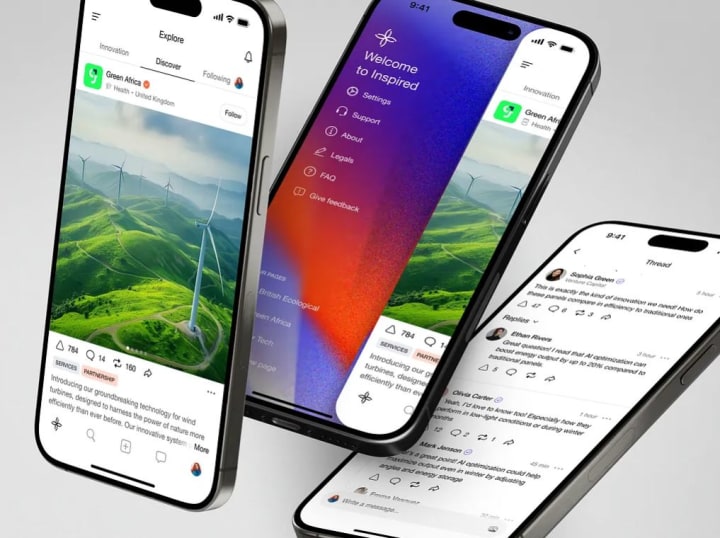
The Major Advantages of Native App Development
Unmatched Performance and Velocity
Users have zero patience for lag. If an application hesitates while loading a screen or stutters during a gesture, users will abandon it immediately.
Because native apps execute directly on the device's operating system without any intermediary translation layers, they offer superior speed. Animations appear fluid, transitions feel instantaneous, and resource-intensive tasks—such as image manipulation, real-time video processing, or complex graphics—are handled with greater efficiency since the software communicates directly with the hardware.
For applications that push hardware boundaries, such as high-end gaming, augmented reality (AR), or dynamic e-commerce feeds, native development provides the necessary performance headroom that often becomes critical only when other approaches hit their limits.
Direct Access to Device Capabilities and APIs
Apple and Google frequently introduce new hardware and software functionalities, including Face ID, LiDAR scanning, background audio handling, or advanced privacy-focused location services on Android.
Native applications receive priority access to these innovations. Developers can integrate them immediately using official Software Development Kits (SDKs), eliminating the wait for third-party plugins to catch up—or discovering that no plugin exists at all. Hybrid frameworks often lag behind in this regard.
For instance, a Bluetooth Low Energy feature might function perfectly on iOS but fail silently on Android within a cross-platform environment, often due to a wrapper library that hasn't been updated for recent security protocols. With native development, you work directly with the source code, removing black boxes and delays. If the operating system supports a feature, you can implement it immediately.
Superior User Experience (UX)
Native applications inherently adhere to platform-specific design conventions: iOS utilizes swipe-to-go-back gestures and bottom sheets, while Android relies on the system back button and Material Design principles. By respecting these established patterns, developers ensure that users can navigate intuitively without needing to learn new behaviors. Everything feels natural.
This is often where hybrid applications fall short. They frequently display a uniform interface across both platforms, resulting in awkward navigation flows and buttons that lack expected animations. While subtle, these discrepancies create friction. In an era where user retention depends heavily on first impressions, this friction can be costly. During usability testing, it is common to see users repeatedly tapping a non-native button, confused by its unresponsive behavior. Native development eliminates this cognitive burden entirely.
Simplified Maintenance and Updates
Counterintuitively, maintaining native apps can be more straightforward. Although you are managing two distinct codebases, each remains clean, well-documented, and aligned with its specific platform's evolution. When Apple releases a new iOS version, you simply update your Swift code, test, and deploy. There is no struggle with a framework that is still adapting to new permission models.
Furthermore, debugging is more direct. Crash logs point precisely to your code rather than being obscured by layers of abstraction. Over time, this saves significant hours otherwise spent guessing whether an issue stems from your logic or the framework itself. Additionally, both major mobile platforms actively optimize their development tools for native workflows; features like Xcode previews and Android Studio profilers are designed specifically for this purpose. Leveraging these tools streamlines the update process.
While the initial effort may appear greater, long-term maintenance is often smoother than anticipated, particularly for applications intended to have a multi-year lifespan.
The Primary Disadvantages of Native Mobile Development
Increased Development Costs
Choosing native development typically requires a larger budget, sometimes significantly so. The primary reason is that you are essentially building two separate applications. This necessitates hiring iOS specialists proficient in Swift and the Apple ecosystem, alongside Android experts fluent in Kotlin and Google's evolving guidelines.
This approach involves dual hiring tracks, separate code review processes, and two distinct testing cycles. Beyond salaries, expenses extend to specialized tooling, diverse QA devices, app store fees, and design assets that often require platform-specific adjustments. For startups bootstrapping or racing to validate product-market fit, these costs can be prohibitive.
Hybrid strategies allow for greater budget efficiency initially, whereas native development demands a premium investment for quality from day one.
Extended Time to Market
When weighing the trade-offs of native apps, the most prominent drawback is speed. Rapid deployment is crucial when chasing trends, testing hypotheses, or competing in saturated markets.
With native development, a "build once, deploy everywhere" strategy is impossible. Even if you stagger launches (e.g., releasing on iOS first), it still takes weeks or months to deliver a comparable experience on Android. During this interim, you risk ignoring half your potential audience or accumulating feature debt.
By the time your second version launches, a competitor using a competent hybrid solution may have already captured significant market share and user attention. In fast-paced sectors like food delivery or social media, this timing gap can be decisive. While native offers polish, being late to the market can negate that advantage.
Complexity in Cross-Platform Maintenance
Sustaining two independent codebases over the long term presents a persistent challenge that is often underestimated. Every bug fix, new feature, or minor text update must be implemented twice—once for each platform.
Although the underlying logic may be similar, the implementation details rarely match. For example, a date picker behaves differently on iOS versus Android, or push notification permissions changed in Android 13 while remaining static in iOS 16.
Over time, this leads to "feature drift," where one platform receives innovative updates while the other lags due to stretched resources. Teams end up playing catch-up rather than driving innovation. Furthermore, losing a key developer on one side can make onboarding replacements difficult, especially if the codebase has evolved independently for years.
In custom mobile development, this complexity is manageable with rigorous engineering discipline and robust CI/CD pipelines, but it undeniably adds overhead. For small teams or solo founders, this dual-maintenance burden can slow progress significantly. Ultimately, while native apps perform beautifully, keeping them that way requires continuous effort, coordination, and additional financial investment.
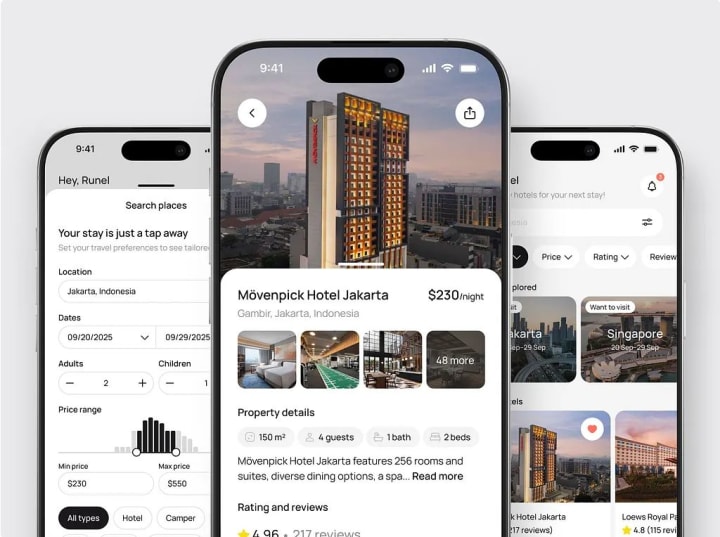
Strategies for Choosing Between Native and Hybrid Development
Critical Considerations Before You Begin
Selecting the right development path isn't about following trends; it's about aligning your technology stack with your specific business context. Before writing a single line of code, address these four pivotal questions:
1. Who is your audience, and what devices do they use?
Your user demographic dictates your platform strategy. If your product targets enterprise clients utilizing company-managed iPhones, a dedicated iOS native app is likely the logical choice. Conversely, if you are aiming for emerging markets where Android holds a monopoly—and where hardware ranges from the latest flagships to aging budget models—you need broad compatibility immediately. In such scenarios, a robust cross-platform solution might offer faster market penetration. Avoid assuming an even split between platforms; instead, let data from analytics or market research guide your decision.
2. What are your actual performance requirements?
Not every application demands 60 frames-per-second animations or real-time sensor integration. If your app primarily consists of data entry forms, static lists, and standard content, a hybrid approach will likely suffice. However, if your roadmap includes resource-heavy tasks like live video streaming, gaming, augmented reality (AR), voice recognition, or complex offline synchronization, hybrid frameworks may hit performance ceilings sooner than anticipated. Be brutally honest: is "acceptable" performance truly sufficient for your specific use case?
3. What is your total budget horizon (not just initial costs)?
While native development often carries a steeper initial price tag, focusing solely on upfront expenses is shortsighted. A budget-friendly hybrid launch might appear attractive initially, but if you end up constantly fixing platform-specific glitches or rewriting core modules because the framework couldn't scale, the costs will eventually catch up in the form of technical debt and team burnout. It is essential to project expenses for quality assurance, ongoing maintenance, and potential refactoring over the next 18 months. Sometimes, investing more capital early prevents a costly strategic pivot down the road.
4. Which features are essential, and how dependent are they on specific platforms?
Compile a list of your non-negotiable features and evaluate their reliance on advanced APIs. Do you need immediate access to Face ID, precise background location tracking, Bluetooth Low Energy peripherals, or Apple Watch connectivity? If so, native development provides direct, unhindered access. Relying on hybrid tools means waiting for third-party libraries to support these features—or worse, discovering that a critical function is entirely unsupported. Many teams have faced months of delays because their chosen cross-platform framework struggled with new OS permission models. Never let your product roadmap depend on an external library's update cycle.
There is no one-size-fits-all solution. However, by grounding your strategy in these four inquiries, you can sidestep the most common pitfall: selecting a technology stack based on industry hype rather than genuine product requirements. Making this distinction alone positions your project ahead of countless others in the market.
Ideal Scenarios for Choosing Native Mobile Development
Applications Demanding Peak Performance
When your application's success hinges on instantaneous responsiveness, fluid animations, or the reliable processing of real-time data, native development is frequently the only viable option. This is particularly true for sectors like gaming, augmented reality (AR), virtual reality (VR), high-volume e-commerce, and financial trading dashboards, where every millisecond counts.
Consider mobile gaming: even mid-range titles today place immense strain on GPUs, manage intricate physics simulations, and maintain constant synchronization with remote servers. Attempting to run such complex logic through a JavaScript bridge or a rendering abstraction layer inevitably introduces noticeable lag. The same principle applies to AR applications, such as interior design visualizers or navigation overlays. These tools must track motion, map physical surfaces, and render 3D objects in real time without dropping a single frame. Since platforms like Apple’s ARKit and Google’s ARCore are engineered for native integration, any alternative approach typically results in increased latency or restricted capabilities.
A practical example from Shakuro’s portfolio illustrates this point. For Zad, an iOS-based investment platform, the project required trading dashboards and analytics capable of handling intense real-time data streams. The team selected a purely native iOS strategy to harness the full power of the platform and its inherent features without relying on workarounds. This decision enabled the delivery of a swift, intuitive application while allowing resources to be allocated to other critical challenges. When performance is a cornerstone of your value proposition, compromising on the technology stack is rarely a wise trade-off.
Applications Requiring Direct Hardware Integration
Certain applications simply cannot function effectively unless they communicate directly with the device’s hardware, bypassing any intermediary layers. This category includes tools that rely heavily on camera capabilities (such as advanced photo editors, barcode scanners, or medical imaging software), precise sensor data, Bluetooth peripherals, or extensive background processing.
Native development grants immediate, unrestricted access to these APIs as soon as they are released by Apple or Google. Because these companies optimize their Software Development Kits (SDKs) specifically for their own ecosystems, features like Night Mode photography, LiDAR depth sensing, or Android’s latest privacy-focused location services are available instantly to native developers.
In contrast, hybrid solutions often lag behind. Companies may wait months for a third-party plugin to support a new camera feature, or they may abandon efforts entirely when trying to manage background audio on Android with the screen disabled. With native code, you eliminate dependence on external wrappers. This allows for granular control over permissions, intelligent battery management, and precise responses to hardware events exactly as the operating system intends.
If your application’s core value proposition relies on specific hardware capabilities, native development is almost always the safer and more future-proof choice. This approach ensures that your primary functionality remains robust and reliable across the diverse landscape of real-world devices.

Final Verdict: Is Native Development the Right Fit for Your Business?
Selecting the Optimal Strategy for Success
Adopting a native approach isn't a universal solution, but when the situation calls for it, it can serve as a powerful competitive advantage. If your goal is to deliver an application that feels instantaneous, robust, and deeply integrated, native development often provides superior outcomes regarding user retention, engagement levels, and long-term scalability in critical areas.
Let’s break this down practically. This path is only viable if your organizational context can support it. Key considerations include: Can your budget sustain two distinct engineering teams (or the cost of outsourcing them)? Is your timeline flexible enough to manage simultaneous iOS and Android development tracks? Most critically, do raw performance and platform-specific nuances directly impact your core value proposition?
Missteps are common. Many startups squander precious months over-engineering a native solution for a Minimum Viable Product (MVP) that would have been better served by a rapid framework like Flutter. Conversely, other companies compromise user experience by cramming complex functionality into a hybrid architecture to cut initial costs, only to face a costly rewrite in native code a year later—often at triple the original expense.
Do not select native development simply because it carries a "premium" label. Choose it only when your specific user base, product requirements, and business strategy necessitate it. If you are constructing a product designed for longevity, growth, and differentiation in a saturated marketplace—where every interaction shapes brand perception—native offers the precise control needed to excel. However, if you are validating a concept, building for internal use, or operating under strict resource constraints, there is absolutely no drawback to starting with an alternative approach.
About the Creator
Shakuro
We are a web and mobile design and development agency. Making websites and apps, creating brand identities, and launching startups.
Audit Evidence vs Audit Documentation: Key Differences Explained
Audit evidence and audit documentation are closely connected concepts in auditing, but they serve different purposes in the audit process. Understanding their distinction is essential for auditors, Accounting students, and finance professionals who want to ensure compliance with international auditing standards and produce reliable audit reports.
By charliesamuel3 days ago in 01




Comments
There are no comments for this story
Be the first to respond and start the conversation.