
The Gruffalo
A quick review of The Gruffalo summarizes what the book covers.

Introduction
The Gruffalo, written by Julia Donaldson and illustrated by Axel Scheffler, is a beloved children's picture book first published in 1999. The story is a delightful and imaginative tale of a clever mouse who uses his wit to outsmart predators in the woods by inventing a fearsome creature called the Gruffalo. With its rhythmic language and engaging narrative, the book appeals to both children and adults. The central themes of cleverness, bravery, and the power of imagination are woven throughout the story. In this summary, we'll explore the mouse's journey as he encounters various forest creatures and finally meets the fictional Gruffalo.
Chapter 1: The Mouse’s Journey Begins
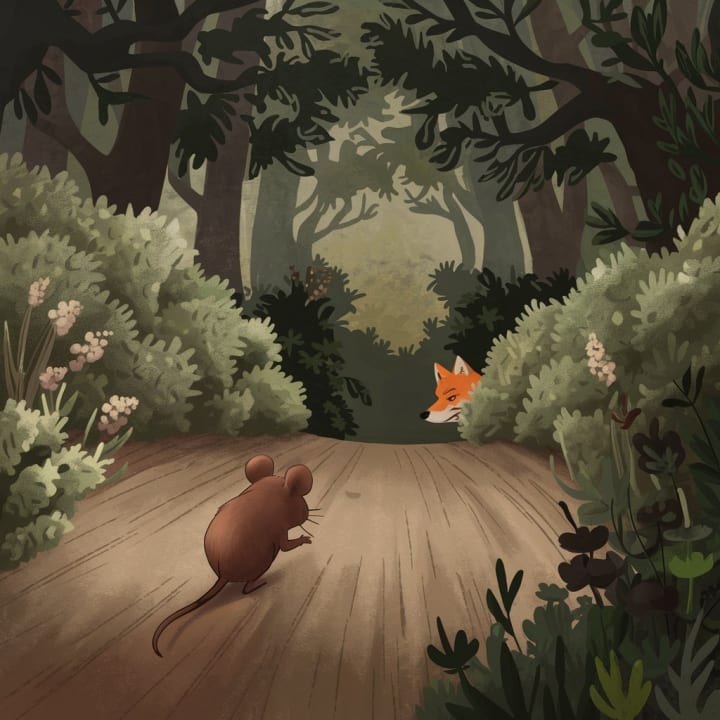
The story opens with a small mouse setting off on a stroll through a dense and dark wood. The narrator introduces the mouse as a clever and resourceful character. As the mouse walks along the forest path, he is approached by several creatures that view him as potential prey.
The first creature the mouse encounters is a fox. The sly fox, eyeing the mouse as a tasty snack, invites the mouse to his home for a meal. Realizing the fox's intention, the mouse cleverly declines the offer. Instead, the mouse invents a fictional creature he calls the Gruffalo. He describes the Gruffalo as a terrifying beast with terrible claws, teeth, and a poisonous wart on the end of his nose. The fox, horrified by the thought of such a monster, quickly scurries away.
The introduction of the Gruffalo is key to the plot, as it showcases the mouse’s ability to use his intelligence to survive in a world filled with larger, more dangerous creatures. The mouse continues his journey, feeling confident after having outwitted the fox.
Chapter 2: The Mouse Outsmarts More Predators
As the mouse ventures deeper into the woods, he encounters an owl perched high in the trees. The owl, like the fox, invites the mouse to his home for a meal. Once again, the mouse senses the danger in the invitation and refuses. The mouse repeats his tactic of fabricating the Gruffalo, describing it with frightening details, such as its knobbly knees and turned-out toes. The owl, terrified of meeting such a creature, flies away in haste.
Next, the mouse encounters a snake slithering through the undergrowth. The snake, like the fox and the owl before him, invites the mouse to his lair for lunch. The mouse, still clever and composed, mentions the Gruffalo again, elaborating on its monstrous features. This time, the mouse adds that the Gruffalo has orange eyes and a black tongue. The snake, equally frightened by the thought of such a beast, quickly retreats.
The second chapter continues to emphasize the mouse's wit and resourcefulness. Despite his small size, the mouse can avoid danger by using his imagination to scare off larger creatures. The mouse’s success builds a sense of triumph and cunning.
Chapter 3: The Gruffalo Appears
Just as the mouse begins to feel invincible, there is an unexpected twist in the story. After dismissing the predators, the mouse is startled when he suddenly comes face-to-face with the very creature he invented — the Gruffalo. The Gruffalo is exactly as the mouse described, with sharp claws, terrible teeth, and a poisonous wart.
Despite the shock of realizing his fictional monster is real, the mouse quickly regains his composure. He recognizes that he must rely on his wit once again to avoid becoming the Gruffalo’s next meal. The Gruffalo, intrigued by the tiny mouse, expresses his surprise that such a small creature is walking through the woods unafraid. The Gruffalo reveals his intention to eat the mouse, but the mouse, thinking fast, comes up with another plan.
The appearance of the Gruffalo is a pivotal moment in the story. It challenges the mouse’s previous confidence but also presents an opportunity for him to prove his cleverness once again. The plot thickens as the mouse is now faced with a more significant threat than before.
Chapter 4: The Mouse’s Final Trick
In this chapter, the mouse devises his boldest and most clever trick yet. Knowing that the Gruffalo is physically stronger but perhaps not as sharp, the mouse tells the Gruffalo that he is the most feared creature in the entire forest. The mouse invites the Gruffalo to follow him as he walks through the woods, offering to demonstrate how all the other creatures are terrified of him.
As they walk through the woods together, the mouse and the Gruffalo encounter the fox, owl, and snake once again. Each predator, seeing the fearsome Gruffalo following the mouse, quickly flees, confirming the mouse’s story. The Gruffalo is thoroughly convinced that the mouse is indeed a terrifying creature, powerful enough to frighten every animal in the forest.
The chapter highlights the mouse’s resourcefulness, as he turns the situation in his favor by leveraging the Gruffalo’s presence. The clever reversal of power dynamics between the mouse and the Gruffalo is a key theme in the story, showcasing how intelligence can triumph over brute strength.
Chapter 5: The Mouse Triumphs
With the Gruffalo now completely convinced of the mouse’s fearsome reputation, the mouse takes control of the situation. He tells the Gruffalo that he is hungry and that Gruffalo crumble is his favorite food. Horrified by the thought of being eaten, the Gruffalo panics and runs away, leaving the mouse victorious.
The story concludes with the mouse calmly continuing his walk through the forest, confident in his ability to outwit any creature, no matter how big or small. He finds a nut to eat and settles down, enjoying his snack in peace.
The final chapter serves as a satisfying resolution to the story. The mouse, who started as a seemingly insignificant creature in the dangerous woods, has used his intelligence and creativity to outsmart every predator, including the fictional Gruffalo. The themes of cleverness and bravery are reinforced as the mouse enjoys his well-earned victory.
Conclusion
The Gruffalo is a captivating and humorous tale that teaches children the value of using their intellect and creativity to solve problems. Through the character of the mouse, the story shows that size and strength are not the only attributes that lead to success. Instead, cleverness and quick thinking can often be more powerful tools for overcoming challenges.
Julia Donaldson’s rhythmic and engaging storytelling, combined with Axel Scheffler’s whimsical illustrations, make The Gruffalo a timeless classic in children’s literature. The book’s playful yet meaningful message about the power of imagination continues to resonate with readers of all ages, making it a cherished favorite for generations to come.
**Affiliate Disclosure** This article contains affiliate links, meaning that we will receive a small commission at no added cost to you as part of our partnership with Audible when you sign up for a free trial to obtain this book.
About the Creator
Keep reading
More stories from Ermelita T. Engracio and writers in 01 and other communities.
James and the Giant Peach
Introduction "James and the Giant Peach" is a story that blends elements of fantasy, adventure, and coming-of-age. The book is filled with whimsical characters, imaginative scenarios, and a sense of wonder that captivates readers of all ages. As James travels inside the giant peach with his newfound insect friends, he experiences a series of extraordinary adventures, each one more exciting than the last. The novel is not only a tale of adventure but also a story about finding family and belonging in the most unexpected places.
By Ermelita T. Engracioabout a year ago in 01
Ultimate Guide to Content Marketing Services and Pricing Trends
I remember the first time I tried to price content work for a client. I sat at my desk late at night, calculator open, coffee cold, scrolling through blog after blog that promised clear answers. What I found instead was confusion. One site said content was cheap and fast. Another treated it like a luxury product reserved for big brands. None of it matched what I was actually seeing in real projects.
By Jane Smith4 days ago in 01
Kitchenware Market Size and Forecast 2025–2033
Global Kitchenware Market Overview The global kitchenware market is entering a new era of growth, driven by evolving consumer lifestyles, rapid urbanization, and the growing influence of health-conscious cooking habits. According to Renub Research, the kitchenware market was valued at US$ 67.66 billion in 2024 and is expected to reach US$ 124.6 billion by 2033, expanding at a CAGR of 7.02% from 2025 to 2033.
By Sushant. Renub Researchabout 2 hours ago in 01



Comments
There are no comments for this story
Be the first to respond and start the conversation.