
Kitchenware Market Size and Forecast 2025–2033
Global Kitchenware Market Poised for Strong Growth Amid Innovation and Lifestyle Shifts


Global Kitchenware Market Overview
The global kitchenware market is entering a new era of growth, driven by evolving consumer lifestyles, rapid urbanization, and the growing influence of health-conscious cooking habits. According to Renub Research, the kitchenware market was valued at US$ 67.66 billion in 2024 and is expected to reach US$ 124.6 billion by 2033, expanding at a CAGR of 7.02% from 2025 to 2033.
From basic utensils to advanced smart cookware, kitchenware has transformed from simple household necessities into lifestyle-driven products that combine convenience, aesthetics, sustainability, and technology. Rising disposable incomes, increased interest in home cooking, expanding e-commerce platforms, and demand for eco-friendly materials are collectively shaping the future of this dynamic industry.
Kitchenware Industry Overview
Kitchenware refers to the extensive range of tools, utensils, and appliances used in the preparation, cooking, storage, and serving of food. This includes cookware, bakeware, tableware, knives, cutting boards, mixing bowls, containers, and modern smart appliances designed to improve cooking efficiency and safety.
Kitchenware products are made from materials such as stainless steel, aluminum, glass, ceramic, silicone, copper, and plastic, with material selection guided by factors like durability, heat resistance, food safety, and environmental impact. As consumers become more informed, the preference is shifting toward non-toxic, sustainable, and long-lasting materials.
The modern kitchen is no longer just a functional space—it has become a center for creativity, wellness, and social connection. As a result, kitchenware is now designed not only for performance but also for style, storage efficiency, and compatibility with contemporary living spaces.
Key Growth Drivers of the Kitchenware Market
1. Rising Demand for Multifunctional and Space-Saving Kitchenware
One of the most significant growth drivers is the increasing demand for compact and multifunctional kitchen products, especially in urban households where space is limited. Consumers are seeking stackable cookware, collapsible tools, and multipurpose appliances that reduce clutter and enhance convenience.
Manufacturers are responding with innovative designs that combine multiple functions in a single product. In 2023, Cuisinart introduced an outdoor wok station, reflecting growing interest in versatile cooking solutions for both indoor and outdoor use. These innovations are especially appealing to renters, young professionals, and minimalist households, making multifunctional kitchenware a powerful growth catalyst.
2. Technological Innovation and Smart Kitchenware
Technology integration is revolutionizing the kitchenware industry. Smart cookware with temperature sensors, app connectivity, precision controls, and safety features is gaining popularity among tech-savvy consumers. These products enhance cooking accuracy, reduce energy consumption, and improve overall kitchen efficiency.
In 2023, All-Clad Metalcrafters launched a PFOA-free stainless steel cookware line, responding to consumer demand for safer and more sustainable cooking solutions. Ergonomic handles, scratch-resistant coatings, and improved heat distribution are also becoming standard features, encouraging replacement purchases and premiumization across global markets.
3. Urbanization and Changing Lifestyles
Rapid urbanization has reshaped household structures and cooking habits worldwide. Smaller homes, busy work schedules, and growing nuclear families have increased the need for efficient, easy-to-use kitchenware that saves both time and space.
Urban consumers prefer kitchen products that support quick meal preparation while maintaining health and quality. This lifestyle shift has encouraged manufacturers to develop compact, user-friendly, and stylish kitchenware tailored to modern city living, further accelerating market growth.
4. Health Awareness and Sustainable Consumption
Health-conscious consumers are increasingly choosing cookware made from non-toxic, BPA-free, and eco-friendly materials. The rise in home cooking following the pandemic has further strengthened this trend, as people seek greater control over ingredients and cooking methods.
Sustainable kitchenware—such as recyclable, long-lasting, and energy-efficient products—is now a key differentiator for brands. This shift toward responsible consumption is reshaping product development and marketing strategies across the industry.
Challenges Facing the Kitchenware Market
Market Saturation in Developed Economies
In mature markets like North America and Western Europe, the kitchenware sector faces saturation, with high ownership levels limiting replacement demand. Growth in these regions is largely driven by innovation, premium products, and sustainability upgrades rather than new customer acquisition.
Manufacturers must continually introduce differentiated designs and smart features to remain competitive in these saturated environments.
Intense Competition and Price Pressure
The kitchenware market is highly competitive, with numerous established global brands and emerging local players offering similar products. This competition leads to price wars, shrinking profit margins, and the need for constant innovation.
Low-cost manufacturers from emerging economies further intensify pressure on premium brands, making brand loyalty, quality assurance, and innovation essential for long-term survival.
Regional Market Insights
United States Kitchenware Market
The U.S. kitchenware market is expanding steadily, supported by growing interest in smart appliances, eco-friendly cookware, and premium kitchen tools. Consumers are prioritizing sustainability, health, and convenience, driving demand for non-toxic materials and energy-efficient products.
E-commerce growth has made a wide range of products easily accessible, while design-driven kitchenware is increasingly viewed as a lifestyle investment rather than a necessity.
Germany Kitchenware Market
Germany’s kitchenware market is known for its emphasis on quality, durability, and sustainability. German consumers prefer premium products made from recyclable and long-lasting materials. Brands such as WMF, Zwilling, and Fissler dominate the market, offering high-performance cookware with modern design.
Smart kitchen appliances and precision cooking tools are also gaining traction, supported by a strong culture of engineering excellence and health-conscious cooking.
India Kitchenware Market
India represents one of the fastest-growing kitchenware markets globally, driven by urbanization, rising incomes, and a renewed interest in home cooking. Young consumers are experimenting with global cuisines, boosting demand for diverse and innovative cookware.
In January 2025, Artarium launched its first Kitchenware & Cookware collection, featuring brass and copper cookware that combines traditional Indian craftsmanship with modern wellness-focused design. The rapid expansion of e-commerce platforms and growing middle-class consumption continue to fuel strong market growth.
Saudi Arabia Kitchenware Market
Saudi Arabia’s kitchenware market is expanding due to changing consumer lifestyles, rising disposable incomes, and growing interest in home dining. Consumers are increasingly seeking durable, stylish, and smart kitchen products that blend tradition with modern convenience.
Online retail has significantly improved product accessibility, while sustainability trends are encouraging the adoption of eco-friendly cookware. The market reflects broader national trends toward wellness, convenience, and modern living.
Recent Developments in the Kitchenware Market
In 2023, Malaysia’s Ministry of Health (KKM) proposed revisions to safety regulations for milk products, highlighting growing global focus on food safety and compliance.
In May 2022, Arla Foods invested approximately USD 213 million to expand its dairy facility in Pronsfeld, Germany, demonstrating increased investment in food processing and kitchen-related infrastructure.
Global brands continue to invest heavily in R&D to develop safer, smarter, and more sustainable kitchenware products.
Kitchenware Market Segmentation
By Product
Cookware
Bakeware
Tableware
Others
By Application
Residential
Commercial
By Distribution Channel
Hypermarkets/Supermarkets
Specialty Stores
Online
Others
Country-Level Market Coverage (25 Viewpoints)
North America:
United States, Canada
Europe:
France, Germany, Italy, Spain, United Kingdom, Belgium, Netherlands, Turkey
Asia-Pacific:
China, Japan, India, Australia, South Korea, Thailand, Malaysia, Indonesia, New Zealand
Latin America:
Brazil, Mexico, Argentina
Middle East & Africa:
South Africa, United Arab Emirates, Saudi Arabia
Key Players in the Global Kitchenware Market
Groupe SEB
TTK Prestige Ltd.
The Vollrath Company, LLC
Wilh. Werhahn KG
Target Brands, Inc.
Newell Brands
Fissler
Tramontina
Each company has been analyzed across five dimensions: Company Overview, Key Persons, Recent Developments & Strategies, SWOT Analysis, and Sales Analysis.
Final Thoughts
The global kitchenware market is evolving from a traditional household segment into a technology-driven, design-focused, and sustainability-oriented industry. With strong growth projected through 2033, the market offers significant opportunities for innovation, premiumization, and expansion—especially in emerging economies.
As consumers continue to prioritize health, convenience, and environmental responsibility, kitchenware brands that invest in smart technology, sustainable materials, and multifunctional designs will be best positioned to succeed in this competitive landscape.
The future of the kitchen is smarter, greener, and more efficient—and the kitchenware market is set to grow right alongside it.
About the Creator
Sushant. Renub Research
I’m Sushanta Halder, Digital Marketing Manager at Renub Research with 15+ years in SEO, content, PPC & lead generation. Passionate about data-driven growth strategies.
Keep reading
More stories from Sushant. Renub Research and writers in 01 and other communities.
Global Online Travel Market Size and Forecast 2025
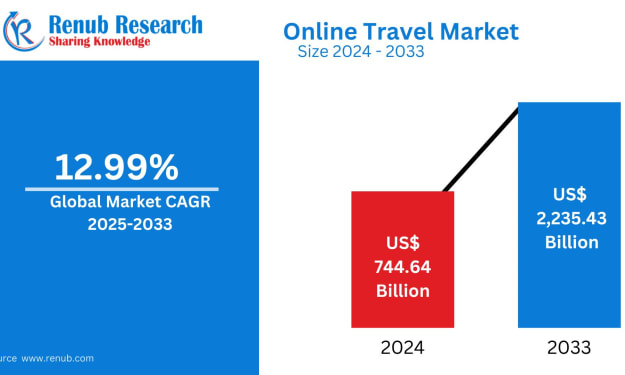
Global Online Travel Market — A Transformational Decade Ahead The Global Online Travel Market is entering its most transformative era, driven by rapid digitalization, rising consumer confidence in online transactions, and a new generation of travelers that prioritize mobility, personalization, and speed. According to Renub Research, the market is projected to reach a massive US$ 2,235.43 billion by 2033, rising from US$ 744.64 billion in 2024, and expanding at a strong CAGR of 12.99% between 2025 and 2033.
By Sushant. Renub Research2 months ago in 01
Configure KeyLocker for JarSigner using the DigiCert KSP Library
Prerequisites Before configuring KeyLocker for JarSigner, please ensure you have the following components and environment set up. Each of these is necessary and plays a role in establishing a contracted, secure, engaging signing environment.
By Anna Shipman2 days ago in 01



Comments
There are no comments for this story
Be the first to respond and start the conversation.