
The Evolution of the Forecourt: Navigating the Global Fuel Dispenser Market
The Evolution of the Forecourt: Navigating the Global Fuel Dispenser Market

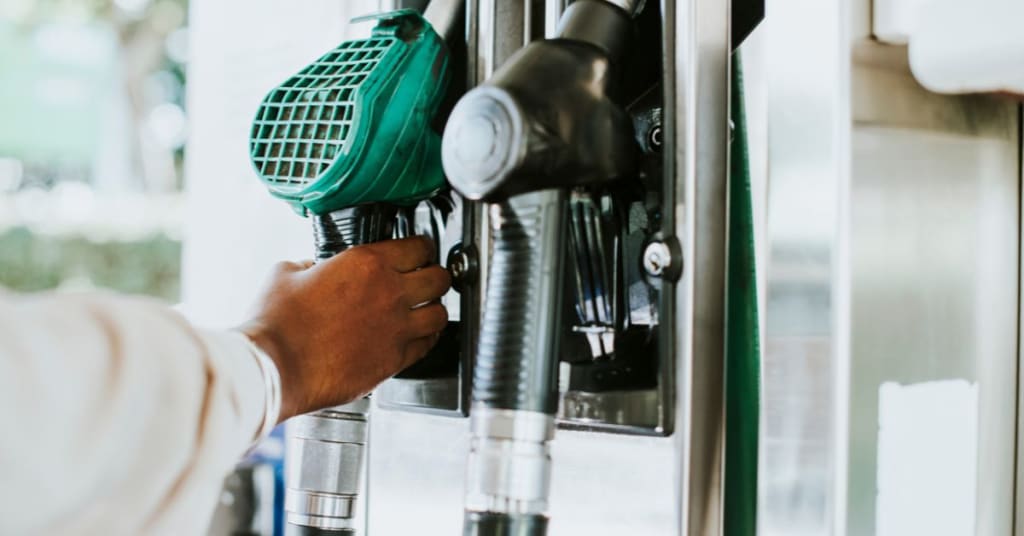
For decades, the fuel dispenser was a purely utilitarian piece of hardware—a mechanical pump designed to move liquid from an underground tank to a vehicle’s reservoir. However, as the global energy landscape undergoes its most significant shift since the internal combustion engine first took hold, the fuel dispenser market is being radically redefined.
Valued at approximately $2.5 billion and projected to grow steadily despite the rise of electric vehicles, the fuel dispenser market is currently a fascinating study in adaptation. From the integration of AI and cloud computing to the emergence of "multi-energy" dispensers, the industry is proving that the gas station of the future will look very different from the one we know today.
1. The Market Dynamics: Growth in the Face of Transition
At first glance, one might assume that the push for Electric Vehicles (EVs) would signal the end of the fuel dispenser. However, the market is currently experiencing a "dual-track" growth phase.
Emerging Economies and Infrastructure Expansion
In regions like Asia-Pacific, Africa, and parts of Latin America, the demand for traditional petrol and diesel dispensers is actually increasing. Rapid urbanization and the expansion of road networks in countries like India and Vietnam require thousands of new retail fueling stations. For these markets, the focus remains on durability, flow rate accuracy, and anti-fraud technology.
Developed Markets and High-Tech Retrofitting
In North America and Europe, the market is driven by "replacement demand." Station owners are upgrading old pumps to comply with stricter environmental regulations (such as vapor recovery systems) and to enhance the customer experience through digital screens, contactless payments, and loyalty program integration.
2. Technological Megatrends: The "Smart" Pump
The modern fuel dispenser is no longer a "dumb" machine. It is a sophisticated Internet of Things (IoT) device that acts as a point-of-sale terminal and a data harvester.
The Rise of Digital Forecourt UX
Consumer expectations have shifted. Today’s dispensers often feature:
High-Definition Displays: Large screens that provide news, weather, and targeted advertisements, turning the 3-to-5-minute fueling window into a revenue-generating opportunity.
Contactless and Mobile Payments: Integration with Apple Pay, Google Pay, and RFID-based fleet cards is now a standard requirement.
LPR (License Plate Recognition): Some advanced dispensers use cameras to identify a vehicle as it pulls up, automatically authorizing the pump based on the user’s pre-saved profile.
IoT and Remote Monitoring
For station operators, the biggest advancement is remote management. Modern dispensers communicate their "health" in real-time. If a filter is clogging or a meter is drifting out of calibration, the system alerts the maintenance team before a failure occurs. This minimizes "down-time," which is the single biggest profit-killer in the retail fuel industry.
3. The Multi-Fuel Future: Hydrogen and Beyond
The most significant strategic shift in the market is the move toward Alternative Fuel Dispensers. The industry is transitioning from "Gas Stations" to "Energy Hubs."
Hydrogen Refueling Stations (HRS)
As heavy-duty trucking moves toward hydrogen fuel cells, the demand for specialized hydrogen dispensers is surging. These units must handle extreme pressures (350 to 700 bar) and maintain cryogenic temperatures. Companies like Dover Fueling Solutions and Gilbarco Veeder-Root are investing heavily in H2 technology to ensure they remain relevant in a post-fossil-fuel world.
Compressed Natural Gas (CNG) and LNG
In markets like Brazil, China, and India, CNG remains a vital bridge fuel. The dispensers for these gases require complex metering systems that measure mass rather than volume, requiring a different set of engineering competencies than traditional liquid pumps.
4. The EV Convergence
Perhaps the most surprising trend is the integration of EV charging into the traditional fuel dispenser footprint. We are seeing the emergence of "Hybrid Dispensers" that feature a liquid fuel nozzle on one side and a high-speed DC charging cable on the other.
This allow station owners to maximize their existing real estate while catering to both legacy internal combustion engine (ICE) drivers and new EV owners. It also solves a psychological hurdle for consumers, keeping the "refueling" habit centralized in one familiar location.
5. Regulatory Pressures and Environmental Safety
Environmental compliance is a massive driver for hardware upgrades.
Stage II Vapor Recovery
Many jurisdictions now mandate "Stage II" vapor recovery, which requires the dispenser to suck gasoline vapors back into the underground tank during the fueling process rather than letting them escape into the atmosphere. This requires specialized nozzles and vacuum pumps within the dispenser housing.
Accuracy and Anti-Tampering
Fuel is an expensive commodity, making it a target for theft and fraud. The market is seeing increased demand for electronic "pulsers" that are encrypted to prevent "skimming" or electronic tampering intended to make the pump under-report the amount of fuel dispensed.
6. Competitive Landscape: The Big Four
The global market is dominated by a few key players who have achieved scale through decades of innovation and global distribution networks:
Gilbarco Veeder-Root (Vontier): The global market leader, known for its Encore series. They have a massive footprint in North America and are leading the charge in cloud-integrated forecourt management.
Dover Fueling Solutions (Wayne/Tokheim): A powerhouse in both the US and Europe. Their "Wayne Helix" dispensers are often cited as the gold standard for ergonomic design and modularity.
Tatsuno Corporation: The dominant player in the Japanese and wider Asian markets, famous for their high-quality overhead dispensers (common in Japan) and ultra-reliable metering technology.
Censtar: A leading Chinese manufacturer that has grown rapidly alongside China’s domestic infrastructure boom and is now expanding aggressively into African and Middle Eastern markets.
7. Challenges: The Road Ahead
The market faces two primary challenges:
The "Stranded Asset" Risk: Station owners are hesitant to invest $20,000 in a new diesel dispenser if they fear diesel will be banned in their city within a decade. Manufacturers are countering this by making dispensers "modular"—allowing owners to swap liquid components for EV or Hydrogen components later.
Cybersecurity: As dispensers become more connected, they become entry points for hackers to access payment data or disrupt a nation's energy supply. Hardening the "Cyber-Physical" security of the pump is now a top priority for R&D departments.
Conclusion: More Than Just a Pump
The fuel dispenser market is a microcosm of the global energy transition. It is an industry that is simultaneously doubling down on traditional infrastructure in the developing world while pioneering "Space Age" technology in the developed world.
The winners in this market will not be the companies that build the best pumps, but the companies that build the best gateways. Whether the energy being transferred is liquid, gas, or electrons, the dispenser remains the critical interface between the energy provider and the consumer. The "Iron Renaissance" of rail has its parallel here: a "Digital Renaissance" of the forecourt.
About the Creator
Rahul Pal
Market research professional with expertise in analyzing trends, consumer behavior, and market dynamics. Skilled in delivering actionable insights to support strategic decision-making and drive business growth across diverse industries.
Is Our Health at Risk from 5G, 6G, and Other Technologies?
Is Our Health at Risk from 5G, 6G, and Other Technologies? The world is moving faster than ever. High-speed connectivity has become a part of everyday life, from streaming 4K videos in a matter of seconds to controlling smart homes with voice commands. One question keeps coming up despite the fact that 6G is already in development and 5G is spreading globally.
By Farida Kabirabout 5 hours ago in 01
What Every Internet User Needs to Know About the New AI Laws and Updates to Digital Privacy in 2026
What Every Internet User Needs to Know About the New AI Laws and Updates to Digital Privacy in 2026 In comparison to just a few years ago, the digital landscape in 2026 looks very different. Artificial intelligence is no longer a new or experimental tool; rather, it is now an essential component of everyday life.
By Farida Kabir2 days ago in 01


Comments
There are no comments for this story
Be the first to respond and start the conversation.