
The Iron Renaissance: Why the Global Rolling Stock Market is Moving Toward a Golden Age
Investment in Rail Modernization, Electrification, and Smart Mobility Driving Sustainable Growth in Mass Transit and Freight Systems

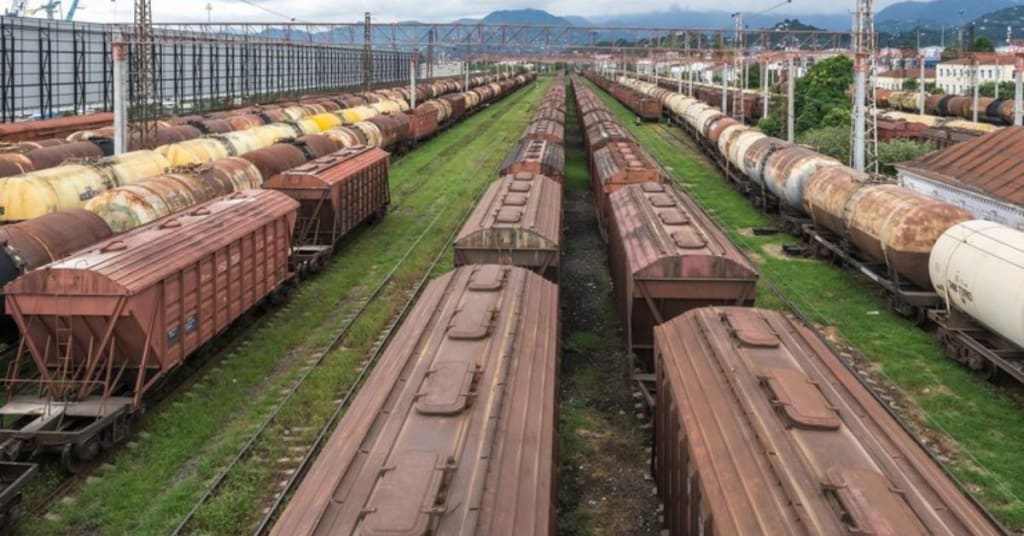
In the history of industrialization, few inventions have been as transformative as the railway. From the soot-filled air of 19th-century Manchester to the sleek, silent magnetism of modern Shanghai, "rolling stock"—the collective term for locomotives, freight wagons, and passenger coaches—has been the literal engine of economic growth.
However, for much of the late 20th century, rail was seen by many as a legacy industry, losing ground to the flexibility of long-haul trucking and the speed of commercial aviation. That narrative has officially flipped. Today, we are witnessing an "Iron Renaissance." Driven by the urgent need for decarbonization and the pressures of hyper-urbanization, the global rolling stock market is projected to reach unprecedented heights.
In this deep dive, we explore the trends, technologies, and titans shaping the $60 billion global rolling stock landscape.
1. The Green Mandate: Rail as the Climate Hero
The most significant tailwind for the rolling stock market is the global "Green Deal" movement. Transport accounts for roughly 25% of global CO2 emissions, but rail is responsible for only a tiny fraction of that—less than 2%.
Governments are realizing that they cannot reach Net Zero without a massive "modal shift" from road to rail. In Europe, the "Fit for 55" package is incentivizing rail travel over short-haul flights. This isn't just policy talk; it’s translating into massive orders for Rolling Stock.
The Hydrogen vs. Battery Debate
While overhead electrification is the "gold standard" for high-traffic lines, thousands of miles of regional tracks across North America and Australia remain unelectrified. Traditionally, these lines were the domain of diesel. Now, the rolling stock market is racing to replace them:
Hydrogen Fuel Cells: Leaders like Alstom with their Coradia iLint have proven that hydrogen can power regional trains with a range of over 1,000 kilometers, emitting nothing but water vapor.
Battery Electric (BEMUs): For shorter branch lines, battery-powered units are becoming the preferred "last-mile" solution, charging under electrified sections and running on battery through the gaps.
2. The High-Speed Prestige Race
High-Speed Rail (HSR) is the crown jewel of the rolling stock market. It is the only segment that directly competes with—and wins against—the aviation industry.
China’s Absolute Dominance
You cannot discuss rolling stock without mentioning China. In less than two decades, the country has built the world’s largest HSR network, stretching over 45,000 kilometers. Their latest "Fuxing" trainsets aren't just fast (350 km/h); they are increasingly autonomous, featuring self-driving capabilities and advanced vibration-damping systems that make a 300-mph ride feel like sitting in a stationary living room.
The European Expansion
While China leads in scale, Europe is focused on interoperability. The dream of a seamless "Trans-European Express" depends on rolling stock that can handle different voltages and signaling systems as they cross borders. This is a massive boon for manufacturers like Siemens and Alstom, who specialize in multi-system locomotives capable of traversing the continent without stopping.
3. Urbanization and the "Last Mile"
By 2050, nearly 70% of the world’s population will live in cities. This demographic shift is placing immense pressure on urban transit.
Metros and Light Rail (LRT)
In emerging markets like India, Vietnam, and Egypt, the demand for metro cars is skyrocketing. India’s "Make in India" initiative has turned the country into a global hub for metro manufacturing. Cities are no longer just buying trains; they are buying "mobility solutions" that include automated, driverless "Grade of Automation 4" (GoA4) systems, which maximize throughput and minimize human error.
4. The Digital Train: Rail 4.0
The most profound change in the rolling stock market isn't visible from the outside. It’s in the silicon. Modern trains are essentially rolling data centers.
Predictive Maintenance
In the past, a train was serviced based on time or mileage—a "reactive" approach. Today, thousands of sensors on a locomotive's bogies, engines, and braking systems feed real-time data to the cloud. By using AI to analyze these patterns, operators can predict a component failure before it happens. This reduces "down-time" and saves millions in operational costs.
Digital Twins
Manufacturers are now creating "Digital Twins" of every trainset that leaves the factory. This virtual replica allows engineers to simulate wear and tear under different weather conditions or track qualities, optimizing the design of the next generation of vehicles before a single piece of steel is cut.
5. The Competitive Landscape: A Game of Titans
The rolling stock market has undergone a period of intense consolidation, leaving a few massive players to dominate the global stage:
CRRC (China Railway Rolling Stock Corporation): A behemoth that dwarfs all others. CRRC accounts for nearly half of the global market share in terms of production volume, fueled by China’s domestic needs and aggressive infrastructure diplomacy in Africa and Southeast Asia.
Alstom (France): Since its acquisition of Bombardier Transportation, Alstom has become the undisputed Western leader. They are the pioneers of hydrogen rail and the holders of the world speed record for conventional rail.
Siemens Mobility (Germany): Known for its engineering precision, Siemens leads in signaling and digital rail infrastructure, alongside its famous ICE (Intercity-Express) platforms.
The New Challengers: Companies like Stadler Rail (Switzerland) have carved out a highly profitable niche by focusing on customized, regional, and mountain-climbing trains that the larger "platform-based" giants aren't nimble enough to build.
6. Freight: The Backbone of the Global Economy
While passenger trains get the glory, freight wagons are the workhorses. The freight rolling stock market is currently focused on efficiency and automation.
In North America, the focus is on "Precision Scheduled Railroading" (PSR), which requires massive, high-horsepower locomotives from manufacturers like Wabtec and Progress Rail (Caterpillar). Meanwhile, in Europe, the push is for Digital Auto Coupling (DAC). Currently, most European freight cars are still coupled by hand—a 19th-century process. DAC will allow for automatic braking tests and data transmission throughout the freight train, finally allowing rail to compete with the "instant tracking" capabilities of the trucking industry.
7. Challenges on the Horizon
Despite the optimism, the rolling stock market faces significant headwinds:
Supply Chain Volatility: The shortage of specialized steel and semiconductors has pushed the lead time for a new EMU (Electric Multiple Unit) from 2 years to nearly 4 in some regions.
Infrastructure Lag: You can build a hydrogen train, but it’s useless without a hydrogen refueling station. The "chicken and egg" problem of vehicle vs. infrastructure remains a hurdle.
High Capital Requirements: Rolling stock is expensive. A single high-speed trainset can cost upwards of $30 million. In a high-interest-rate environment, financing these fleet renewals becomes a challenge for state-owned railways.
Conclusion: The Path Ahead
The rolling stock market is no longer a "boring" industrial sector. It is at the intersection of AI, clean energy, and urban design. As we move toward 2030, the focus will shift from simply "moving people" to "moving people intelligently."
We are entering an era of "Seamless Mobility," where your train, metro, and e-scooter are all synced via the cloud. The vehicles themselves are becoming lighter, smarter, and greener. For investors, engineers, and commuters alike, the message is clear: the future of transport is on tracks.
The next time you see a train gliding through a station, remember—you aren't just looking at a machine; you're looking at the most sophisticated solution we have for a sustainable 21st century.
About the Creator
Rahul Pal
Market research professional with expertise in analyzing trends, consumer behavior, and market dynamics. Skilled in delivering actionable insights to support strategic decision-making and drive business growth across diverse industries.
Bitcoin’s Rollercoaster: Understanding the Rise, Fall, and Future of the World’s Most Popular Cryptocurrency
Bitcoin has become a household name in the world of digital finance, often synonymous with cryptocurrency itself. Since its inception in 2009 by the mysterious Satoshi Nakamoto, Bitcoin has captured the attention of investors, traders, and technologists alike. Unlike traditional currencies issued by governments, Bitcoin is a decentralized crypto currency, operating on a peer-to-peer network that allows users to send and receive value without intermediaries. Over the years, Bitcoin has evolved from a niche digital experiment into a mainstream investment asset, attracting both retail and institutional investors.
By Story Prism4 days ago in 01
The Structure and Logic of Korean Skin Care Routines
The global interest in korean skin care is often linked to its multi-step routines, but the true appeal lies deeper than the number of products used. At its foundation, this approach is about understanding how skin functions over time and responding with consistent, supportive care. Rather than focusing on dramatic short-term results, the system emphasizes balance, hydration, and long-term maintenance.
By Ethan Robertabout 5 hours ago in 01
📢 Raise Your Voice Thread: 02/05/2026
Our “Raise Your Voice Threads” are hosted most alternating Thursdays at 12PM ET to offer creators more avenues to uncover exceptional stories on Vocal. As we are continuously searching for fresh creators and inspiring stories, this thread provides an opportunity to exchange and discuss the stories that have moved and motivated us on Vocal.
By Raise Your Voice by Vocal5 days ago in Resources




Comments
There are no comments for this story
Be the first to respond and start the conversation.