
Taxi Market Size and Forecast 2025–2033: The Future of Urban Mobility Goes Digital
From Street Hails to Smart Apps – How Technology, Urbanization, and Sustainability Are Reshaping the Global Taxi Industry


Global Taxi Market Outlook 2025–2033
The global taxi market is entering a transformative era, driven by rapid urbanization, digital innovation, and the changing mobility preferences of modern commuters. According to Renub Research, the Taxi Market is expected to reach US$ 592.96 billion by 2033, growing from US$ 274.6 billion in 2024, at a CAGR of 8.93% from 2025 to 2033.
This remarkable growth reflects the rising demand for flexible, convenient, and environmentally friendly transportation solutions, especially in densely populated cities where traditional public transport systems struggle to keep pace with expanding populations and mobility needs.
From traditional street-hailing taxis to app-based ride-hailing and ride-sharing platforms, the industry has evolved into a highly competitive and technology-driven ecosystem. Today’s taxi services are no longer just a means of transport—they are an essential component of urban lifestyle, tourism, business travel, and smart city infrastructure.
Global Taxi Industry Overview
Urbanization and population density growth have significantly increased the need for efficient, reliable, and comfortable transportation. Taxis remain one of the most preferred point-to-point transport options, offering unmatched flexibility compared to buses, metros, or personal vehicles.
In crowded cities, traffic congestion and limited parking spaces make car ownership less practical. Taxis eliminate the burden of ownership while providing speed, convenience, and door-to-door accessibility. The expansion of ride-hailing apps has further enhanced this value proposition by enabling users to book rides instantly, track vehicles in real time, estimate fares, and make cashless payments.
A notable example is YelowSoft’s launch of an in-app wallet in January 2024, designed to improve transaction speed, enhance security, and boost customer retention through rewards and one-click payments. Such innovations highlight how digitalization is redefining customer experience and operational efficiency.
In regions with underdeveloped public transportation infrastructure, taxis often serve as the primary mobility solution. As a result, the taxi industry plays a crucial role in supporting economic activity, employment, tourism, and daily commuting worldwide.
Key Factors Driving Taxi Market Growth
1. Population Growth and Rapid Urbanization
Urban populations continue to rise at an unprecedented rate, especially in Asia, Africa, and Latin America. As cities expand, commuting distances increase and traffic congestion intensifies, making taxis an essential alternative to private vehicles.
In many metropolitan areas, owning a car is expensive and inconvenient due to fuel costs, parking shortages, and environmental regulations. Taxis provide an affordable and flexible option for short- and long-distance travel, contributing to sustained market expansion.
2. Expansion of App-Based Ride-Hailing Platforms
The emergence of ride-hailing giants such as Uber, Lyft, Grab, DiDi, and Bolt has completely transformed the taxi ecosystem. These platforms offer unmatched convenience through smartphone-based bookings, driver ratings, fare transparency, and route optimization.
For drivers and fleet operators, these platforms improve vehicle utilization, reduce idle time, and streamline operations through AI-driven matching algorithms. This digital transformation has expanded the taxi customer base and accelerated market growth in both developed and emerging economies.
3. Rising Demand from Business and Tourism Travel
Global tourism and business travel are rebounding strongly, increasing the need for reliable and on-demand transport services. Tourists rely on taxis for safe and convenient travel in unfamiliar destinations, while business travelers prioritize punctuality and comfort.
Airport transfers, city tours, and intercity trips continue to drive high taxi usage, pushing service providers to improve availability, multilingual support, and premium ride options.
Challenges in the Taxi Market
1. Driver Shortages and Workforce Issues
The taxi industry is facing a global shortage of professional drivers, worsened by the pandemic and the rise of alternative gig-economy jobs such as food delivery. Long working hours, inconsistent income, safety concerns, and limited benefits have made driving less attractive.
To address this, companies must offer better incentives, flexible working models, and improved working conditions while balancing rising operational costs.
2. Gaps in Technological Adaptation
Traditional taxi operators often lag behind ride-hailing platforms in adopting technology. Many still lack digital booking, GPS tracking, real-time ride updates, and cashless payment systems—features now expected by modern consumers.
This digital gap reduces customer satisfaction and limits market reach, especially among tech-savvy younger populations. Although digital transformation is essential, financial constraints and lack of expertise make adoption difficult for smaller operators.
Taxi Market Overview by Region
United States Taxi Market
The U.S. taxi industry is highly competitive and technology-driven. Traditional yellow cabs now coexist with app-based ride-hailing platforms that dominate urban mobility. Cities like New York, Chicago, and San Francisco remain key markets, but suburban and rural areas are also seeing rising demand.
Sustainability is shaping the future of the market. For example, Lyft expanded its “Green” mode to 14 major U.S. cities in April 2023, allowing users to request electric or hybrid vehicles, supporting the company’s 2030 all-electric fleet goal.
United Kingdom Taxi Market
The UK market combines iconic black cabs with private hire vehicles and app-based services. Strict regulations ensure high service quality, particularly in London, where drivers undergo extensive training.
However, competition from digital platforms is forcing traditional operators to modernize. The push toward electric vehicles, labor shortages, and evolving regulations continue to influence market dynamics, making innovation essential for long-term growth.
India Taxi Market
India’s taxi market is one of the fastest-growing globally, driven by urbanization, rising middle-class incomes, and smartphone penetration. App-based platforms coexist with traditional taxis, serving major cities like Delhi, Mumbai, and Bengaluru.
Despite strong growth, challenges include traffic congestion, regulatory complexity, and inconsistent service quality. The shift toward electric mobility and government support for sustainable transport are reshaping the competitive landscape and opening new opportunities.
United Arab Emirates Taxi Market
The UAE boasts one of the most technologically advanced taxi systems in the world. Government-regulated fleets in Dubai and Abu Dhabi feature GPS tracking, digital meters, smart apps, and cashless payments.
Tourism, business travel, and smart city initiatives continue to drive demand, while the transition to eco-friendly vehicles is becoming a major priority for operators.
Recent Developments in the Taxi Industry
August 2024: The Pan Car App was launched in Kangra, Himachal Pradesh, offering home-based taxi booking and promoting local employment through technology-driven mobility solutions.
March 2024: Xanh SM Laos expanded its electric taxi service to Savannakhet, offering eco-friendly transportation starting at USD 0.90 per ride. This move strengthens the company’s commitment to sustainable mobility in Southeast Asia.
These developments highlight how innovation, localization, and sustainability are shaping the future of the taxi industry worldwide.
Market Segmentation Analysis
By Booking Type
Online Booking
Offline Booking
By Vehicle Type
Cars
Motorcycle
Other
By Service Type
Ride Hailing
Ride Sharing
By Region
North America: United States, Canada
Europe: France, Germany, Italy, Spain, United Kingdom, Belgium, Netherlands, Turkey
Asia Pacific: China, Japan, India, Australia, South Korea, Thailand, Malaysia, Indonesia, New Zealand
Latin America: Brazil, Mexico, Argentina
Middle East & Africa: South Africa, Saudi Arabia, United Arab Emirates
Key Companies Covered
BlaBlaCar
Bolt Technologies OU
Curb Mobility LLC
DiDi Chuxing (Beijing Xiaoju Technology Co. Ltd)
Flywheel Software Inc.
Gojek Tech
Grab Holdings Inc.
FREE NOW
Kabbee Exchange Limited
Lyft Inc.
Uber Technologies Inc.
Each company profile includes overview, key personnel, recent developments, SWOT analysis, and revenue analysis, offering a complete competitive landscape.
Final Thoughts
The global taxi market is undergoing one of the most significant transformations in its history. As urban populations grow and mobility needs become more complex, taxis are evolving from traditional transport services into digitally connected, environmentally conscious mobility solutions.
With strong growth forecasted through 2033, the industry’s future will be defined by technology adoption, sustainability, and customer-centric innovation. Companies that successfully integrate digital platforms, electric vehicles, and smart city infrastructure will emerge as leaders in this rapidly expanding global market.
About the Creator
Renub Research
Renub Research is a Market Research and Consulting Company. We have more than 15 years of experience especially in international Business-to-Business Researches, Surveys and Consulting. Call Us : +1-478-202-3244
Keep reading
More stories from Renub Research and writers in 01 and other communities.
Generative AI Market Size and Forecast 2025–2033: The Technology Redefining Creativity, Productivity, and Intelligence
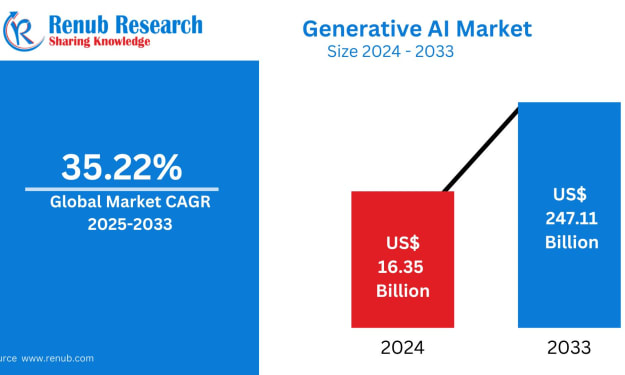
Generative AI Market Overview The Generative AI Market is expected to reach US$ 247.11 billion by 2033, expanding rapidly from US$ 16.35 billion in 2024, at a remarkable CAGR of 35.22% from 2025 to 2033. This explosive growth reflects a fundamental shift in how businesses, governments, and consumers interact with technology. No longer limited to analyzing data or predicting outcomes, generative AI systems now create—producing original text, images, videos, music, software code, and even scientific hypotheses.
By Renub Research4 days ago in 01
Migrate from G Suite to Office 365 While Preserving Metadata & Permissions
With the growing business size, the storage and resource requirements also start to evolve. Several aspiring businesses migrate from Google Workspace to Office 365 to access advanced collaboration and communication tools. Google Workspace and Office 365, both are feature-rich SaaS platforms, designed to boost the efficiency of business operations. However, they are still quite different from each other and can experience challenges during the shift.
By Xanthe Clay4 days ago in 01



Comments
There are no comments for this story
Be the first to respond and start the conversation.