future
Explore the next frontier of tech innovation, and imagine our society in the near and far future.
Are AI Prompts Fake?
Are AI prompts fake? Seriously, how do they work? Artificial intelligence models are now used to generate everything from articles to images, and more lately, video with a fidelity that is almost indistinguishable from actual footage. Many people have now integrated it into their daily lives. Some people use it because they have not developed their skills in whatever creative pursuits they enjoy. Meanwhile, others use it as a blatant attempt to make money with minimal effort.
By Atomic Historian7 months ago in 01
What would happen if the Earth stopped spinning?
What would happen if the Earth suddenly stopped spinning? It's possible that billions of years from now, the Earth could come to a standstill. However, it's more likely that other events, like the Sun swallowing the planet, will happen first. That said, there's no chance the Earth will just stop spinning anytime soon. But let's imagine for a moment that it did stop rotating and see what would happen to us and the planet. Our planet spins at about 1,000 miles per hour at the equator as it orbits the Sun, but the rotation slows down as you move toward the poles. Without this rotation, life as we know it wouldn't exist. It's believed that billions of years ago, our planet spun much faster than it does today. In the early days of our solar system, a large celestial body collided with the Earth, changing its alignment and rotation, which also led to the formation of the Moon. Since that time, the Earth's rotation has been gradually slowing down. The Moon is said to have also spun faster in the past before it became tidally locked with the Earth. Tidal locking is when a moon's orbital period matches its rotational period. This is the same fate that affects all large moons orbiting planets, like our Moon. In the early solar system, both the Earth and the Moon rotated independently. However, the Earth's gravity pulled on the tidal bulges, slowing the Moon's rotation. To balance the loss of momentum, the Moon drifted away from the Earth to its current position, about 230,000 miles away. The Moon also affects the Earth, as the same tidal forces that create tides are gradually slowing down the Earth's rotation bit by bit, while the Moon continues to drift away a few centimeters each year. If the Earth were to stop spinning, there are two different scenarios to consider, but it wouldn't be tidally locked to the Sun On its equator or at the substellar point, temperatures would soar to such extremes that survival would be nearly impossible. Conversely, the cold side of the planet would face a different scenario. The absence of the sun's warmth on the dark side would lead to the atmosphere transforming into a dense gas, which would then condense into liquid and eventually freeze into solid ice. However, it's unlikely that the atmosphere on the dark side would solidify completely. Instead, it would continue to condense, creating a vacuum that would draw air from the hot side, where the atmospheric gases would be expanding. This process might make the planet somewhat habitable, but the storms resulting from the clash of hot and cold air would be beyond imagination. Super storms would rage on both sides of the planet, with winds powerful enough to erode rock into sand. Following this, the Earth's magnetic field could cease to regenerate and gradually weaken over time. This decline occurs because the magnetic field is produced by a dynamo effect linked to the planet's rotation. Our magnetic field is crucial for maintaining our atmosphere and shielding Earth from cosmic rays. So, where does this leave humanity? We are a highly adaptable species that has managed to survive various disasters. Even with advanced technology, living on a planet that has stopped rotating and is tidally locked to the Sun would pose significant challenges. We might be able to manage our environment to some extent by going underground, but cultivating food in such conditions could prove difficult. Fortunately, there's no need to panic about this scenario occurring anytime soon, as physicists estimate it would take a billion years at the current pace
By Wedeb Asmarina7 months ago in 01
Mark Zuckerberg Has a LOT of Explaining To Do!
In light of the recent wrongful terminations of Meta accounts, Mark Zuckerberg has a LOT of explaining to do. Far too long he has been incredibly quiet regarding the latest string of unjust account deletions across Meta. He needs to finally come out of the woodwork and explain himself about this.
By Halden Mile7 months ago in 01
🕳️ The Beauty of the Void: Embracing Nothingness in Dark Ambient . AI-Generated.
In a culture obsessed with stimulation, silence can feel radical. In a music landscape driven by hooks, drops, and climaxes, creating space instead of filling it becomes an act of rebellion.
By Yokai Circle7 months ago in 01
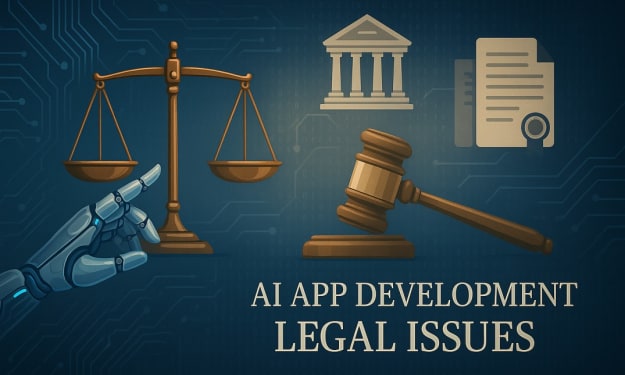
Navigating AI App Development Legal Issues: What Every Business Should Know
Artificial Intelligence is changing the way businesses operate. From smarter chatbots to advanced data processing, AI is helping companies move faster and serve better. But with this innovation comes a legal minefield that many businesses overlook.
By kathleenbrown7 months ago in 01
Human Brain Cell Computer Is Here
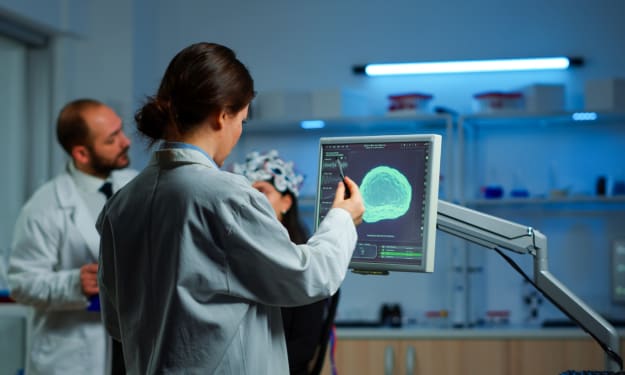
Biological computing is emerging as a credible experimental alternative to conventional electronics as researchers look for methods that cut energy use while delivering new forms of information processing. A collaboration between the Australian startup Cortical Labs and the UK synthetic biology company bit.bio has produced a laboratory device called CL1 that illustrates the current state of the field.
By Dmitry Baraishuk7 months ago in 01
Top 10 Benefits of Managed IT Solutions: Complete Guide
These days, running a business in Washington, DC, means more than just day-to-day tasks. Technology is a big part of how well you do. But without help, it can be hard to keep everything up-to-date, safe, and running smoothly.
By Emily Harper7 months ago in 01