
Sunrooms for All Seasons
Tips for Temperature Control and Comfort


- A sunroom is a great way to enjoy the beauty of nature from the comfort of home.
- Sunrooms can be designed and built to serve different purposes depending on the season.
- Use different alignments for sun exposure and ventilation.
It’s early morning, birds chirping excitedly as you wander with a cup of coffee towards your sunroom, preparing to greet the day at a leisurely pace.
It’s late afternoon, the hours drifting into evening, as you and friends lounge on the sunroom furniture, laughter echoing through the open windows.
Having a sunroom allows for hybrid living, marrying the comfort of indoor amenities with the need for a connection to nature. With a sunroom, you can enjoy that connection for months on end, regardless of time or weather, with comfort and temperature control.
What is a sunroom?
Before we get into the intricacies of creating a well-designed sunroom, let’s define what it is and the different types. A “sunroom” alludes to a room bathed in sun, but different parameters determine how a contractor approaches the job and how it’s classified for resale.
The walls of a typical sunroom are made up of windows. If they’re screens, that makes it more of a deck or screened-in porch. If the windows are glass, it is a room. A solarium is a type of sunroom, but on a larger scale, and can be within a home. A Florida room is another name for a sunroom.
Decide on your sunroom’s purpose
Once you’ve decided you want a sunroom, not a porch, it’s time to determine what type. You can have a three-season sunroom, or a four-season sunroom (which we’ll describe in detail below) that either maximizes or minimizes sunlight and wind.
Choose the right sunroom design for your family's needs and your location.
A three-season sunroom
A three-season sunroom, as the name suggests, can be used primarily during three seasons of the year: spring, summer, and fall. This room isn’t built to withstand the cold winter months, so it likely doesn’t connect to your home’s heating system.
If you live in a colder environment, this might be the choice for your family.
A four-season sunroom
A four-season sunroom can be used year-round. If you live in a milder climate without harsh winters, a four-season sunroom could be the best option for your home, since you wouldn’t need a ton of central heat during the winter months. A well-placed space heater and blanket can do the trick.
How to build a comfortable sunroom
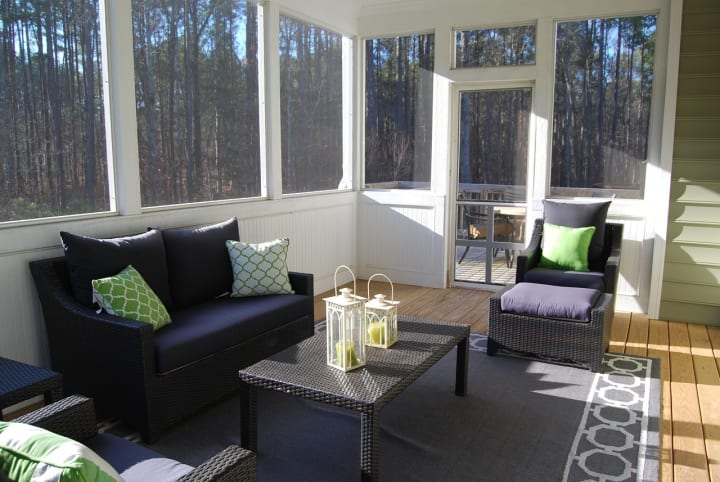
Once you’ve determined how you want to use your sunroom, it’s time to make a building plan. A four-season sunroom, especially one in climates with extreme seasons, will need more insulation to protect against harsh temperatures, whether in the summer or winter.
A four-season sunroom will also need HVAC ductwork routed from the house to achieve temperature control. Whether a three or four-season sunroom, design it properly to take advantage of sun exposure and ventilation.
Arranging proper placement for sun and ventilation
A sunroom is more than an addition; it’s a connection to the outside. Plan accordingly by placing your sunroom in a certain direction. A south-facing room gets a lot of sunlight from spring to fall. An east-facing room will be bathed in morning light, and a west-facing room in sunset light.
Also consider how the wind acts around your house. If you’re on the water, a sunroom parallel to the coast will have good cross-ventilation. If your house is at the bottom of a hill, the wind will likely come down in a swirl.
Ensure cross-ventilation by placing windows and doors in spots that allow for airflow.
How to make a comfortable sunroom
Sun exposure and cross ventilation go a long way towards achieving the best temperature control in your sunroom. However, that is primarily during the warmer months, and you can’t always depend on good weather to create the ideal sunroom temperature.
Here are a few other ways to ensure a comfortable sunroom, regardless of swings in the weather.
Temperature control in a sunroom
A three-season sunroom doesn’t need a ton of temperature control, since the seasons should take care of it for you, but a few options to maintain the balance are well-placed fans or space heaters. Don’t overload your system or create a fire hazard, but add one or two to keep the air moving.
These fans or heaters are almost necessary for a four-season sunroom, when you can’t predict when temperatures might plummet. If you routed your home’s HVAC system to the sunroom as well, you can turn on the unit to regulate the sunroom’s temperature.
Final touches for a comfortable sunroom
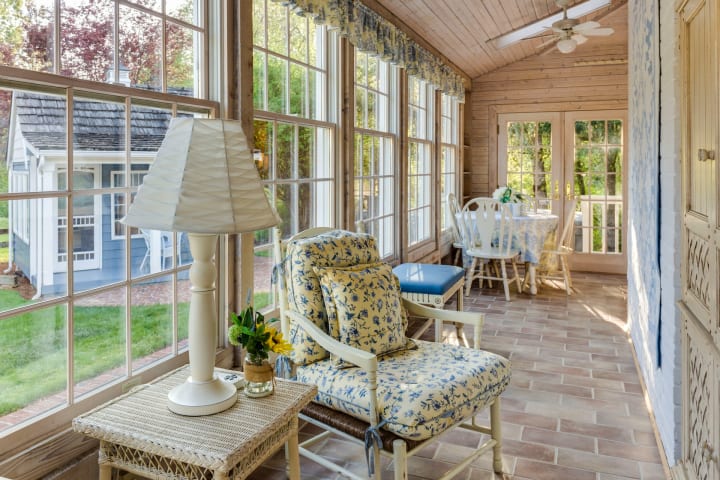
The most important part of a sunroom is to be comfortable, allowing you to relax with family and friends, or escape for some individual time. You might add final touches based on personal style, your family’s needs, or your sunroom’s purpose, such as an eating space, nap space, or lounge area.
Final touches for a three-season sunroom
A three-season sunroom lends itself to long, leisurely afternoons bleeding into nights around the table. Add soft lighting for ambience that doesn’t overtake the natural light, such as string lights or lamps, and give yourself soft textures with pillows and comfy throws.
A three-season sunroom takes advantage of good weather, so drape your open windows with curtains that billow and add wind chimes or bird feeders, which help your area better commune with nature.
Final touches for a four-season sunroom
The final touches for a four-season sunroom can include all the things listed above, giving you the ultimate spot during those spring-to-fall months. But you also need to consider the winter months when finishing your four-season room.
Keep big, chunky blankets on hand to stay warm and cozy. You’ll also want to increase your lighting, keeping it soft for ambience, but adding more options since the winter months include shorter days and longer nights.
Conclusion
A sunroom is not just a luxury, but a way of life, an invitation to relax and enjoy your home, your company, and the area around you. Finding a design that works for you and your home, achieving temperature control, and adding final touches can give you a place to escape and relax all year long.
About the Creator
Andrew Lemieux
Andrew is a creative writer, poet, and content strategist. He is passionate about literature, food, wine, travel, and sports. In his spare time he enjoys working on home projects and restoring the 1837 Greek Revival he and his wife own.
Keep reading
More stories from Andrew Lemieux and writers in 01 and other communities.
How Memorial Benches Enhance the Visitor Experience in Cemeteries and Parks
Benches placed in cemeteries, parks, and other public spaces to memorialize someone who has passed on are quiet but powerful reminders that remembrance doesn’t have to be grand to be deeply meaningful. Unlike towering monuments or elaborate tombs, benches invite people to pause, sit, and spend time in a space.
By Andrew Lemieux13 days ago in 01
Global Security Market Size and Forecast 2025–2033: Protecting a Digitized World in an Era of Rising Threats
Global Security Market Overview The global security market is entering a decisive phase of expansion as governments, enterprises, and institutions confront an increasingly complex risk environment. According to Renub Research, the Security Market is expected to grow from US$ 142.66 billion in 2024 to US$ 264.71 billion by 2033, registering a strong CAGR of 7.11% from 2025 to 2033. This growth reflects the convergence of digital transformation, rising geopolitical tensions, urbanization, and escalating cyber and physical threats worldwide.
By Renub Research6 days ago in 01
Candace Owens pushes theory Charlie Kirk was 'time traveller' who went to 'X-Men school'
In a recent episode of her podcast, Candace Owens said Charlie Kirk told her he was a “time traveler” who was sent to “X-Men school,” and alleged he was monitored since childhood.
By Dena Falken Esq7 days ago in 01


Comments
There are no comments for this story
Be the first to respond and start the conversation.