
S Corp vs. C Corp:
The Ultimate Business Formation Guide for Smart Entrepreneurs


Key Takeaways
• S Corporations offer pass-through taxation that eliminates double taxation, while C Corporations face potential double taxation on distributed profits
• C Corps can have unlimited shareholders and multiple stock classes, whereas S Corps are limited to 100 shareholders and one class of stock
• S Corps provide self-employment tax savings for owner-employees through reasonable salary requirements and distribution strategies
• C Corps offer superior access to investment capital, employee stock options, and sophisticated benefit programs that attract top talent
• Tax rates differ significantly: S Corp profits are taxed at individual rates, while C Corp profits face a flat 21% federal corporate rate
• C Corps can retain earnings at lower corporate tax rates, while S Corp profits pass through to owners regardless of distributions
• Ownership restrictions make S Corps suitable for closely-held businesses, while C Corps accommodate complex ownership structures and growth plans
• The choice between S Corp and C Corp should align with business size, growth objectives, ownership needs, and long-term strategic plans
Introduction
Choosing between S Corporation and C Corporation status represents one of the most critical decisions in business formation, with profound implications for taxation, ownership structure, growth potential, and operational flexibility. This fundamental choice affects everything from daily cash flow management to long-term succession planning, making it essential for entrepreneurs to understand the nuanced differences between these two corporate structures.
The distinction between S Corp and C Corp taxation has become increasingly important as tax laws evolve and businesses seek to optimize their financial performance while maintaining operational efficiency. Recent changes in corporate tax rates and individual tax brackets have shifted the relative advantages of each structure, creating new opportunities for strategic tax planning and business optimization that smart entrepreneurs can leverage for competitive advantage.
As a business formation expert who has guided hundreds of companies through entity selection decisions, I've observed that successful entrepreneurs understand that corporate structure choice extends far beyond immediate tax considerations. The decision impacts ability to raise capital, attract and retain employees, implement succession plans, and adapt to changing market conditions throughout the business lifecycle.
This comprehensive analysis examines the critical differences between S Corp and C Corp structures, providing the detailed insights necessary for making informed decisions that align with specific business objectives and growth strategies. Understanding these distinctions will empower you to select the optimal corporate structure for your unique circumstances and long-term vision.
Fundamental Structural and Ownership Differences
Shareholder Limitations and Ownership Restrictions
S Corporations operate under strict shareholder limitations that significantly impact their suitability for different business models and growth strategies. The maximum of 100 shareholders, while sufficient for most closely-held businesses, can become a constraint for companies seeking broader ownership distribution or complex investment structures. These shareholders must be U.S. citizens or residents, eliminating foreign investment opportunities that might be valuable for international business development or diverse funding strategies.
The single class of stock requirement for S Corporations means all shares must have identical rights to distribution and liquidation proceeds, preventing the creation of preferred stock classes that investors often require. This limitation makes it difficult to accommodate different investor preferences, implement sophisticated equity compensation plans, or structure complex financing arrangements that involve varying levels of risk and return expectations.
C Corporations face no restrictions on the number or type of shareholders, allowing unlimited growth in ownership base and accommodating foreign investors, institutional shareholders, and complex ownership structures. Multiple stock classes enable creation of preferred shares with varying dividend rights, voting privileges, and liquidation preferences that facilitate venture capital investments, employee stock option programs, and sophisticated corporate finance strategies.
Corporate Governance and Operational Flexibility
Both S Corps and C Corps require formal corporate governance structures including boards of directors, corporate officers, and regular shareholder meetings. However, the complexity and formality of these requirements often scale with the size and complexity of the business, making C Corps more suitable for larger organizations with sophisticated governance needs and multiple stakeholder groups requiring structured oversight and accountability mechanisms.
S Corporations typically operate with simpler governance structures that reflect their closely-held nature and limited shareholder base. Board meetings, shareholder resolutions, and corporate formalities are generally less complex and time-consuming, making S Corp status attractive for small to medium-sized businesses that want corporate legal protections without excessive administrative burden or governance complexity.
C Corporations must maintain more rigorous governance standards, particularly if they plan to access public capital markets or accommodate institutional investors who require sophisticated oversight and reporting mechanisms. These requirements include detailed board committees, comprehensive financial reporting, and formal decision-making processes that provide accountability and transparency but require significant administrative resources and professional oversight.
Business Continuity and Succession Planning
S Corporation ownership transfers face restrictions that can complicate succession planning and business continuity strategies. The limitations on shareholder types and numbers can make it difficult to bring in new investors, implement employee ownership programs, or execute complex succession plans that involve multiple generations or professional management teams.
However, S Corps offer advantages for family business succession planning, as the pass-through taxation structure can simplify ownership transfers and minimize tax complications during generational transitions. Estate planning strategies often work effectively with S Corp structures, particularly when combined with gifting programs and family limited partnership arrangements that preserve family control while managing tax obligations.
C Corporations provide superior flexibility for complex succession planning, business sales, and ownership transitions. The ability to issue different stock classes facilitates gradual ownership transfers, management buyouts, and strategic sales to corporate buyers or private equity firms. Public offering opportunities are exclusively available to C Corporations, providing ultimate liquidity and exit strategy options for successful businesses.
Tax Treatment and Financial Implications
Pass-Through vs. Double Taxation Structures
The fundamental tax difference between S Corps and C Corps lies in their treatment of business profits and distributions. S Corporations operate as pass-through entities where profits and losses flow directly to shareholders' individual tax returns, eliminating entity-level taxation and avoiding the double taxation that affects C Corporations. This pass-through treatment means S Corp shareholders pay individual tax rates on their allocated share of corporate profits, regardless of whether actual cash distributions are received.
C Corporations face double taxation where the corporation pays federal income tax at a flat 21% rate on profits, and shareholders pay additional individual income tax on dividends received from the corporation. This structure can result in combined tax rates exceeding 35% for high-income shareholders, making it less attractive for businesses that regularly distribute profits to owners but potentially advantageous for companies that retain earnings for reinvestment.
The pass-through nature of S Corporation taxation provides immediate recognition of business losses on shareholders' personal tax returns, subject to various limitation rules including at-risk rules and passive activity limitations. This loss pass-through capability can provide valuable tax benefits during startup phases or economic downturns when business losses can offset other sources of income and reduce overall tax burden for business owners.
Self-Employment Tax Considerations and Optimization
S Corporation shareholders who work in the business must receive reasonable compensation as W-2 employees, with only these wages subject to payroll taxes rather than the entire business profit. Profits distributed beyond reasonable compensation are not subject to self-employment taxes, potentially generating significant tax savings for profitable S Corps with substantial earnings above reasonable salary levels.
The IRS closely monitors S Corporation shareholder compensation to ensure it meets reasonable standards based on industry benchmarks, job responsibilities, and business performance. Inadequate compensation can result in reclassification of distributions as wages subject to payroll taxes and penalties, making proper compensation planning essential for realizing self-employment tax benefits through S Corp election.
C Corporation shareholder-employees also receive W-2 wages subject to payroll taxes, but additional profits retained in the corporation are not subject to payroll taxes and are taxed at the corporate rate. This structure can provide payroll tax advantages compared to other business entities where all profits may be subject to self-employment taxes, particularly for highly profitable businesses with substantial earnings above reasonable compensation levels.
Corporate Tax Rates and Earnings Retention Strategies
The current federal corporate tax rate of 21% for C Corporations provides advantages for businesses that retain significant earnings for reinvestment, expansion, or strategic reserves. Unlike S Corporations where all profits pass through to shareholders regardless of distributions, C Corporations can accumulate earnings at the lower corporate rate, potentially deferring individual taxation until profits are distributed as dividends.
S Corporation profits are allocated to shareholders based on their ownership percentages and must be reported on individual tax returns regardless of whether distributions are made. This allocation-based taxation can create cash flow challenges when the S Corp generates profits but does not distribute sufficient cash to cover shareholders' tax obligations on their allocated share of corporate income.
State tax treatment varies significantly between S Corps and C Corps, with some states not recognizing S Corporation elections and treating them as C Corporations for state tax purposes. This variation creates additional complexity in tax planning and may influence the overall tax efficiency of S Corp elections depending on the business's state of operation and the relative state tax rates for individuals versus corporations.
Strategic Business Considerations and Growth Planning
Access to Capital and Investment Opportunities
C Corporations provide superior access to venture capital, private equity, and institutional investment due to their flexible ownership structures and ability to issue multiple classes of stock with varying rights and preferences. Most sophisticated investors require C Corporation structures because of their familiarity with corporate governance, established legal frameworks, and standardized investment documentation that facilitates complex funding arrangements and exit strategies.
The ability to issue preferred stock classes allows C Corporations to accommodate investor requirements for liquidation preferences, anti-dilution protection, and board representation rights that are essential for securing growth capital from professional investors. These financing capabilities become increasingly important as businesses scale and require substantial capital for expansion, market development, or competitive positioning in rapidly growing markets.
S Corporations face significant limitations in accessing professional investment capital due to their ownership restrictions and single stock class requirements. While debt financing remains available, the inability to accommodate preferred stock investments or foreign investors can severely limit growth funding options and strategic partnership opportunities that require equity participation from institutional or international partners.
Employee Incentive and Retention Programs
C Corporations offer unmatched flexibility for implementing employee stock option plans, employee stock purchase programs, and other equity-based compensation arrangements that have become essential for attracting and retaining top talent in competitive markets. Stock option programs are particularly powerful for growth companies that need to compete with larger organizations while managing cash flow constraints during expansion phases.
The corporate structure enables sophisticated compensation planning including incentive stock options (ISOs), non-qualified stock options, restricted stock awards, and employee stock purchase plans that provide significant tax advantages for employees while creating retention incentives that align employee interests with long-term business success. These programs can be particularly valuable for technology companies, professional services firms, and other businesses where human capital represents the primary competitive advantage.
S Corporations can implement employee stock ownership programs, but the single class of stock requirement and shareholder limitations create constraints that may limit the effectiveness and attractiveness of equity compensation plans. While S Corps can offer phantom stock plans and cash-based incentive programs, these alternatives may be less attractive to employees and more expensive for the business compared to traditional stock option arrangements.
Long-Term Growth and Exit Strategy Planning
C Corporation structure provides the greatest flexibility for long-term growth strategies including public offerings, strategic acquisitions, and complex business combinations that require sophisticated corporate structures and governance mechanisms. The ability to accommodate multiple investor types, implement dual-class voting structures, and access public capital markets makes C Corps the preferred choice for businesses with ambitious growth objectives and potential IPO aspirations.
Strategic sale opportunities are generally more abundant for C Corporations due to their familiar structure and the ability to accommodate complex purchase arrangements including stock deals, earnouts, and rollover equity participation. Corporate buyers and private equity firms typically prefer acquiring C Corporations because of their standardized governance structures and the ability to implement post-acquisition growth strategies without structural limitations.
S Corporations can provide effective exit strategies for closely-held businesses, particularly through management buyouts, employee stock ownership plans (ESOPs), or strategic sales to companies willing to work with pass-through entities. However, the structural limitations may reduce the pool of potential buyers and could affect valuation multiples compared to similar C Corporation targets with more flexible ownership structures.
Professional Guidance and Implementation Strategies
Timing and Conversion Considerations
The timing of S Corporation elections can significantly impact tax consequences and business operations, as the election must be made within specific timeframes to be effective for the desired tax year. New corporations can make S Corp elections within 75 days of incorporation, while existing C Corporations can convert to S Corp status but must consider built-in gains taxes and other conversion complexities that may affect the financial benefits of the election.
Converting from S Corp to C Corp status can be accomplished relatively easily and may become attractive as businesses grow beyond S Corp limitations or seek to access capital markets that require C Corp structure. However, converting from C Corp to S Corp status requires careful planning to address potential built-in gains taxes and ensure compliance with S Corp eligibility requirements before making the election.
Professional guidance from experienced tax advisors and corporate attorneys is essential for navigating these timing considerations and ensuring that elections are made properly and at optimal times. The complexity of corporate tax law and the long-term implications of these structural decisions make professional consultation a valuable investment in business planning and tax optimization strategies.
State-Specific Considerations and Compliance
State tax treatment of S Corporations varies significantly across jurisdictions, with some states not recognizing the federal S Corp election and treating these entities as C Corporations for state tax purposes. This variation can significantly impact the overall tax efficiency of S Corp elections and must be carefully considered when evaluating the benefits of different corporate structures, particularly for businesses operating in multiple states.
C Corporations face varying state corporate income tax rates and may qualify for state-specific incentives including investment tax credits, job creation credits, and industry-specific benefits that are not available to S Corporations or may be less valuable under pass-through taxation structures. Understanding these state-level differences is crucial for comprehensive tax planning and entity selection decisions.
Multi-state operations create additional complexity for both S Corps and C Corps, but the implications differ significantly between the two structures. Professional guidance from advisors familiar with multi-state taxation and corporate compliance requirements is essential for businesses operating across state lines or considering expansion into new jurisdictions with different tax and regulatory environments.
Integration with Estate and Succession Planning
S Corporation structure can provide advantages for estate planning and family business succession due to the pass-through taxation that simplifies ownership transfers and minimizes tax complications during generational transitions. Gifting S Corp shares to family members can be effective for reducing estate taxes while maintaining family control of business operations, particularly when combined with valuation discounts for minority interests and marketability restrictions.
C Corporation structures offer different estate planning opportunities including charitable remainder trusts, grantor retained annuity trusts (GRATs), and other sophisticated wealth transfer strategies that may be more effective with corporate stock than with pass-through entity interests. The ability to create different classes of stock can facilitate complex estate planning arrangements that separate voting control from economic benefits.
The integration of corporate structure decisions with comprehensive estate planning requires coordination between tax advisors, estate planning attorneys, and business advisors who understand both the technical requirements and practical implications of different approaches. This collaborative planning process ensures that business structure decisions support both current operational needs and long-term family wealth management objectives.
Conclusion
The choice between S Corporation and C Corporation status represents a pivotal decision that extends far beyond immediate tax considerations to encompass growth potential, operational flexibility, and long-term strategic objectives. While S Corporations offer attractive pass-through taxation benefits and self-employment tax savings that benefit many closely-held businesses, C Corporations provide superior access to capital markets, employee incentive programs, and sophisticated business arrangements that support aggressive growth strategies.
Understanding the ownership restrictions, tax implications, and operational requirements of each structure is essential for making informed decisions that align with specific business circumstances and entrepreneurial objectives. S Corporations work well for businesses with stable ownership groups, limited growth capital needs, and focus on current tax efficiency, while C Corporations serve businesses with ambitious growth plans, complex ownership requirements, and need for sophisticated financing and compensation arrangements.
The evolving tax environment and changing business landscape continue to create new considerations that affect the relative advantages of different corporate structures. Regular review of entity selection decisions with qualified professionals ensures that business structures remain optimal for current circumstances and support long-term success in competitive markets.
Successful entrepreneurs recognize that corporate structure choice is not permanent and can be adjusted as business circumstances evolve and strategic objectives change. By understanding the fundamental differences between S Corp and C Corp structures and working with experienced advisors, business owners can make strategic decisions that optimize tax efficiency while maintaining the operational flexibility necessary for sustained growth and competitive success in dynamic market environments.
About the Creator
Keep reading
More stories from Start My Business and writers in 01 and other communities.
How Snowboard Sidewalls Influence Durability and Edge Response
When riders think about snowboard performance, they often focus on camber profiles, flex patterns, or base materials. Sidewalls, however, play a critical and often overlooked role in how a snowboard handles wear and tear and how effectively it transfers energy to the edges. Understanding how sidewall construction influences durability and edge response can help riders choose a board that matches their riding style and the conditions they face most often.
By Shawn Boday6 days ago in 01
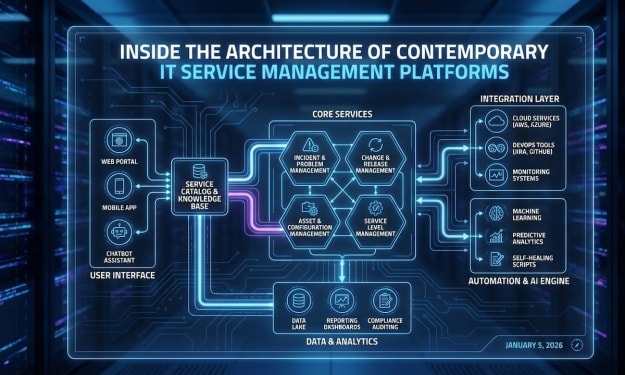
Inside the Architecture of Contemporary IT Service Management Platforms
Introduction As organizations increasingly rely on digital systems to operate efficiently, IT Service Management (ITSM) platforms have become a critical component of modern enterprises. These platforms help manage IT services, streamline workflows, and ensure consistent service delivery. Behind every effective ITSM solution lies a carefully designed architecture that integrates multiple technologies, processes, and systems.
By Nayel Basim Al Shehhi5 days ago in 01



Comments
There are no comments for this story
Be the first to respond and start the conversation.