
"Legend of Their Time"
"In an Age of Silence, One Voice Became a Legend.

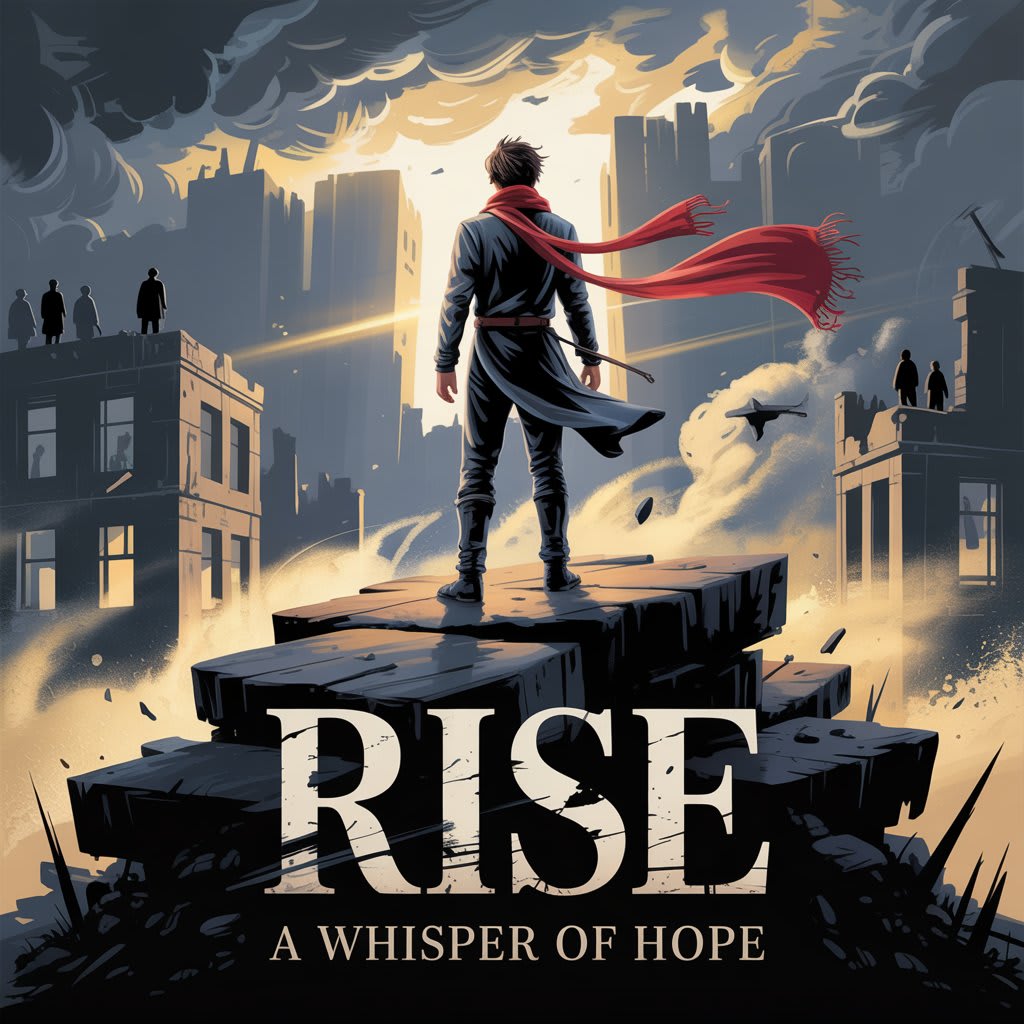
Legend of Their Time
"In an Age of Silence, One Voice Became a Legend."
The world had forgotten how to speak.
Not because the people had lost their voices — but because the cost of speaking had become too high.
In the grey city of Virell, once a beacon of hope and culture, silence had ruled for nearly two decades. The High Order, a ruling regime born from war and paranoia, had outlawed free speech. Words of protest, poetry, or even unsanctioned laughter could earn you a disappearance into the fog — a punishment no one returned from.
The people had grown accustomed to it. They wore masks of indifference. They walked with their heads bowed, shoulders hunched. Children grew up learning not the alphabet, but gestures of compliance. Fear became the only language spoken freely.
And yet, in the shadows of forgotten libraries and beneath broken statues, a boy named Kael was learning to speak.
Raised by his grandfather, a former teacher whose tongue had been scarred by fire for defying the Order, Kael grew up hearing stories of a time before silence. A time when voices built nations and ideas moved mountains. His grandfather whispered poems into the night, reciting old verses that once made people weep or dance. And Kael listened. Not just with ears — but with his soul.
“What’s the use of words, Grandfather?” he once asked. “No one listens.”
“Not yet,” the old man replied. “But a voice doesn't need to be loud. It only needs to be true.”
Years passed. The city grew colder. More towers were built to monitor silence. More people vanished.
Kael, now a young man, became a ghost within the city — a courier for forbidden knowledge. He carried messages, old songs, fragments of banned books. He wore a red scarf, just like the rebels of the lost generation, tucked under his cloak. He didn’t know why he risked everything. Maybe it was madness. Or maybe it was hope.
One day, he found it — the Speaker’s Square. It was buried beneath rubble in the heart of the city, once the place where artists and philosophers stood and spoke truths that stirred nations.
Now, it was just cracked stone and dust.
But Kael stood there anyway.
He climbed the steps, heart pounding, hands trembling. The city’s eyes — surveillance drones and Order agents — watched everything. And yet, he took off his scarf, wrapped it around his wrist, and opened his mouth.
At first, only air came out. His throat was dry from fear. But then… he remembered a poem his grandfather used to whisper:
“When the world forgets how to dream,
Let one heart light the flame unseen.
Speak not for all, but speak as one—
And darkness will not block the sun.”
He said it aloud.
A single poem. A single voice.
And the world shuddered.
The drones halted. The streets paused. Windows cracked open. From corners and alleys, eyes emerged — wide, astonished.
Someone had spoken.
Kael didn’t run.
He returned the next day. And the next. Each day, he spoke. He told stories. He read from forgotten journals. He sang broken melodies.
The people watched. Some cried quietly. Others smiled for the first time in years. And slowly, word spread. The Voice, they called him.
The High Order called him a traitor.
They came for him on the thirteenth day.
Hundreds of black-armored enforcers surrounded the square. The drones aimed their weapons. A voice rang out from a hovering command ship:
“Cease your defiance. This is your final warning.”
Kael looked at the crowd gathering behind him. Not thousands — but enough. He saw old men holding each other's hands, children on shoulders, mothers wiping tears.
He stepped forward.
“I speak not to defy you,” he shouted, voice shaking but clear, “but to remind them who they are.”
He turned to the people.
“You are not shadows. You are not silent. You have a voice — and I only reminded you.”
A beat of silence.
Then an old woman stepped forward and whispered, “We remember.”
A young boy echoed, louder: “We remember!”
And then came a roar — not of violence, but of unity. The people shouted in one voice, the way they hadn't in decades.
“WE REMEMBER!”
The sky lit up. The Order opened fire.
But they couldn’t shoot everyone.
And they couldn’t shoot the idea.
Kael fell. A bullet to the chest. The scarf on his wrist fluttered down like a wounded flame.
The crowd scattered — but his voice didn’t die.
Someone picked up the scarf. A girl. Maybe thirteen. She stood where Kael had stood. And she screamed:
“He spoke for us. Now we speak for him.”
The revolution didn’t happen in one day. But something broke in the hearts of the people — something beautiful.
Years later, when the Order had fallen and the city began to sing again, they built a statue in the center of Speaker’s Square.
Not a grand warrior. Not a king.
Just a young man, one hand to his chest, a red scarf around his wrist, eyes closed — as if still speaking.
The plaque beneath read:
"Kael Varin — The Voice of Silence."
He did not shout. He did not command.
But he spoke. And the world heard.
And so, in a time where silence had become law, one voice rose.
And became a legend.
About the Creator
Keep reading
More stories from younas khan and writers in 01 and other communities.
The Mind Behind Mars: The Elon Musk Story
In a quiet neighborhood in Pretoria, South Africa, a curious boy named Elon Musk sat alone, lost in books and dreams. While other children played outside, Elon was flipping pages of science fiction novels, computer manuals, and encyclopedias. The world didn’t quite understand him — he was shy, introverted, and deeply imaginative. But even then, there was a flicker in his eyes, a restlessness in his mind, and a relentless desire to understand how everything worked.
By younas khan9 months ago in 01
Why Most Fitness Apps Lose 80% of Users in 30 Days
The fitness technology sector is currently facing a "leaky bucket" crisis. User acquisition costs have stabilized in early 2026. However, the data remains very grim. Approximately 80% of users abandon new fitness applications within the first month.
By Devin Rosario7 days ago in 01
Cost to Develop an App Like Tinder: Your 2026 Guide
Building a dating app right now feels like trying to catch lightning in a bottle. Y'all probably think it is just about swiping, but the tech underneath has grown quite thick lately. I reckon you are looking at a massive range of prices.
By Sherry Walker2 days ago in 01




Comments
There are no comments for this story
Be the first to respond and start the conversation.