
The Mind Behind Mars: The Elon Musk Story
How One Man Dared to Change the World—And Is Doing It

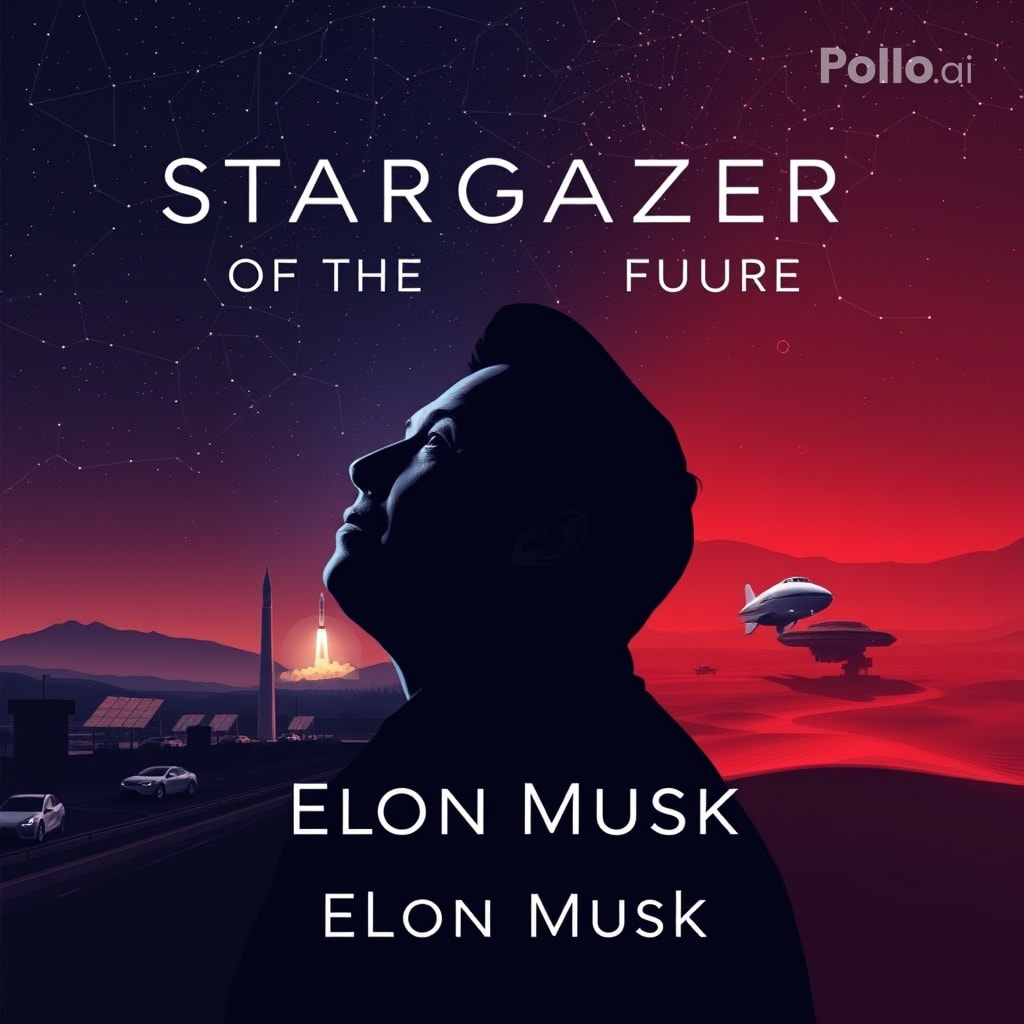
In a quiet neighborhood in Pretoria, South Africa, a curious boy named Elon Musk sat alone, lost in books and dreams. While other children played outside, Elon was flipping pages of science fiction novels, computer manuals, and encyclopedias. The world didn’t quite understand him — he was shy, introverted, and deeply imaginative. But even then, there was a flicker in his eyes, a restlessness in his mind, and a relentless desire to understand how everything worked.
At age 12, Elon created a simple video game called Blastar and sold it for $500. While that may have seemed trivial to others, it was the first spark of something extraordinary — a sign that he wasn't just a dreamer, but a doer.
His journey wasn’t smooth. Elon faced bullying in school, both physical and emotional. He was pushed down stairs and beaten so badly once that he had to be hospitalized. But instead of becoming bitter, he became more determined. He devoured knowledge — physics, engineering, programming — anything that could bring him closer to his vision of a better world.
After moving to Canada at 17 and eventually transferring to the University of Pennsylvania, Elon began laying the foundation for a future no one else could see. He believed that humanity’s survival depended on two things: transitioning the world to sustainable energy and making life multi-planetary. These weren’t casual ambitions; they were obsessions.
In 1999, after co-founding Zip2 and selling it for nearly $300 million, Elon didn’t stop. He plunged into the financial technology world, co-founding X.com, which later became PayPal. The sale of PayPal to eBay made him a multimillionaire. Most would have retired, bought a yacht, and faded into luxury.
But Elon wasn’t like most people.
Instead of enjoying his fortune, he invested nearly every dollar into his three biggest ventures: Tesla, SpaceX, and SolarCity. He faced ridicule, mockery, and worst of all — failure.
Tesla was mocked as an impossible dream. No one believed an electric car company could survive in a market dominated by gas-powered giants. Early models failed, deadlines were missed, and production lines stalled. SpaceX suffered three failed rocket launches in a row. Each one cost millions. Each one shook the dream. With every setback, investors pulled away, and critics sharpened their knives.
He was down to his last dollar. In 2008, Elon stood at a crossroads: one final rocket launch. If it failed, SpaceX would be bankrupt. If it failed, Tesla would follow. The world would call him a fool. Everything he had worked for would collapse.
But the fourth rocket didn’t fail. It soared.
And with that flight, the impossible became real.
NASA noticed. Contracts came in. Tesla survived. SolarCity grew. And Elon Musk — the bullied boy from Pretoria — became a name that echoed in boardrooms, classrooms, and newsrooms around the world.
He didn’t stop there.
With Tesla, he redefined what electric cars could be — not slow or boring, but fast, sleek, and desirable. He didn’t just build cars; he built a movement. A shift in the global auto industry toward sustainable energy, charging stations, and smart technology.
With SpaceX, he launched reusable rockets, slashing the cost of space travel and reigniting humanity’s dream of exploring the stars. He envisioned a city on Mars — not as a fantasy, but as a blueprint. The Starship program is now one of the most ambitious undertakings in aerospace history.
With Neuralink, he’s working to merge the human brain with AI. With The Boring Company, he's attempting to solve traffic problems underground. With OpenAI, he foresaw the ethical need for safe artificial intelligence. His fingers are in many industries, but his mission remains consistent: to push humanity forward.
But Elon Musk isn’t a flawless hero. His leadership style is intense, his deadlines aggressive, and his tweets often controversial. He’s been criticized, even sued, and yet — he keeps moving forward. Because for Elon, progress is non-negotiable.
He sleeps on factory floors, works 80-100 hour weeks, and pushes his teams beyond limits. Not out of cruelty, but belief — belief that the future is not something we wait for, but something we build.
Ask him why he does it all, and he’ll tell you plainly: “If something is important enough, even if the odds are against you, you should still do it.”
That’s Elon Musk in a sentence.
He dares, where others hesitate. He builds, where others theorize. He fails, learns, and tries again — where others give up.
He doesn’t see obstacles. He sees design problems waiting for solutions. He doesn’t wait for permission. He acts.
And today, we’re driving electric vehicles that challenge supercars. We’re watching rockets land back on Earth like scenes from science fiction. We’re dreaming again — not just of apps and gadgets, but of planets and stars.
Because one man dared to think differently.
Because one man didn’t just ask, “What is?” — he asked, “What could be?”
Elon Musk didn’t wait for the future.
He built it.
And he's still building.
Moral of the Story:
The future doesn’t belong to the lucky or the privileged. It belongs to the relentless. The ones who see beyond today. The ones who refuse to settle. The ones who understand that failure isn’t the end — it’s part of the path.
Elon Musk’s story isn’t just about technology.
It’s about belief — in ideas, in progress, and in oneself.
So if you're ever told your dream is too big, or your ideas too wild — remember Elon.
And keep building.
2/2
About the Creator
Keep reading
More stories from younas khan and writers in 01 and other communities.
Seeing Isn’t Feeling
Seeing Isn’t Feeling Some connections go deeper than sight. I used to think that love was a matter of sight—how you look at someone, how you catch their gaze, how they smile when they see you walk into a room. But I’ve learned that love is more about feeling what others can’t say. What they won’t show. What they hope someone might notice beneath their calm expression.
By younas khan8 months ago in 01
How Tax Outsourcing Companies Are Helping U.S. Businesses Stay Compliant and Profitable
Taxes are one of the most unavoidable parts of doing business in the United States. Whether you’re running a small startup or managing a growing company, tax compliance can quickly turn into a major headache. This is where Tax Outsourcing Companies have become a game-changer for businesses across the USA. By handing over complex tax responsibilities to professionals, companies are finding smarter ways to save time, reduce errors, and stay compliant with ever-changing tax laws.
By Outsourced Bookkeeping Solutions5 days ago in 01
Elon Musk called medical school "pointless," but Jeff Bezos wants Gen Z to finish college before starting their own companies — as AI threatens entry-level jobs
The job market is becoming volatile by the minute as generative AI becomes more prevalent and gains broad adoption across organizations worldwide. Last year, Salesforce CEO Marc Benioff revealed that the company is seriously debating hiring software engineers, citing "incredible productivity gains" from agentic AIs.
By Dena Falken Esq2 days ago in 01




Comments (1)
Elon's story is inspiring. His determination despite hardships led to amazing achievements.