
Why Most Fitness Apps Lose 80% of Users in 30 Days
A guide for developers and founders on overcoming the retention crisis in the 2026 digital health market

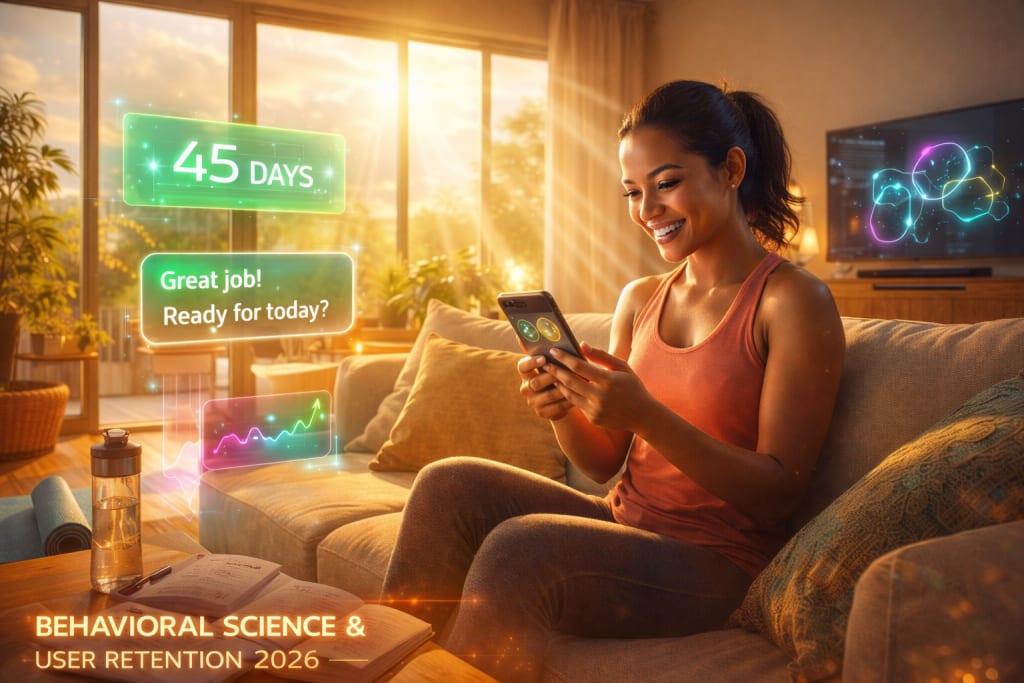
The fitness technology sector is currently facing a "leaky bucket" crisis. User acquisition costs have stabilized in early 2026. However, the data remains very grim. Approximately 80% of users abandon new fitness applications within the first month.
Developers and stakeholders must understand this trend. Knowing why most fitness apps lose 80% of users in 30 days is a requirement. It is essential for fiscal survival in the current market.
This high churn rate is not usually the result of bad code. It is not always about a poor user interface either. Instead, it stems from a fundamental disconnect. App mechanics do not match the psychological realities of habit formation.
We now live in an era of "digital fatigue." This is a recognized consumer trend in 2026. Apps often fail to provide immediate and frictionless value. They also lack deep personalization. Such apps are deleted without a second thought by the user.
The 2026 Retention Reality: Why Users Walk Away
The average smartphone user now has over four health-related subscriptions. Competition is no longer just about having the most features. It is now about winning "cognitive share" in the user's mind.
An app might require too much manual input from the person. It might also provide generic advice that feels unhelpful. In these cases, the app becomes a chore. It stops being a helpful tool for the user.
Recent industry reports from 2025 show a "Day 30" cliff. This drop in users is steepest for apps relying on manual logging. This is often because the first month is a psychological breaking point. Users initially enter the app with very high motivation.
They may have a New Year's resolution or a seasonal goal. However, this "honeymoon phase" eventually fades away. Manual data entry creates a lot of friction for the person. This effort soon outweighs the perceived benefit of the app.
The Problem of "Generic Overload"
In the past, a library of 500 workout videos was a selling point. In 2026, a large library is actually a liability. Expert analysis suggests that "Choice Paralysis" is a primary driver for abandonment.
A user opens an app and sees too many options. They must spend five minutes just deciding what to do. This creates an emotional feeling of frustration. In that moment, their physical momentum is lost. Successful apps have shifted away from simple libraries. They now focus on providing "curated paths" for the individual.
The Three Pillars of 30-Day Retention
We must look at three specific areas to understand this 80% loss. Most products fail in Onboarding, Feedback Loops, and Community Integration.
1. The Onboarding Friction Point
Many apps front-load their friction during the signup process. They ask for height, weight, goals, and injuries immediately. They also ask for dietary preferences before the user sees the dashboard.
In 2026, the gold standard is "Progressive Disclosure." This means collecting data slowly over a longer time. It allows the user to experience a "micro-win" very quickly. The user should feel success within the first 90 seconds.
2. The Absence of Variable Rewards
Behavioral science explains how we form new habits. It happens through the Cue-Action-Reward cycle. The "Cue" starts the behavior. The "Action" is the workout itself. The "Reward" is the positive feeling afterward.
The reward is boring if it is always the same. Users grow tired of seeing the same "You finished" message. Leading apps in 2026 use AI to provide variable rewards. These include unexpected digital badges or personalized insights. An app might praise a specific heart rate recovery metric. It might even offer a shout-out from a virtual coach.
3. Misaligned Difficulty
A user feels incompetent if a workout is too hard. They feel they are wasting time if it is too easy. This is known as the "Goldilocks problem."
Apps cannot adjust difficulty without real-time biometric feedback. Wearable integration is now a standard requirement. Biometrics solve this by finding the "just right" intensity. Without it, the frustration often ends in the user deleting the app.
Bridging the Gap with Intelligent Development
Solving the retention crisis requires a move toward adaptive systems. Static programming is no longer enough for modern users. Founders seek specialized expertise to handle complex data science. High-retention products require a very deep level of technical skill.
Teams focusing on Mobile App Development in Georgia are leading the way. They prioritize the integration of HealthKit and Google Fit APIs. These tools allow the app to read data directly from watches. This automates data collection for the user. It removes the "logging fatigue" that kills most fitness apps.
Developers ensure the user only focuses on the actual movement. The app handles the quantification and math in the background. This is a shift from a "manual tool" to a "passive coach." This shift is the hallmark of the most successful platforms.
Real-World Scenario: The "Adaptive Coach" vs. The "Static Planner"
Consider two hypothetical products entering the market in 2026.
App A (The Static Planner):
- Method: It sends a notification at 7:00 AM every day.
- Message: It always says "Time to work out!"
- Result: The user is in a busy morning meeting.
- Reaction: The user feels guilty and ignores the alert.
- Outcome: The user eventually disables all alerts.
- Final Result: The app is deleted on Day 12.
App B (The Adaptive Coach):
- Method: It checks the data from the user's wearable device.
- Observation: It notices the user had very poor sleep.
- Context: It sees that their digital calendar is packed today.
- Action: It sends a note at 5:30 PM.
- Message: "Tough day? Let’s do a 10-minute mobility flow to de-stress."
- Outcome: The user feels "seen" and supported by the technology.
- Final Result: Retention persists well past Day 90.
AI Tools and Resources
Peloton Guide API — This tool integrates motion-tracking metrics into third-party apps.
- Best for: Improving form correction and engagement in home-workout apps.
- Why it matters: It provides the "feedback" part of the habit loop.
- Benefit: It works effectively without needing human trainers.
- Who should skip it: Apps focused purely on outdoor running or nutrition.
- 2026 status: It is widely available for enterprise and mid-market partners.
Terra API — This is a single API to connect to all wearable data.
- Best for: It eliminates the need for manual data entry.
- Why it matters: It directly addresses why users quit by removing friction.
- Who should skip it: Budget-strapped startups with very limited funds.
- Note: This tool carries a recurring subscription cost.
- 2026 status: It is the industry standard for cross-platform biometric syncing.
Risks and Limitations: When Personalization Overreaches
Data-driven retention is effective but has a "creepy factor" threshold. Privacy regulations are much stricter in 2026. The updated GDPR-2 specifically protects biometric health data.
When Retention Strategies Fail: The Over-Optimization Trap
- Scenario: An app sends too many "personalized" nudges to the user based on every minor biometric change.
- Warning signs: Users begin opting out of push notifications entirely or revoke health permissions.
- Why it happens: This is known as "Notification Anxiety." The app feels like a nagging parent rather than a supportive tool.
- Alternative approach: Implement a "Quiet Mode" or allow users to set their own "Nudge Intensity" during onboarding.
Key Takeaways
- Automation is Mandatory: You have lost the user if they must type data. Use 2026-standard wearable integrations for all tracking.
- Micro-Wins Matter: Ensure the user feels achievement within the first session.
- Context is King: Use AI to understand the user's daily environment, including sleep, weather, and work calendars.
- Psychology over Features: Simple apps that understand habit formation always win. They beat complex apps that ignore human behavior.
Developers should review a 2026 AI Personal Trainer developer blueprint. This document provides a deeper look at the required architecture. It explains how to sustain long-term engagement for users.
About the Creator
Keep reading
More stories from Devin Rosario and writers in 01 and other communities.
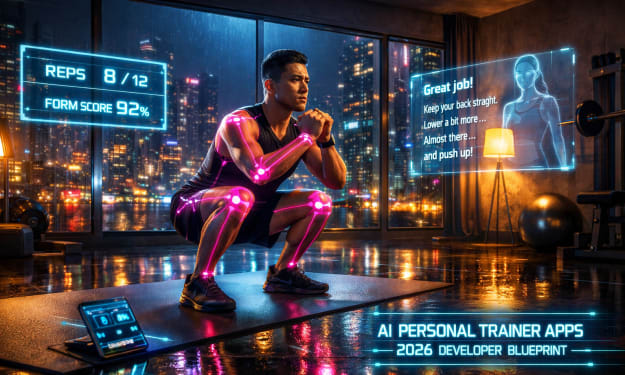
AI Personal Trainer Apps - 2026 Developer Blueprint
The fitness industry has seen a massive shift recently. Static video libraries are now a thing of the past. Users now demand interactive and real-time coaching. The AI Personal Trainer Apps - 2026 Developer Blueprint sets new standards. Modern apps require more than just a simple rep counter. They demand high-fidelity motion analysis. They also require empathetic feedback driven by Large Language Models (LLMs). Developers must move beyond basic API wrappers. They must build sophisticated edge-computing architectures. These systems must respect user privacy. They must also provide professional-grade athletic guidance.
By Devin Rosarioabout 14 hours ago in 01
The Growing Impact of Simple AI Tools in Everyday Digital Tasks
Introduction Artificial Intelligence (AI) is becoming an important part of modern technology. Many digital platforms now use AI to help people complete tasks faster and more efficiently. From writing support to idea generation, AI tools are helping individuals improve productivity without requiring advanced technical knowledge.
By Arslan Khana day ago in 01


Comments
There are no comments for this story
Be the first to respond and start the conversation.