
Inflation, types, reasons and effects on economy.
Definition and types

art writing...Inflation refers to the persistent and general increase in the price level of goods and services in an economy over a period of time. This phenomenon is often measured by the inflation rate, which is the percentage change in the price level from one period to another, typically a year.
Inflation can be caused by a variety of factors, including an increase in the money supply, an increase in demand relative to supply, or a decrease in supply relative to demand. It can also be affected by external factors such as changes in exchange rates or commodity prices. Inflation can have both positive and negative effects on an economy and its people.
One of the main negative effects of inflation is that it reduces the purchasing power of money. When prices increase, the same amount of money can buy fewer goods and services. This can lead to a decrease in living standards for individuals and households, particularly for those on fixed incomes or with limited access to credit.
Inflation can also create uncertainty and volatility in financial markets, making it more difficult for businesses and individuals to plan for the future. This can lead to reduced investment and economic growth.
On the other hand, some level of inflation is generally considered to be necessary for a healthy economy. Inflation can encourage spending and investment by making it more expensive to hold onto cash. It can also make exports more competitive by reducing the relative price of domestic goods and services.
Central banks play a key role in managing inflation through their control of monetary policy. In many countries, central banks aim to maintain a target inflation rate within a certain range, typically around 2%. They do this by adjusting interest rates and controlling the money supply.
Overall, inflation is a complex economic phenomenon with both positive and negative effects. While high inflation can be harmful to individuals and the economy, some level of inflation is generally considered to be necessary for a healthy economy. Managing inflation is a key challenge for policymakers, and requires a careful balancing of various economic factors.
There are various types of inflation that can occur in an economy. Here are some of the most common types:
Demand-Pull Inflation: This type of inflation occurs when there is excessive demand for goods and services relative to the supply available in the economy. This increase in demand can lead to an increase in prices as suppliers raise prices to meet the demand.
Cost-Push Inflation: This type of inflation occurs when there is an increase in the cost of production for goods and services, such as an increase in the cost of raw materials or wages. This increase in costs can lead to an increase in prices as suppliers raise prices to maintain their profit margins.
Wage-Price Spiral: This type of inflation occurs when workers demand higher wages to keep up with the rising cost of living, which leads to an increase in production costs. As a result, suppliers raise prices to maintain their profit margins, which in turn leads to another round of wage increases, and so on.
Imported Inflation: This type of inflation occurs when the prices of imported goods and services rise due to changes in exchange rates, tariffs, or other factors. This increase in prices can lead to an increase in domestic prices as suppliers raise prices to maintain their profit margins.
Hyperinflation: This is an extreme form of inflation that occurs when prices rise at a very high rate, usually more than 50% per month. This type of inflation is often caused by a collapse in the value of the currency and can lead to social and economic instability.
Understanding the different types of inflation is important for policymakers as it can help them to identify the underlying causes of inflation and develop appropriate policies to manage itInflation can have both positive and negative effects on an economy, depending on the level and duration of inflation. Here are some of the effects of inflation on a country's economy:
Decrease in Purchasing Power: Inflation leads to a decrease in the purchasing power of money. This means that the same amount of money can buy fewer goods and services, leading to a decrease in the standard of living of individuals and households.
Uncertainty and Volatility: High inflation can lead to uncertainty and volatility in financial markets, making it difficult for businesses and individuals to plan for the future. This can lead to reduced investment and economic growth.
Increased Cost of Borrowing: High inflation can lead to an increase in the cost of borrowing. This can make it more difficult for businesses and individuals to access credit, which can lead to a decrease in investment and economic growth.
Redistribution of Wealth: Inflation can lead to a redistribution of wealth within an economy. Those who have borrowed money at a fixed interest rate may benefit from inflation, as they are repaying their loans with money that is worth less than when they borrowed it. On the other hand, those who have saved money in fixed-income investments may see a decrease in the value of their savings.
Increased Exports: Inflation can make exports more competitive by reducing the relative price of domestic goods and services. This can lead to an increase in exports and a decrease in imports, which can improve the trade balance of a country.
Reduced Economic Growth: High and persistent inflation can lead to reduced economic growth by reducing consumer and business confidence and investment. This can lead to a decrease in productivity, employment, and overall economic activity
About the Creator
Keep reading
More stories from writers in 01 and other communities.
Daniel Raphael Dreamporting Reviews: What Participants Are Saying
Personal development programs often inspire curiosity—and skepticism—in equal measure. Dreamporting, founded by Daniel Raphael, is no exception. Positioned within the mindfulness and consciousness-based growth space, the program has generated a wide range of responses from participants. Some describe it as insightful and grounding, while others remain uncertain about its value or structure.
By Jeffrey D. Gross MDabout 13 hours ago in 01
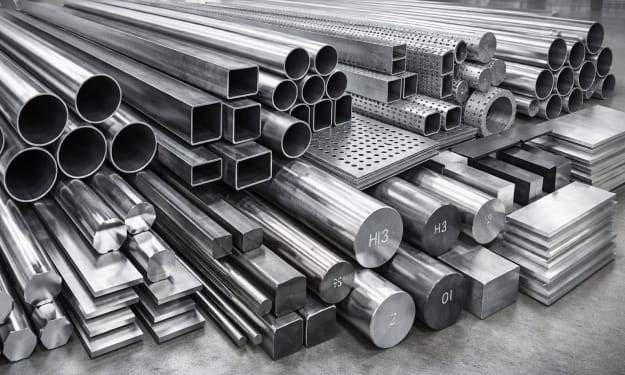
The Most Popular Types of Steel in Industry
Steel remains the backbone of modern industry. From towering skyscrapers to precision surgical instruments, this versatile alloy shapes our world in countless ways. But not all steel is created equal. Different compositions and treatments yield materials with vastly different properties, each suited to specific industrial applications.
By Sommersanga day ago in 01
Thoughts on Vocal and the way the world is
"Death cannot stop true love, only delay it." – Wesley in The Princess Bride. I decided to come back to Vocal on a very cold and dark night at the end of December. I had been, and still am, convalescing from a horrible staph infection that had gone misdiagnosed for months. This, paired with the increasing challenges of being healthy, making the best choices for my co-parented child, being a wife, and being a director at a new job, was a lot to manage.
By Jazzy 4 days ago in Confessions



Comments
There are no comments for this story
Be the first to respond and start the conversation.