
How to Ship a Portable Concrete Pump Overseas: A Complete Guide
Aimix concrete pumping solution

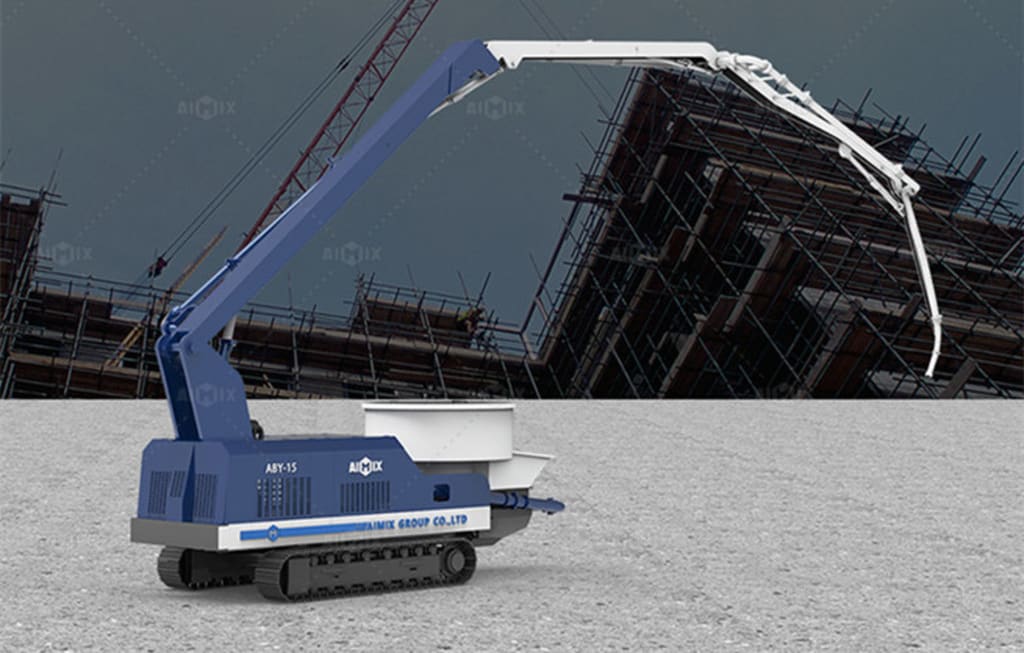
Shipping a portable concrete pump overseas requires careful planning to ensure safe transit, compliance with regulations, and cost efficiency. Whether you're exporting to Africa, the Middle East, Europe, or Southeast Asia, proper packaging, documentation, and logistics are essential to avoid delays, damage, or customs issues.
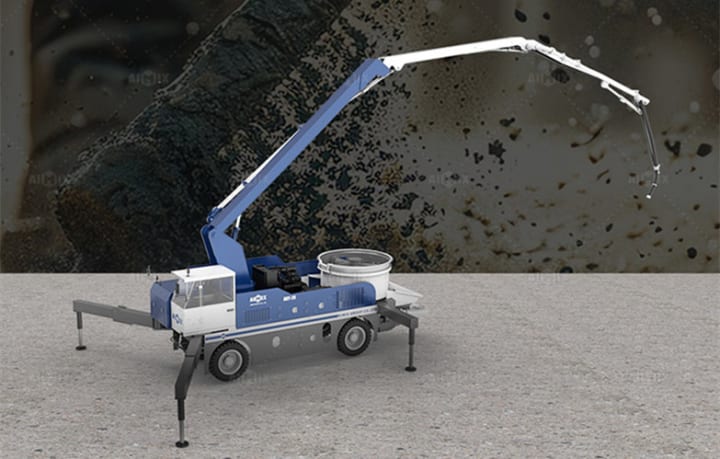
This guide covers step-by-step procedures for shipping a portable concrete pump internationally, including packing methods, shipping options, customs clearance, and cost-saving tips.
Pre-Shipment Preparation
A. Cleaning & Maintenance
Flush the Pump System: Remove all residual concrete using high-pressure water.
Drain Fluids: Empty hydraulic oil, fuel, and coolant to prevent leaks.
Disassemble Detachable Parts: Remove hoses, pipelines, and control panels for separate packing.
B. Documentation & Compliance
Commercial Invoice: Must include product description, value, and HS code (typically 8428.90.00 for concrete pumps).
Packing List: Details all components and their weights/dimensions.
Certificate of Origin: Required for customs duty calculations.
Export License (if applicable): Some countries restrict heavy machinery exports.
CE/ISO Certifications: Proof of compliance with international standards.
C. Packaging for Safe Transit
Wooden Crating: Use marine-grade plywood (minimum 15mm thickness) for the main pump unit.
Anti-Corrosion Protection: Apply VCI (Vapor Corrosion Inhibitor) paper or rust-preventive spray on metal parts.
Shock Absorption: Use foam padding and air cushions to protect sensitive components.
Waterproof Wrapping: Cover electrical parts with plastic sheeting and silica gel packs to prevent moisture damage.
Choosing the Right Shipping Method
A. Container Shipping (Best for Port-to-Port Delivery)
20ft Container: Fits smaller portable pumps (up to 6,000 kg).
40ft High-Cube Container: Ideal for larger units (up to 12,000 kg).
LCL (Less than Container Load): Cost-effective if shipping multiple small machines.
B. RORO (Roll-On/Roll-Off) Shipping
- Suitable for wheel-mounted portable pumps.
- The pump is driven onto the vessel, saving on crating costs.
Disadvantages: Exposure to saltwater corrosion, limited availability.
C. Flat Rack or Open-Top Container
- Used for oversized or heavy pumps that don’t fit in standard containers.
- Requires extra waterproofing due to exposure.
D. Air Freight (For Urgent Shipments)
- Extremely expensive (typically $8-$15 per kg).
- Only viable for small, high-value components.
Selecting a Freight Forwarder & Insurance
A. Choosing a Reliable Freight Company
- Look for experience in heavy machinery exports.
- Verify if they handle door-to-door delivery.
- Check customer reviews (e.g., Flexport, DHL Global Forwarding).
B. Marine Insurance Coverage
All-Risk Insurance: Covers damage, theft, and natural disasters.
Typical Cost: 1-3% of the pump’s value.
Exclusions: Improper packing, wear and tear.
Customs Clearance & Import Regulations
A. Destination Country Requirements
Import Duties: Vary by country (e.g., 5-15% in Africa, 0-10% in the Middle East).
Local Certifications: Some countries require SONCAP (Nigeria), SASO (Saudi Arabia), or COC (Kenya).
Taxes & VAT: Check if the buyer must pay additional fees.
B. Avoiding Customs Delays
Accurate HS Code Declaration: Misclassification can lead to penalties.
Pre-Clearance: Some forwarders offer advance customs processing.
Phytosanitary Certificate (if wood packaging is used): Mandatory in the EU, USA, and Australia.
Cost Breakdown of Shipping a Portable Concrete Pump
| Expense | Estimated Cost (USD) |
|---------------------------|--------------------------|
| Wooden Crating | $500 - $2,000 |
| 20ft Container Shipping | $1,500 - $4,500 |
| 40ft Container Shipping | $3,000 - $7,000 |
| Marine Insurance | 1-3% of pump value |
| Customs Duties (varies) | 5-20% of CIF value |
| Port Handling Fees | $200 - $800 |
Post-Shipment Steps
A. Tracking & Delivery Confirmation
- Use GPS tracking if available.
- Confirm ETA (Estimated Time of Arrival) with the forwarder.
B. Unloading & Reassembly
Use a forklift or crane for safe unloading.
Reassemble hoses, pipelines, and electrical connections.
Refill fluids (hydraulic oil, fuel, coolant).
C. Testing Before Operation
- Run a no-load test to check for transit damage.
- Verify hydraulic pressure and electrical functions.
Common Shipping Mistakes to Avoid
❌ Skipping Proper Cleaning → Concrete residue hardens, damaging the pump.
❌ Incorrect Packaging → Leads to corrosion or mechanical damage.
❌ Underestimating Customs Fees → Unexpected costs for the buyer.
❌ Choosing the Cheapest Forwarder → Risk of delays or poor handling.
Shipping a portable concrete pump overseas requires:
✔ Proper cleaning & disassembly
✔ Secure wooden crating portable concrete pump
✔ Correct shipping method (container/RORO)
✔ Complete documentation & insurance
✔ Compliance with import regulations
By following this guide, exporters can minimize risks, reduce costs, and ensure smooth delivery.
About the Creator
consrtuctionmachines
AIMIX is a customer-center-oriented heavy equipment manufacturer and supplier, devoted to production, innovation, combination, one-stop solution, etc.
https://aimixgroup.com/
Keep reading
More stories from consrtuctionmachines and writers in 01 and other communities.
Top 5 Mistakes That Inflate Your Ready Mix Concrete Plant Price (and How to Avoid Them)
Investing in a ready mix concrete plant is a significant decision for any construction business. The plant will be the backbone of your concrete production, and its costs can vary greatly depending on a number of factors. While many companies focus primarily on the price tag, there are several mistakes that can inadvertently increase the total cost over time.
By consrtuctionmachines9 months ago in 01
10 Companies Influencing Mobile App Development Costs in 2026
Google’s 2026 infrastructure pivot toward AI Retrieval has officially decoupled mobile development costs from traditional labor-hour models. We are witnessing a tectonic shift where Entity Accountability dictates market entry pricing rather than simple feature complexity.
By Del Rosarioabout 5 hours ago in 01
How Memorial Benches Enhance the Visitor Experience in Cemeteries and Parks
Benches placed in cemeteries, parks, and other public spaces to memorialize someone who has passed on are quiet but powerful reminders that remembrance doesn’t have to be grand to be deeply meaningful. Unlike towering monuments or elaborate tombs, benches invite people to pause, sit, and spend time in a space.
By Andrew Lemieux3 days ago in 01
Getting Serious About Comedy (Part I)
If I were asked to remark on my life and the childhood that paved some road leading me to this point, I would have to say something about all the funny people who surrounded me for the last 26,872 days (and counting). Somewhere along that road, I became a big fan of laughter and the comedy that spawns it – and, I mean not only my own laughter, but the laughter of others, some of which I have actually been responsible for inducing.
By John Oliver Smith7 days ago in Humor




Comments
There are no comments for this story
Be the first to respond and start the conversation.