
How to optimize website speed by using Toolslite
Optimize Website speed

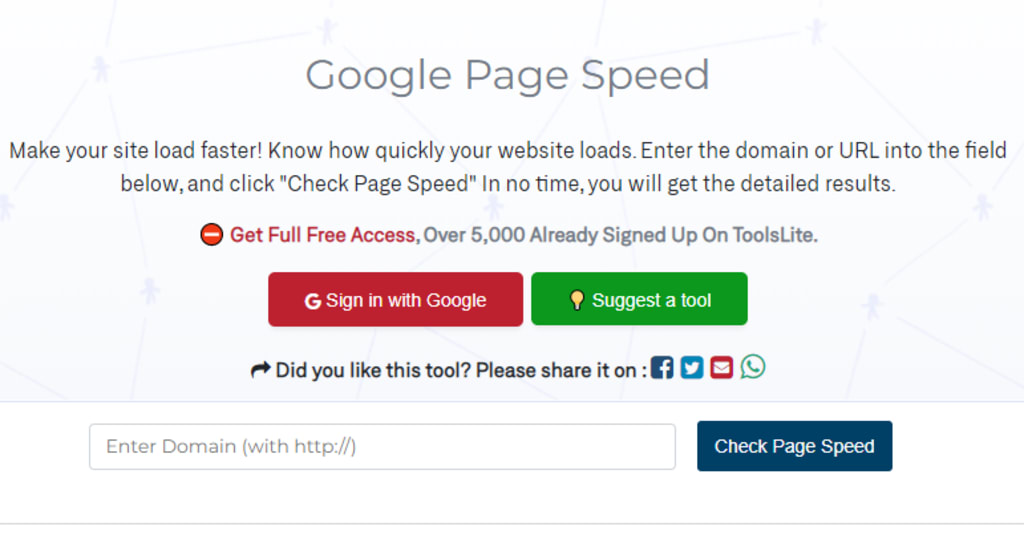
Do you have your own website? Do you plan to build your website and want some tips to boost its performance? Are you curious about what most impacts website speed?
Developing a website is not enough these days. Even developing an “awesome looking” website is not only going to serve your purpose unless it loads faster and rank better on Google.
👋 Best Website Speed Tool: Test Your Score for FREE ᐈ
What is Page Speed?
Page speed is the amount of time it takes for the content on a website’s page to fully load. In a world where people have come to expect instantaneous results, faster is better.
In fact, nearly half of web users expect a site to load in 2 seconds or less, and they tend to abandon a site that isn’t loaded within 3 seconds, according to surveys done by Akamai and Gomez.com.
But how long do most websites take to load?
The standards many have been using for page load time come from a study conducted by Geoff Kenyon where he compares website speed against the rest of the web:
- 5 seconds is faster than 25% of the web
- 3 seconds is faster than 50% of the web
- 2 seconds is faster than 75% of the web
- 1 second is faster than 94% of the web
So how can you determine how your website stacks up?
How to Determine Your Page Speed and Score
Here’s how to measure how your website stacks up:
- Hop into your website’s Google Analytics Site Speed reports. This will give you an idea of how your site has performed over various time periods and the load speed of each of your pages.
- Enter your site’s URL into Google’s PageSpeed Insights Tool. This will give you a report card on your website’s speed performance on mobile devices and desktop. The report comes with some recommended actions you can take to improve your site’s speed.
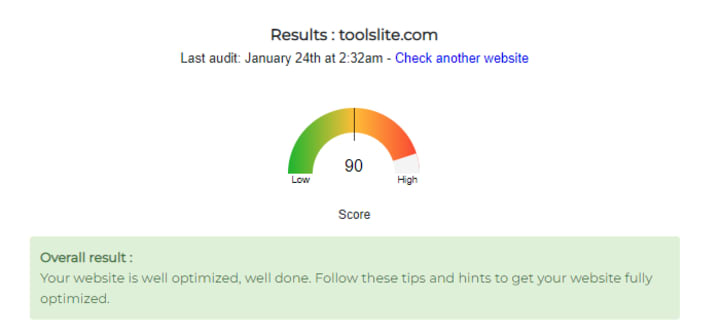
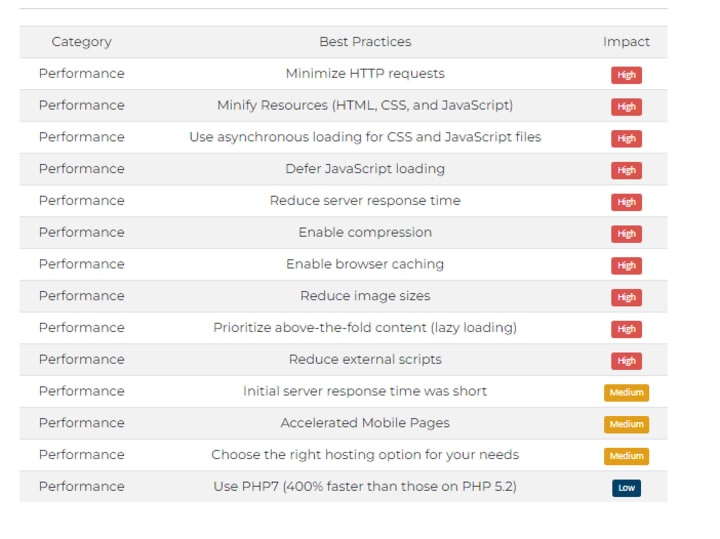
- Check the Google page Speed to find out the speed, rank and percent faster than the average of their tested websites
👋 Best Website Speed Tool: Test Your Score for FREE ᐈ
Why Does Page Speed Matter?
Bridging the gap between user expectations (2 seconds) and average website load time (5 seconds) is the goal of page speed optimization and the tactics we’ll outline later. But why exactly does page speed matter? It comes down to 3 main interconnected reasons:
1. Speed Kills UX
User experience is probably the most important reason you should care about website speed, so we’ll start here.
People don’t have the patience for slow loading websites anymore. In the beginning, just connecting to the internet required a tolerance that just doesn’t exist anymore.
Today, people are constantly online and you’ve got 3 seconds maximum to display your page or they’re gone. More than 3 seconds creates a poor user experience and the bar is only going to get higher in the future.
2. Speed Kills SEO
User experience is actually the driving force behind the SEO implications of site speed. While Google has been slow to officially reveal whether slow websites would receive ranking demotions, it appears that those days are coming. You need to make sure your website is ready.
3. Speed Kills Conversions
Your site speed’s effect on conversions is what should really catch your attention. How can you move people through your funnel if each step takes forever? Your super-fans will do it, but those new, hesitant people who are prone to buyers-remorse will bounce.
👋 Best Website Speed Tool: Test Your Score for FREE ᐈ
About the Creator
Alan Breugem
Freelancer at Fiverr.
💰 I Share With You For Free, How Freelancers Earn +$50k/Mo With No Skill 💰
Keep reading
More stories from Alan Breugem and writers in 01 and other communities.
Everything you need to know about Google PageSpeed Insights
How long do you like to wait for a web page to load before you tap the back button? Five seconds? 20 seconds? Perhaps one minute? According to Google, more than half of web users will abandon a website if it takes more than three seconds to load. In fact, the probability of a bounce rate increases to 123% if the page speed takes more than seven seconds.
By Alan Breugem4 years ago in Journal
Candace Owens pushes theory Charlie Kirk was 'time traveller' who went to 'X-Men school'
In a recent episode of her podcast, Candace Owens said Charlie Kirk told her he was a “time traveler” who was sent to “X-Men school,” and alleged he was monitored since childhood.
By Dena Falken Esq6 days ago in 01
How a Web Development Company in India Builds CMS eCommerce Sites?
The first CMS-based eCommerce project I watched unfold didn’t start with technology at all. It started with confusion. The client wanted an online store, a blog, marketing pages, and the ability to change everything without calling a developer every week. The development team didn’t argue platforms or frameworks. They asked questions—lots of them. That moment stuck with me because it explained how many teams in India actually approach CMS eCommerce work.
By Jane Smith3 days ago in 01



Comments
There are no comments for this story
Be the first to respond and start the conversation.