
How to Count the Energy Cost of Trailer Concrete Pump in Different Weather Days
Aimix Concrete Pumping Solution


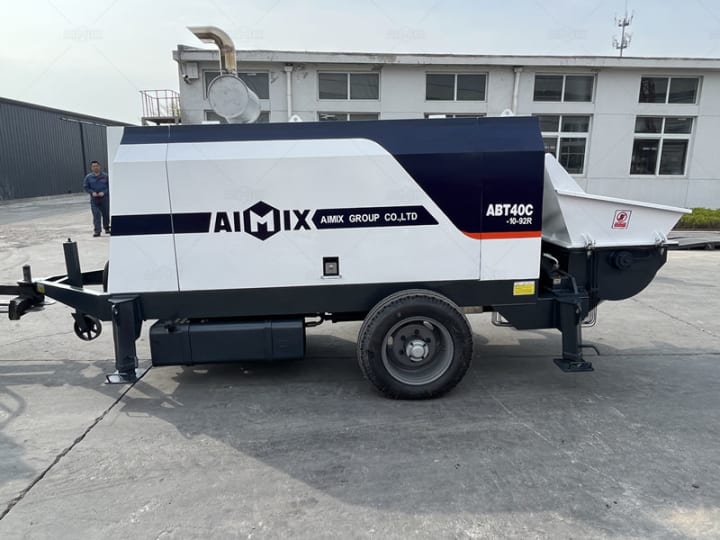
Trailer concrete pump has become an indispensable piece of equipment in modern construction projects, favored for its strong mobility, high conveying efficiency, and wide applicability. For construction enterprises and equipment operators, accurately counting the energy cost of trailer concrete pump is crucial for cost control and project profit management, and weather conditions are one of the key factors that significantly affect the energy consumption and thus the energy cost of the equipment. Different weather days (such as sunny days, rainy days, hot days, and cold days) bring varying challenges to the operation of trailer concrete pump, leading to differences in energy consumption. Below is a detailed guide on how to scientifically count the energy cost of trailer concrete pump in different weather days, helping relevant personnel grasp the cost law and optimize energy use, while clarifying the connection between energy consumption and the overall cost of concrete pump.

Basic Principles of Energy Cost Calculation for Trailer Concrete Pump
Before delving into the impact of different weather days on energy cost calculation, it is necessary to first clarify the basic principles and core factors of energy cost calculation for trailer concrete pump, as this lays the foundation for accurate counting in various weather conditions. The energy cost of trailer concrete pump mainly refers to the cost of energy (usually diesel or electricity) consumed during its operation, and the basic calculation formula is: Energy Cost = Energy Consumption per Unit Time × Operation Time × Energy Unit Price. Among them, energy consumption per unit time is the core variable affected by weather conditions, while operation time is determined by the construction task, and energy unit price is a fixed value in a short period (such as diesel price per liter or electricity price per kilowatt-hour). It should be noted that the energy cost of trailer concrete pump is an important part of the overall cost of concrete pump, which also includes maintenance cost, labor cost, and depreciation cost, but energy cost accounts for 30% to 50% of the total operational cost, making it a key focus for cost control. In addition, the energy consumption of trailer concrete pump is also related to its model, conveying capacity, conveying distance and height, and the performance of core components (such as hydraulic system and motor), but weather conditions directly affect the operating load of these components, thereby changing the energy consumption per unit time. Therefore, to count the energy cost accurately in different weather days, it is necessary to first master the basic energy consumption law of the equipment under normal weather conditions, and then adjust the calculation parameters according to the characteristics of different weather.
Energy Cost Calculation on Sunny Days (Normal Weather Condition)
Sunny days with moderate temperature (usually 15℃ to 25℃), low humidity, and no wind or gentle wind are the most favorable weather conditions for the operation of trailer concrete pump, and the energy consumption at this time is in the normal range, which can be used as the reference standard for energy cost calculation in other weather days. To count the energy cost of trailer concrete pump on sunny days, the following steps should be followed: First, determine the energy type of the equipment—most trailer concrete pumps use diesel engines as the power source, while some small and medium-sized models can also use electricity. For diesel-powered trailer concrete pumps, it is necessary to record the diesel consumption per unit time under normal operation (such as liters per hour). This data can be obtained through the equipment’s manual, on-site actual measurement, or historical operation records. For example, a 60m³/h diesel-powered trailer concrete pump consumes about 8 to 10 liters of diesel per hour under normal operation on sunny days. Second, record the actual operation time of the equipment on that day—note that the operation time here refers to the effective working time (excluding the idle time when the equipment is started but not conveying concrete). Third, confirm the current diesel unit price (such as $1.2 per liter). Finally, calculate the energy cost using the basic formula: Energy Cost = Diesel Consumption per Hour × Operation Time × Diesel Unit Price. For example, if the equipment operates for 8 hours a day, the diesel consumption per hour is 9 liters, and the diesel unit price is $1.2 per liter, the energy cost on that sunny day is 9 × 8 × 1.2 = $86.4. It should be noted that on sunny days, the hydraulic system of the trailer concrete pump works stably, the diesel engine (or motor) operates at the optimal load, and there is no additional energy consumption caused by weather factors, so the energy cost calculated at this time is the most accurate reference value. In addition, the energy cost on sunny days also reflects the basic energy efficiency of the equipment, which can help operators judge whether the equipment has potential energy consumption problems (such as excessive fuel consumption caused by component wear).
Energy Cost Calculation on Hot Days (High Temperature Weather)
Hot days (usually temperature above 30℃) will significantly increase the energy consumption of trailer concrete pump, thereby increasing the energy cost, mainly due to the impact of high temperature on the hydraulic system and power system of the equipment. High temperature will cause the hydraulic oil of the trailer concrete pump to heat up, reducing its viscosity and lubrication performance, which will increase the internal friction of the hydraulic system, require the hydraulic pump to work with higher load, and thus consume more energy. At the same time, the diesel engine (or motor) of the equipment will also generate more heat during operation in high temperature environment, and the cooling system needs to work continuously at high load to prevent overheating, which also increases additional energy consumption. To count the energy cost of trailer concrete pump on hot days, it is necessary to adjust the energy consumption per unit time based on the sunny day reference value. The specific steps are as follows: First, obtain the energy consumption increment coefficient of the equipment under high temperature conditions—this coefficient can be obtained through on-site measurement or industry experience, usually ranging from 1.15 to 1.3 (that is, the energy consumption on hot days is 15% to 30% higher than that on sunny days). For example, if the diesel consumption per hour on sunny days is 9 liters, the diesel consumption per hour on hot days will be 9 × 1.2 = 10.8 liters (taking the increment coefficient of 1.2). Second, record the actual operation time of the equipment on hot days—note that in high temperature environment, the equipment may need to stop for cooling intermittently, so the effective operation time may be shorter than that on sunny days, which needs to be accurately recorded. Third, confirm the energy unit price (same as sunny days). Finally, calculate the energy cost using the adjusted formula: Energy Cost = (Normal Energy Consumption per Hour × Increment Coefficient) × Effective Operation Time × Energy Unit Price. For example, if the effective operation time is 7 hours, the diesel consumption per hour after adjustment is 10.8 liters, and the diesel unit price is $1.2 per liter, the energy cost on that hot day is 10.8 × 7 × 1.2 = $90.72. In addition, on hot days, operators can also take some energy-saving measures (such as installing sunshades for the equipment, regularly replacing hydraulic oil, and cleaning the cooling system) to reduce the energy consumption increment, thereby reducing the energy cost. It is also important to note that the increment coefficient will vary according to the specific temperature—higher temperature will lead to a larger increment coefficient, which needs to be adjusted flexibly based on actual conditions.
Energy Cost Calculation on Cold Days (Low Temperature Weather)
Cold days (usually temperature below 5℃, especially below 0℃) will also increase the energy consumption of trailer concrete pump, but the mechanism of increasing energy consumption is different from that of hot days. In low temperature environment, the hydraulic oil of the trailer concrete pump will become viscous, increasing the resistance of the hydraulic system, making the power system need to output more power to drive the hydraulic pump, thus increasing energy consumption. At the same time, the diesel engine of the equipment is difficult to start in low temperature, and needs to preheat before starting, which consumes additional diesel; after starting, the diesel engine needs to run at idle speed for a period of time to reach the normal operating temperature, which also increases idle energy consumption. In addition, if the concrete is easy to freeze in low temperature, the equipment may need to work at a higher conveying speed to avoid pipeline blockage, which also increases energy consumption. To count the energy cost of trailer concrete pump on cold days, the following steps should be taken: First, determine the energy consumption increment coefficient under low temperature conditions—this coefficient is usually ranging from 1.2 to 1.4 (that is, the energy consumption on cold days is 20% to 40% higher than that on sunny days), and it will be larger when the temperature is lower (such as below 0℃, the coefficient can reach 1.3 to 1.4). For example, if the normal diesel consumption per hour is 9 liters, the diesel consumption per hour on cold days (temperature -2℃ to 5℃) will be 9 × 1.25 = 11.25 liters (taking the increment coefficient of 1.25). Second, record the total energy consumption, including preheating energy consumption, idle energy consumption, and effective operation energy consumption. For diesel-powered trailer concrete pumps, the preheating process usually consumes 1 to 2 liters of diesel, and the idle energy consumption per hour is about 3 to 4 liters. Third, record the effective operation time of the equipment—similar to hot days, the equipment may need to stop intermittently in cold days to check the hydraulic system and concrete condition, so the effective operation time needs to be accurately distinguished from the idle time. Fourth, confirm the energy unit price. Finally, calculate the total energy cost: Total Energy Cost = (Preheating Energy Consumption + Idle Energy Consumption + (Normal Energy Consumption per Hour × Increment Coefficient × Effective Operation Time)) × Energy Unit Price. For example, if the preheating consumes 1.5 liters of diesel, the idle time is 1 hour (consuming 3.5 liters), the effective operation time is 6 hours, the adjusted diesel consumption per hour is 11.25 liters, and the diesel unit price is $1.2 per liter, the total energy cost is (1.5 + 3.5 + 11.25 × 6) × 1.2 = (5 + 67.5) × 1.2 = 72.5 × 1.2 = $87. In addition, on cold days, operators can take preheating measures in advance (such as storing the equipment in a warm warehouse, using heating equipment to preheat the hydraulic oil) to reduce preheating energy consumption, thereby reducing the total energy cost. It is also necessary to pay attention to the impact of low temperature on the service life of the equipment—excessive energy consumption for a long time may accelerate component wear, which will increase the overall cost of concrete pump in the long run.
Energy Cost Calculation on Rainy Days (Humid and Windy Weather)
Rainy days are characterized by high humidity, low visibility, and often accompanied by wind, which will affect the operation of trailer concrete pump in many aspects and increase energy consumption to a certain extent, thereby affecting the energy cost. First, high humidity will cause corrosion and increased friction of the mechanical components of the equipment (such as the conveying pipeline, hydraulic system, and motor), increasing the operating load of the power system and thus consuming more energy. Second, rainy days have low visibility, which will slow down the construction progress, prolong the operation time of the equipment, and indirectly increase the total energy consumption (even if the energy consumption per unit time does not increase significantly, the prolonged operation time will lead to higher total energy cost). Third, wind (especially strong wind) will increase the resistance of the concrete conveying process—when conveying concrete at a certain height or distance, strong wind will push the conveying pipeline, requiring the equipment to output more power to maintain the conveying speed and pressure, thus increasing energy consumption. To count the energy cost of trailer concrete pump on rainy days, the following steps should be followed: First, determine the energy consumption increment coefficient—this coefficient is usually ranging from 1.1 to 1.2 (that is, the energy consumption per unit time is 10% to 20% higher than that on sunny days), and it will be larger when there is strong wind. For example, if the normal diesel consumption per hour is 9 liters, the diesel consumption per hour on rainy days with gentle wind is 9 × 1.15 = 10.35 liters (taking the increment coefficient of 1.15); if there is strong wind, the coefficient can be adjusted to 1.2, and the diesel consumption per hour will be 10.8 liters. Second, record the actual operation time of the equipment—note that rainy days may lead to intermittent operation (such as stopping work when the rain is too heavy), so it is necessary to accurately record the total effective operation time (including the time of slow operation due to low visibility). Third, consider the impact of wind on energy consumption—if there is strong wind, it is necessary to appropriately increase the energy consumption per unit time based on the wind speed (the higher the wind speed, the larger the increment). Fourth, confirm the energy unit price. Finally, calculate the energy cost: Energy Cost = (Normal Energy Consumption per Hour × Increment Coefficient) × Actual Operation Time × Energy Unit Price. For example, if the equipment operates for 9 hours (prolonged due to slow progress) on a rainy day with gentle wind, the diesel consumption per hour is 10.35 liters, and the diesel unit price is $1.2 per liter, the energy cost is 10.35 × 9 × 1.2 = $111.78. In addition, on rainy days, operators can take protective measures (such as covering the equipment with waterproof cloth, lubricating the components in advance, and fixing the conveying pipeline to resist wind) to reduce the energy consumption increment and avoid equipment damage caused by humidity and wind, which can also reduce the additional maintenance cost and thus the overall cost of concrete pump.
Key Notes for Accurate Energy Cost Calculation in Different Weather Days
To ensure the accuracy of energy cost calculation for trailer concrete pump in different weather days, there are several key notes that need to be paid attention to. First, collect and record data accurately—including energy consumption per unit time under different weather conditions, actual operation time, idle time, preheating time, and energy unit price. It is recommended to arrange special personnel to record the operation data of the equipment every day, so as to provide reliable basis for energy cost calculation. Second, flexibly adjust the increment coefficient—the increment coefficients provided above are reference values, and specific values need to be adjusted according to the actual weather conditions (such as specific temperature, wind speed, and humidity), equipment model, and construction environment. For example, old trailer concrete pumps with serious component wear will have a larger energy consumption increment in harsh weather, so the increment coefficient needs to be appropriately increased. Third, distinguish between effective operation time and idle time—idle time (such as equipment startup but not conveying concrete, intermittent stop due to weather) also consumes energy, but the energy consumption per unit time is lower than that of effective operation, so it needs to be calculated separately to avoid overcounting or undercounting. Fourth, combine the overall cost of concrete pump—energy cost is closely related to other costs (such as maintenance cost and labor cost), so when counting energy cost, it is also necessary to consider the impact of weather conditions on other costs, so as to achieve comprehensive cost control. Fifth, establish a historical database—record the energy cost data of the equipment under different weather conditions for a long time, summarize the energy consumption law, and provide a more accurate reference for future energy cost prediction and budget formulation. For example, by comparing the energy cost data of hot days in different years, we can find the change trend of energy consumption and take targeted energy-saving measures.
In conclusion, counting the energy cost of trailer concrete pump in different weather days requires mastering the basic calculation principles, adjusting the energy consumption parameters according to the characteristics of different weather (hot, cold, rainy, sunny), and accurately recording the operation data. Weather conditions affect the energy consumption of the equipment by changing the operating load of core components, operation time, and conveying resistance, thereby affecting the energy cost. By following the scientific calculation methods and key notes introduced above, construction enterprises and operators can accurately grasp the energy cost of trailer concrete pump in different weather days, optimize energy use, control project costs effectively, and at the same time understand the connection between energy cost and the overall cost of concrete pump, achieving more rational equipment management and project operation.
About the Creator
Aimixmachine
AIMIX is a customer-center-oriented heavy equipment manufacturer and supplier, devoted to production, innovation, combination, one-stop solution, etc.
Keep reading
More stories from Aimixmachine and writers in 01 and other communities.
How to Arrange Transportation of Portable Concrete Mixer Pump Between Two Sites with 20km Distance
Transporting a portable concrete mixer pump between two construction sites 20 kilometers apart requires systematic planning, strict adherence to safety standards, and rational allocation of resources. As a compact and integrated equipment that combines concrete mixing and pumping functions, the portable concrete mixer pump has unique characteristics in weight, volume, and structural design, which determines that its short-distance transportation is both flexible and requires careful operation. A scientific transportation plan not only ensures the safety and integrity of the portable concrete mixer pump during transit but also minimizes downtime between sites, ensuring the smooth connection of construction progress. This article will detail the key steps and considerations for arranging such transportation, providing practical guidance for contractors and construction teams.
By Aimixmachine3 days ago in 01
Agentic AI vs Generative AI: What’s the Difference and Why It Matters
As Artificial Intelligence continues to influence every major industry, two branches Agentic AI and Generative AI have taken center stage. While both are powerful in their own right, they serve very different purposes and are used in vastly different ways. Understanding how these two Artificial Intelligence (AI) technologies work and how they differ is essential for businesses and tech enthusiasts alike.
By Nia Higginsabout 15 hours ago in 01



Comments
There are no comments for this story
Be the first to respond and start the conversation.