
How to choose the right garden trampoline
Turn your garden into the perfect playground

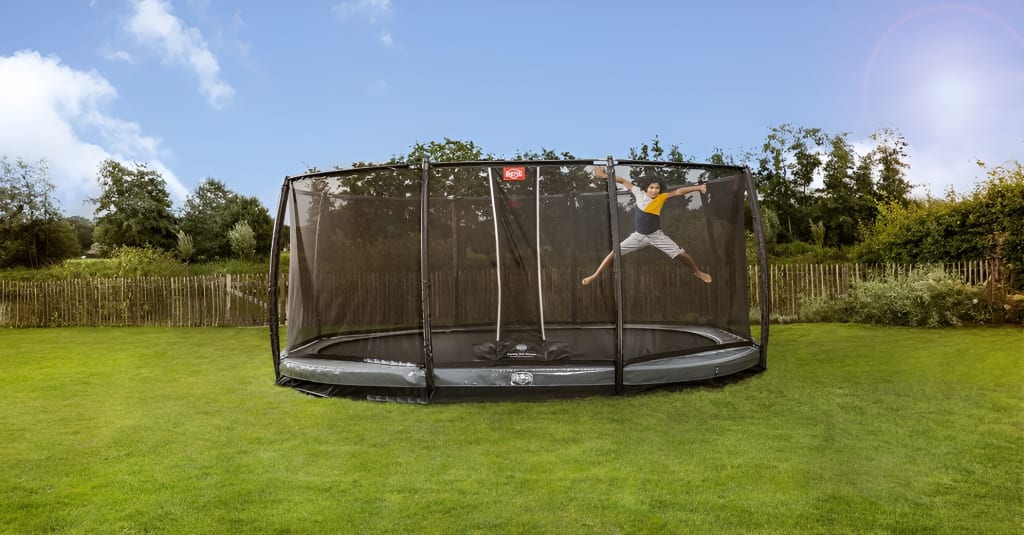
Selecting the perfect trampoline for your outdoor space requires careful consideration of multiple factors that will impact both safety and enjoyment for years to come. The right garden trampoline transforms any backyard into an exciting playground where children and adults can bounce, exercise, and create lasting memories together.
Size stands as the most important factor when choosing your trampoline, as it determines how many people can use it safely and what types of activities are possible. Your available garden space will naturally limit your options, but you should also consider who will be using the trampoline most frequently. Weight capacity varies significantly between models, making it essential to choose one that accommodates all intended users comfortably. Safety features like enclosure nets, padding quality, and frame construction directly impact the long-term durability and protection your trampoline provides. Different trampoline types, including round, square trampoline designs, and inground trampoline installations, each offer unique advantages depending on your specific needs and preferences.
Size and space considerations
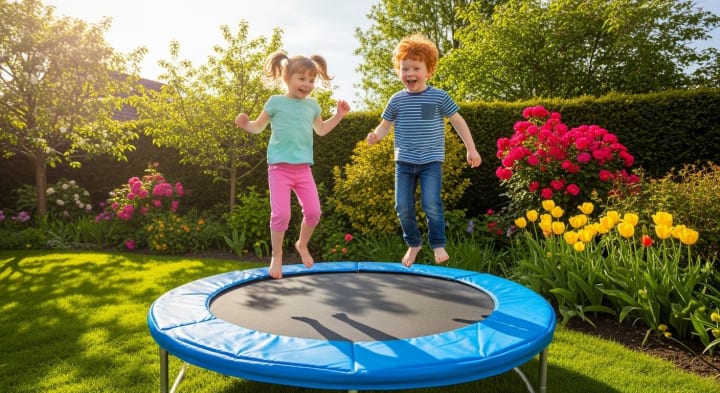
Determining the right size trampoline starts with measuring your available garden space accurately. You need at least 2 meters of clearance on all sides of your trampoline to ensure safe bouncing without hitting fences, trees, or other obstacles. Round trampolines typically range from 8 feet to 15 feet in diameter, while square trampoline models often provide more jumping surface within the same footprint due to their shape.
Consider how many people will use your trampoline simultaneously. Smaller 8-10 foot models work well for younger children or single users, but families with multiple children or teenagers should look at 12-14 foot options. Larger trampolines not only accommodate more users but also provide better bounce quality and more space for different jumping techniques.
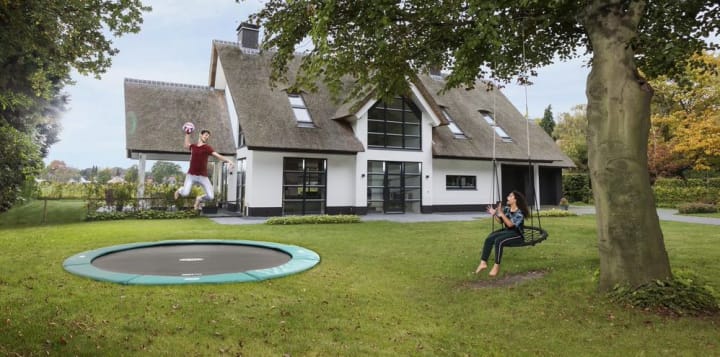
The height of your chosen trampoline also matters significantly. Standard trampolines sit 2-3 feet off the ground, which can feel intimidating for smaller children. An inground trampoline offers an excellent alternative, sitting flush with your lawn surface for easier access and a more integrated appearance in your garden design.
Weight capacity varies dramatically between different trampoline models. Basic residential trampolines typically support 200-300 pounds, while heavy-duty versions can handle 400 pounds or more. Always choose a trampoline with a weight limit that exceeds your heaviest anticipated user by at least 50 pounds for optimal safety and performance. Remember that dynamic bouncing forces can be significantly higher than static weight.
Ground conditions in your garden will also influence your size choice, as larger trampolines require more level surfaces for proper installation and stability.
Safety features and construction quality
Safety nets represent the most visible protection feature on modern trampolines, but their quality varies significantly between manufacturers. High-quality enclosure nets use UV-resistant materials with reinforced stitching at stress points, while cheaper alternatives may tear or fade quickly under outdoor conditions. The net attachment system matters equally - look for nets that connect both at the top of poles and underneath the jumping surface to eliminate gaps where children might fall through.
Frame construction determines your trampoline's longevity and stability during use. Galvanized steel frames resist rust and corrosion better than basic painted steel, especially in humid climates. Thicker gauge steel provides superior strength, with premium models using 12-gauge or 14-gauge steel compared to 16-gauge options on budget trampolines.
T-joint connections where legs meet the frame offer better stability than basic welded joints. Padding quality directly impacts user safety when someone lands near the edge. Dense foam padding covered with waterproof vinyl provides the best protection, while thin padding may compress over time and lose effectiveness.
The padding should completely cover all trampoline springs and frame sections that users might contact during bouncing. Trampoline springs require careful evaluation as they control bounce quality and safety. Galvanized springs resist rust and maintain their tension longer than uncoated alternatives. Spring count and length affect performance - more springs generally provide smoother bouncing, while longer springs offer better bounce height. A Berg trampoline typically features high-quality springs designed for consistent performance over many years of use.
Shape and design options
Round trampolines dominate the residential market due to their natural bouncing characteristics and lower manufacturing costs. The circular design naturally directs jumpers toward the center, making them safer for beginners and younger children who haven't developed precise control over their movements. Round models also distribute weight evenly across all trampoline springs, creating consistent bounce quality regardless of where users land on the surface.
Square trampoline designs offer distinct advantages for more experienced users and families with limited space. The square shape provides approximately 25% more jumping surface than a round trampoline of equivalent dimensions, maximizing your bouncing area within tight garden spaces. Square models also create more predictable bouncing patterns, allowing users to perform tricks and controlled movements more easily. However, they require more precise manufacturing and stronger frame construction to handle the different stress patterns created by their shape.
Rectangular trampolines represent the premium option, commonly used by gymnasts and serious athletes. These models provide the highest bounce and most controlled rebound characteristics, but they also demand the most space and carry higher price points.
An inground trampoline offers unique aesthetic and safety benefits regardless of its shape. These installations sit flush with your lawn surface, creating a seamless appearance that many homeowners prefer. The reduced height eliminates the intimidation factor for nervous jumpers and reduces injury risk from falls. Installation requires excavation and proper drainage considerations, but the results often justify the extra effort for families prioritizing both safety and garden appearance.
More reading suggestions: How to get the most out of your trampoline
Budget and brand considerations
Setting a realistic budget for your trampoline purchase helps narrow down options while ensuring you get the best value for your money. Entry-level trampolines typically cost between $200-400 and work well for occasional use by younger children, though they may lack some premium safety features and durability. Mid-range options in the $400-800 range often provide the sweet spot for most families, combining good build quality with reasonable pricing.
Premium trampolines can cost $800-2000 or more, but they justify their price through superior materials, better warranties, and enhanced safety features. A Berg trampoline falls into this category, offering exceptional build quality and innovative design features that many families find worthwhile for long-term use.
When evaluating different brands and models, consider these key factors:
• Warranty coverage - look for at least 2-3 years on the frame and 1 year on other components
• Replacement parts availability - ensure you can easily find trampoline springs and other wear items
• Customer service reputation - read reviews about how companies handle warranty claims and support
• Assembly complexity - some models require professional installation while others use tool-free designs
• Seasonal storage requirements - consider whether you need to disassemble your trampoline during winter months
Brand reputation matters significantly in the trampoline market, as established manufacturers typically provide better quality control and customer support. Research online reviews from actual users rather than relying solely on marketing materials, paying special attention to comments about durability and safety performance over time. Remember that the cheapest option rarely provides the best long-term value, especially when family safety is at stake.
Choosing the perfect trampoline for your garden requires balancing multiple factors to find the model that best suits your family's specific needs and circumstances. Your available space, user demographics, and budget will naturally guide you toward certain options, but don't compromise on essential safety features regardless of price point.
Size remains the most critical decision, as it affects both safety and enjoyment levels for all users. A square trampoline maximizes jumping surface in compact spaces, while round models offer natural safety benefits for younger children. Consider an inground trampoline if you want seamless garden integration and enhanced safety through reduced height.
Quality construction elements like galvanized frames, UV-resistant safety nets, and properly tensioned trampoline springs directly impact your long-term satisfaction and user safety. Premium brands like Berg trampoline often costs higher prices but typically deliver superior durability and performance that justify the extra cost over time.
Remember that your trampoline represents a multi-year commitment for your family's outdoor recreation. Spending slightly more upfront for better construction quality, comprehensive warranties, and reliable customer support often proves more economical than replacing a cheaper model after just a few seasons. Focus on models that meet your current needs while providing room for your family to grow into the trampoline's full potential over the coming years.
About the Creator
Michael Nielsen
Working with interior design and home decoration. Enjoy blogging and having a good time with friends and family. Got two cats and a mountain bike I don't quite use enough.
Keep reading
More stories from Michael Nielsen and writers in 01 and other communities.
3D printing wooden furniture
3D printing technology has revolutionized furniture manufacturing, transforming wooden piece creation with unprecedented design possibilities. This fabrication method builds intricate wooden furniture through computer-controlled layering of wood-based materials, achieving details and structures previously impossible with traditional woodworking. Designers now produce wooden plank tables featuring complex geometric patterns, chairs with organic body-conforming shapes, and storage solutions with customized internal structures. The fusion of traditional woodworking wisdom with digital fabrication precision has disrupted both bespoke and production-scale furniture printing operations. As 3D printing equipment becomes more accessible, woodworkers and designers experiment with sustainable materials while preserving the natural warmth and character that draws people to wooden furniture in their homes and workspaces.
By Michael Nielsen10 months ago in 01
The Role of AI in Transforming Modern eLearning App Development
In the digital era, education is no longer confined to traditional classrooms. The demand for personalized, accessible, and interactive learning experiences has driven the growth of eLearning app development. Among the most transformative technologies shaping this space is Artificial Intelligence (AI). By integrating AI into educational platforms, businesses and institutions are revolutionizing how content is delivered, assessed, and adapted to learners’ needs.
By keith laurance5 days ago in 01




Comments