
How to Choose the Right Equipment for Your Film Production
A Practical Guide to Picking the Tools That Match Your Vision and Budget


Why Equipment Choice Matters for Film Production Companies in London
Balancing creativity and practicality
Equipment choices aren't just a matter of technical compatibility; they affect everything from the mood of a scene to the speed of a shoot. For film production companies in London, where space, budget, and time are often limited, the pressure to make smart gear decisions is high. Whether working on commercials, music videos, or feature-length projects, the wrong kit can derail momentum before the first take is even captured.
Virtual production has raised expectations even further. Choosing between traditional rigs and real-time tools now involves creative strategy as much as logistics. The right kit supports innovation without slowing things down, especially on fast-turnaround projects that need high-end visuals at pace.
The pressure of tight schedules and tighter budgets
London’s production scene rarely allows for indulgent timelines. Shoots are frequently compressed into narrow windows, sometimes just a day or two, particularly for branded content. Equipment needs to be reliable, adaptable, and easy to manage on the fly. A camera rig that takes an hour to reset, or lighting that requires constant tweaking, will quickly eat into production time and inflate costs.
Many companies now prioritise modular equipment setups that can scale up or down based on changing production demands. The choice isn’t always about having the most expensive gear — it’s about having the right tools that align with how the production team works.
How the right gear impacts post-production quality
Post can’t fix everything. While visual effects and colour grading offer a safety net, poor-quality source footage or compromised audio can limit what’s achievable after the shoot. Production companies that invest in better cameras, clean sound capture, and accurate monitoring gear often save time and cost in post by reducing the need for rework.
This is especially relevant when delivering content across multiple formats — broadcast, online, social, or DOOH. Matching technical standards upfront makes it easier to repurpose material, maintain consistency, and meet platform-specific quality thresholds.
Assessing the Scope of Your Project
Narrative demands vs technical requirements
The story dictates the tools. A contained interview shoot in a controlled environment demands a different kit than a multi-location shoot with car rigs, drones, and gimbals. Film production companies in London are increasingly driven by narrative-led decision-making, selecting equipment that supports specific story beats rather than defaulting to familiar setups.
Understanding this balance can also help avoid unnecessary overspend. Hiring a full cinema rig for a simple testimonial shoot may look impressive, but it won’t add value unless the story demands that level of production.
Matching gear to genre – from drama to docuseries
Genres place different demands on equipment. A high-end commercial might prioritise cinematic lensing and dynamic lighting, while a documentary crew may focus on portability, battery life, and weather resistance. Action-led shoots often require stabilisation tools and safety rigs, while scripted drama might benefit from high-resolution cameras for future-proofing and grading flexibility.
Equipment should match the tone and purpose of the project. The best production companies don’t just own gear — they know when and how to use it to its full potential.
Crew experience and technical support
A kit is only as effective as the crew handling it. Before settling on any gear list, it's worth assessing the team's comfort and familiarity with the equipment. Even cutting-edge tools can slow a shoot if the crew spends time troubleshooting on set. Many London-based production houses work with preferred hire partners or in-house technicians to ensure technical support is available when it counts.
If the shoot uses virtual production methods or advanced tools like Lidar scanning or LED volumes, experienced operators become essential. It's not just about capturing footage — it’s about maintaining a pipeline that connects pre-vis, shoot, and post.
Essential Equipment Categories to Consider
Cameras – understanding your options
Camera selection is often where most attention — and budget — goes. The market offers a wide spectrum, from lightweight mirrorless bodies for run-and-gun shooting to high-end cinema cameras like ARRI, RED, and Sony Venice. Each offers specific benefits, and film production companies in London often balance image quality, file format compatibility, and rigging flexibility when choosing.
Resolution isn’t the only factor. Dynamic range, sensor size, codec versatility, and colour science all influence how footage behaves in post. Multi-cam shoots or those involving virtual production may also require timecode sync and genlock features. That’s why it's crucial to look beyond headline specs and consider how a camera integrates into the overall pipeline.
Lenses and what they unlock
A strong lens lineup offers creative options without needing to overhaul the entire setup. Prime lenses can deliver cinematic depth and texture, ideal for narrative-driven shoots. Zoom lenses, meanwhile, offer speed and flexibility, particularly on commercial sets with quick turnaround requirements.
For projects using virtual production environments, lens metadata and focal length tracking are equally important. Many London studios working with LED volumes now prioritise lens systems compatible with real-time camera tracking to keep foreground and background perfectly aligned. The decision here isn’t just aesthetic — it’s deeply functional.
Lighting setups that save time and energy
Lighting shapes tone, mood, and even performance. But in a market where sustainable production is increasingly prioritised, energy efficiency and speed of rigging are just as critical. LED-based lighting systems like Aputure and Astera have become favourites for their low power consumption, wireless control, and colour flexibility.
Speed matters too. Modular lighting rigs allow gaffers to move quickly between setups without extensive relighting. Softboxes, diffusion tools, and pre-rigged grids all support tighter schedules. And when using green screen or LED volumes, precise lighting ensures keying and colour accuracy hold up in post.
Audio gear that holds up in post
Audio is still one of the most underestimated parts of a kit list. On set, poor sound often goes unnoticed until post-production — when ADR and cleanup add both cost and time. Shotgun mics, lavaliers, timecode sync, and reliable wireless systems are all vital.
In London’s sound-sensitive locations, having directional mics and noise isolation tools can make the difference between clean dialogue and unusable takes. For shoots relying on virtual production, clean audio capture allows greater flexibility in sound design and mixing down the line.
Monitoring and on-set playback tools
What the camera sees isn’t always what the client sees. Having reliable monitoring tools — including calibrated displays, wireless feeds, and video assist systems — is essential for both creative alignment and technical checks.
Directors and DOPs rely on accurate previews for framing and exposure, while clients and producers often need their own feed. Playback tools help review performances, assess continuity, and approve shots in real time, reducing the need for pickups or reshoots. In virtual production, where real-time rendering is key, dependable monitoring becomes non-negotiable.
Virtual Production and Real-Time Tools
When LED Volumes replace traditional backdrops
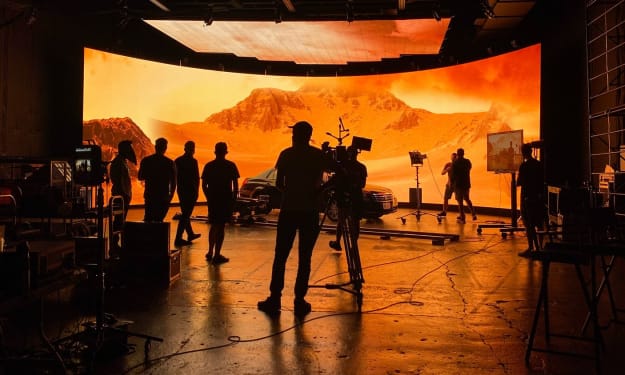
LED Volumes are rapidly changing how projects are shot, particularly in controlled environments. These large-scale curved screens display real-time environments rendered in engines like Unreal, replacing the need for green screen or location shoots. For commercial and episodic work, this shift means more control over lighting, faster setups, and less travel — all valuable benefits for production companies aiming to stay sustainable.
They also allow immediate visual feedback, helping talent, crew, and clients see the final look during the shoot, rather than guessing how VFX will come together in post.
Game engines like Unreal – not just for gaming
Unreal Engine has emerged as a creative tool far beyond its origins in gaming. Now central to real-time production, it enables dynamic environments, reactive lighting, and even animated characters — all rendered live during filming.
This reduces reliance on traditional VFX timelines and supports a more iterative creative process. Teams can test scenes before stepping on set, adjust camera angles with full visibility, and keep the visual language consistent from pre-vis to final delivery.
The role of photogrammetry and Lidar scanning
Location replication is no longer confined to manual 3D modelling. Photogrammetry and Lidar scanning allow teams to create accurate digital environments, either for LED stage projection or for use in VFX pipelines. These techniques capture real-world spaces in high detail and enable hybrid workflows that combine physical and digital seamlessly.
Used well, these tools save travel time, reduce environmental impact, and support fast turnaround for projects with shifting creative briefs. London’s leading studios now integrate this technology as part of their creative development and pre-production process.
Hiring vs Buying – What's Right for You?
The upfront cost vs long-term ROI
Owning equipment offers creative freedom, but it comes with maintenance costs, upgrades, and storage concerns. For many production companies in London, especially those working across varying formats and budgets, buying kit outright can tie up cash flow without guaranteeing a return.
Hiring allows access to cutting-edge gear without the long-term investment. It also reduces downtime — no need to wait for repairs or replacements. This flexibility is particularly valuable on commercial shoots where each project may call for a different technical approach. Evaluating cost-per-use versus ownership overhead is key when building a gear strategy that supports both agility and quality.
Advantages of studio partnerships for gear access
Building relationships with local studios or rental houses can unlock more than just equipment. Preferred partnerships often come with technical support, test days, and discounted rates. Many London-based production companies now operate within creative ecosystems — where studio hire, camera rental, and post-production services are bundled or coordinated under one roof.
This setup encourages smoother logistics, reduces transport delays, and gives teams more time for creative focus. It’s also ideal when working with unfamiliar tools, as in-house technicians can assist with setup, calibration, or troubleshooting.
Understanding terms of equipment insurance and liability
Whether hiring or owning, equipment always comes with responsibility. Damage, theft, and technical failure can quickly derail a shoot. Production teams should always check the terms of their insurance coverage, especially for location-based work or travel-heavy schedules.
Some rental houses include basic cover, while others expect full liability to be managed by the hirer. Understanding these terms avoids costly surprises and keeps risk to a minimum. It’s also smart to document gear condition during collection and return, particularly when working with high-value items like lenses, gimbals, or camera bodies.
Film Studio Hire in London: What to Look For
Flexibility of space and stage configuration
Not every shoot requires a massive soundstage. For smaller-scale projects, a versatile dry hire space with pre-rigged lighting or modular walls might be more efficient. When booking film studio hire in London, it's useful to consider how flexible the space is — both technically and creatively.
Does it offer blackout control? Ceiling rigging? Vehicle access? These details make a difference in how efficiently a crew can work. Some studios also offer green rooms, client viewing areas, and production offices on site, streamlining the full day’s workflow into one location.
Technical fit-out and available support
Look beyond square footage. A well-equipped studio should offer a strong tech backbone: high-spec power distribution, soundproofing, and network infrastructure for live streaming or remote collaboration. Some venues offer LED volumes, virtual production integration, or dedicated fibre connections for real-time rendering tools.
In-house support is just as important. Onsite engineers, riggers, or LED technicians ensure that any unexpected technical issues don’t delay the shoot. This is especially useful when working with virtual backdrops, live playback, or XR workflows, where rapid troubleshooting is critical.
Sustainability credentials and power efficiency
As London’s production scene faces increasing scrutiny over environmental impact, studio sustainability has become a meaningful selection criterion. Look for facilities that use renewable energy, support LED lighting systems, or provide digital alternatives to paper-based workflows.
Some production companies now align studio selection with their wider sustainability goals, choosing spaces with B Corp status or formal environmental policies. These considerations are not just good for the planet — they often come with operational benefits, like lower energy bills or faster setup times.
Working with Innovative Film Production Companies in London
Collaboration on creative development
The best production partners contribute far more than just execution. Many of London’s leading film production companies now offer creative development support — helping clients shape concepts, visual styles, and even script structures before the first shot is taken.
This upfront collaboration helps clarify what kit will be needed, how it will be deployed, and how each department can work in sync. It also prevents creative drift, ensuring that production aligns closely with client expectations and brand objectives from the outset.
Integrated post-production pipelines
Shooting is only half the job. Integrating post-production services — from offline edit to VFX and grade — can drastically reduce the friction between departments. Shared file structures, metadata standards, and real-time rendering pipelines support a faster, cleaner workflow from shoot to delivery.
Companies that manage both production and post under one umbrella can also avoid duplication, ensure consistency in look and tone, and react quickly when creative changes are requested during the edit phase.
Specialist knowledge across formats and platforms
A strong production partner brings technical fluency across multiple formats — from broadcast specs and social aspect ratios to digital signage and interactive content. Understanding how different platforms handle compression, resolution, and playback ensures that assets are captured and delivered correctly the first time.
This level of expertise helps avoid pitfalls in post and reduces the need for reformatting. It also supports smoother collaboration across departments, especially when working with tight turnaround times or multi-channel campaigns. Choosing a production company with this level of technical foresight often means fewer compromises, greater consistency, and a more efficient path to final delivery.
About the Creator
Quite Brilliant
We are the ‘go to’ Virtual Production Experts for the Advertising and Content market as well as the Long-Form and Movie industry, offering bespoke and end to end solutions.
Keep reading
More stories from Quite Brilliant and writers in 01 and other communities.
Can AI and Virtual Production Work Together?
The film and TV world has never been shy about embracing bold new tools—especially when they make stories more dynamic, shoots more efficient, and visuals more jaw-dropping. But now, two powerhouse technologies are stepping into the spotlight at the same time: Artificial Intelligence (AI) and Virtual Production.
By Quite Brilliant6 months ago in 01
Italian Brainrot: Gen Alpha
If you walk through a bustling piazza in Milan or stand near a school gate in Rome during the afternoon rush, you might hear a conversation that feels like a glitch in the linguistic matrix. You’ll see a group of twelve-year-olds, dressed in matching tech-fleece tracksuits, shouting about "Skibidi," debating who has the most "Aura," and accusing each other of being from "Ohio." To anyone born before the year 2010, this sounds like a collective mental breakdown. But to the architects of this new reality—Generation Alpha—it is the only language that makes sense.
By Teodor Monescua day ago in 01



Comments
There are no comments for this story
Be the first to respond and start the conversation.