
How to Check Whether the Concrete Pump Truck Boom Is Flexible to Retract and Extend
Aimix concrete pumping solution

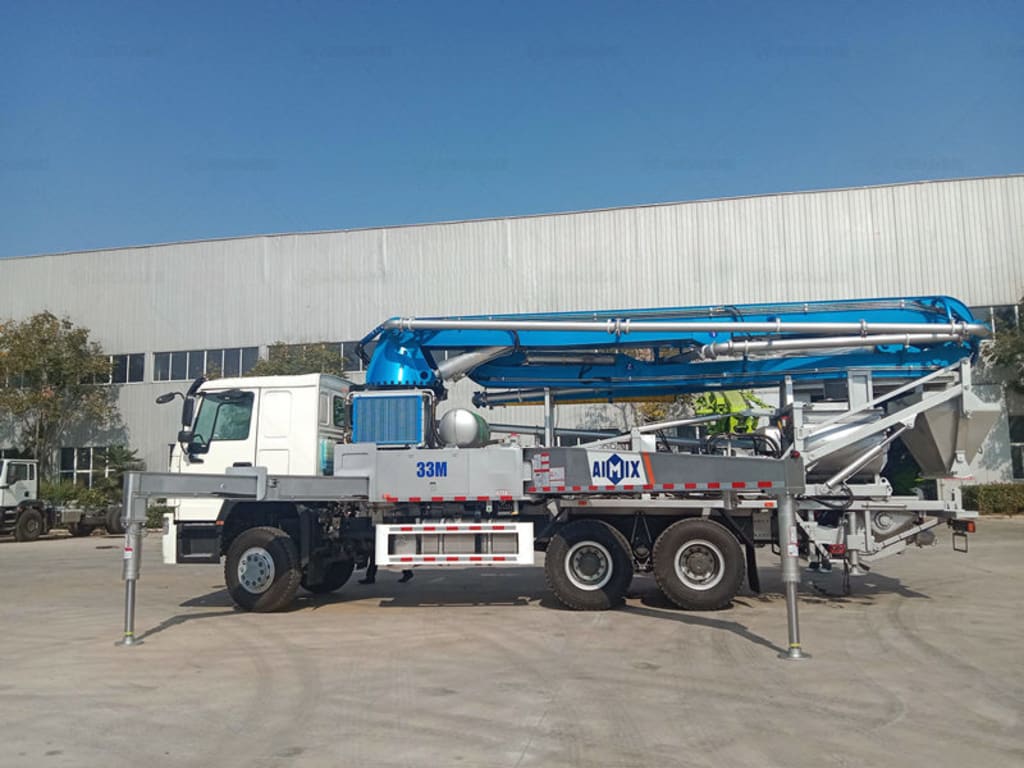
In modern construction projects, efficiency, precision, and safety are critical. One of the most vital concrete pumping machines used in high-rise buildings, bridges, and large-scale foundations is the concrete pump truck. What sets this machine apart is its hydraulic boom—an articulated arm that allows concrete to be delivered at precise points that traditional methods can't reach. However, to maintain performance and safety, it's essential to regularly check whether the boom can extend and retract smoothly. A stiff or malfunctioning boom can lead to serious risks and operational inefficiencies. Below is a detailed guide on how to properly check boom flexibility and ensure your concrete pump truck is ready for reliable daily use.
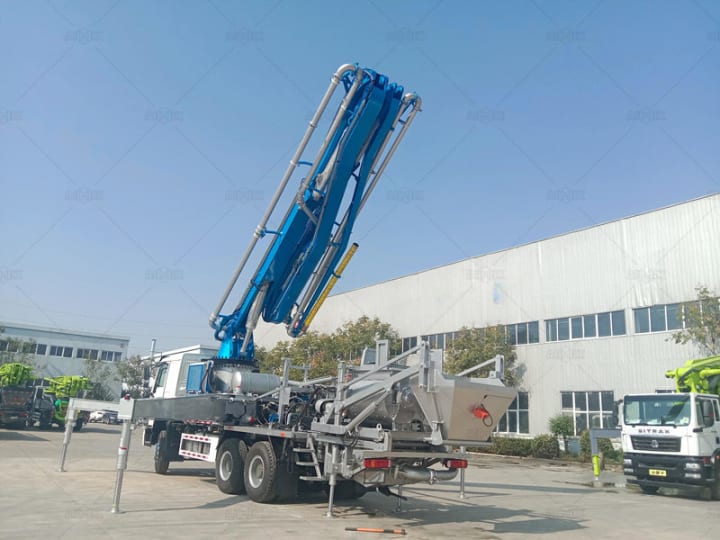
Conduct a Preliminary Visual Inspection
The first step in checking boom flexibility is a thorough visual inspection. Before activating the concrete pumping machine, operators should walk around the truck and inspect all visible parts of the boom arm. Look closely at hydraulic cylinders, connecting pins, bushings, and boom segments. Watch for signs of rust, cracks, oil leaks, or bent parts. Damaged or worn components can affect how smoothly the boom extends or retracts and could eventually lead to complete failure. In particular, focus on the boom joints—any corrosion or lack of lubrication at these points could hinder movement.
Check the Hydraulic System Carefully
Hydraulic pressure is what drives the boom arm on any concrete pump truck, so your next priority should be a detailed check of the hydraulic system. Inspect all hoses, connections, and fittings for leaks or deterioration. Old or damaged hoses may become stiff and restrict fluid movement, which in turn can reduce the flexibility of the boom. Additionally, check the hydraulic oil level and quality. Low oil levels or dirty, contaminated fluid can reduce the system’s ability to deliver consistent pressure. If the boom moves in a jerky or delayed manner, low hydraulic efficiency could be the reason.
Operate the Boom at Low Speed First
Once the visual and hydraulic checks are complete, it’s time to test the boom in action. Start the concrete pump truck and engage the boom controls using the remote or in-cab interface. Always begin at a slow speed when extending or retracting the boom. Observe how each section of the boom unfolds. The movement should be smooth, even, and without resistance or sudden lurches. Each joint should pivot seamlessly, and the hydraulic cylinders should respond immediately to your commands.
If the boom hesitates, makes unusual noises, or moves unevenly, these are red flags that point to mechanical or hydraulic issues. A flexible boom should behave like a well-oiled machine—fluid, predictable, and responsive to control inputs.
Test All Boom Sections Individually
To confirm complete flexibility, it's important to operate and test each segment of the boom arm individually. Most modern concrete pumping machines feature 3-section to 5-section booms. Extend one section at a time and monitor for free motion and stability. Then, retract each section in reverse order. Pay attention to whether any section lags behind or resists movement. Each part must function independently and together as a cohesive system. If one section is sluggish, it can limit the overall range and efficiency of the pump truck.
Observe the Boom Rotation and Stability
Another key aspect of flexibility is how the boom rotates horizontally (slewing). A high-functioning concrete pump truck will allow the boom to rotate 180 degrees or more, depending on its design. Engage the rotation mechanism and observe how the boom swings from side to side. It should turn smoothly without vibrations or delays. Any stuttering or tightness could indicate problems in the slewing gear, base support, or hydraulic control.
During this process, also inspect the stabilizers (outriggers). Even though they don’t directly control boom flexibility, poorly deployed outriggers can lead to uneven weight distribution and make the boom feel stiff or unsafe when extended.
Listen for Unusual Noises
Strange noises are often the first warning signs of malfunction in concrete pumping machines. As you extend or retract the boom, listen carefully for grinding, clicking, or whining sounds. These noises can signal problems with hydraulic cylinders, air in the system, or mechanical friction in joints. A healthy boom should operate quietly with only a consistent hum from the hydraulic system.
Use Diagnostic Tools and Calibration
Advanced concrete pump trucks often come with onboard diagnostic systems or can be calibrated using external tools. If available, use these diagnostics to check pressure values, control responses, and actuator performance. Boom arms that are out of calibration can exhibit stiffness or unbalanced motion. A trained technician can recalibrate the system to restore smooth functionality. Many problems that affect flexibility can be fixed early if caught by routine diagnostics.
Schedule Regular Maintenance and Lubrication
Preventive maintenance is the key to long-term boom flexibility. Keep a regular schedule for greasing boom joints, changing hydraulic oil, and checking wear parts. Lubrication helps prevent stiffness in moving parts and prolongs the life of your concrete pump truck. Maintenance logs should be kept up to date, and any abnormalities found during boom tests should be addressed immediately.
Involve Trained Technicians for Thorough Inspection
While operators can perform routine checks, a full inspection by a certified technician is recommended every few months or after intensive use. Technicians can dismantle and inspect internal components, test hydraulic pressures precisely, and spot early-stage issues that may not be visible during daily checks. This ensures that your concrete pumping machines remain safe, responsive, and fully operational throughout their service life.
Ensuring the boom of your concrete pump truck extends and retracts flexibly is essential not only for efficient concrete placement but also for jobsite safety. By conducting visual checks, testing the hydraulic system, and operating the boom slowly and methodically, operators can detect and correct issues early. Routine maintenance, along with occasional professional inspections, keeps your concrete pumping machines working reliably and extends their operational lifespan. Always treat the boom as a critical component—because when it moves well, the whole job flows better.
About the Creator
consrtuctionmachines
AIMIX is a customer-center-oriented heavy equipment manufacturer and supplier, devoted to production, innovation, combination, one-stop solution, etc.
https://aimixgroup.com/
Keep reading
More stories from consrtuctionmachines and writers in 01 and other communities.
How Ready Mix Concrete Batch Plants Support Green Building Certification Requirements
As the global construction industry increasingly embraces sustainability, green building certifications such as LEED, BREEAM, and others have become key drivers for eco-friendly practices. One critical element contributing to these certifications is the use of environmentally responsible materials and production methods—specifically, the role of ready mix concrete batch plants in reducing environmental impact.
By consrtuctionmachines9 months ago in 01
The Growing Demand for Custom Flexible Packaging Manufacturers in China
Flexible packaging has become one of the fastest-growing segments of the global packaging industry. Businesses across food, beverage, cosmetics, and pharmaceutical sectors are increasingly shifting away from rigid containers toward lighter and more adaptable packaging solutions. In many cases, companies rely on a custom flexible packaging manufacturer to create packaging solutions that match their product needs and branding goals. This transition is driven by efficiency, sustainability considerations, and the need for packaging that works well with modern production systems.
By charliesamuel4 days ago in 01
12 Cloud Data Management Services Every Business Should Know
Introduction Businesses today generate large volumes of digital data. This data includes customer records, operational reports, financial data, and application logs. Managing this information without the right technology becomes difficult. This is why organizations are adopting cloud data management services. These services help businesses store, organize, and analyze data using scalable cloud infrastructure. Instead of maintaining expensive physical servers, companies use cloud environments to manage their digital assets. Many cloud data management companies provide platforms that simplify data storage, integration, and security management. These tools help businesses ensure data availability while maintaining compliance and protection. In addition, modern cloud data management solutions allow companies to automate backup processes, monitor performance, and manage large datasets efficiently. Another important element is Dashboard Development Services, which help transform complex datasets into visual dashboards that provide meaningful insights. By combining storage, analytics, and visualization, organizations gain a complete view of their operations and make better business decisions.
By Wahid Hussaina day ago in 01


Comments
There are no comments for this story
Be the first to respond and start the conversation.