
How Rapid Prototyping Became Essential for Modern Product Development?
As product lifecycles shorten and complexity rises, rapid prototyping provides early validation, clearer stakeholder alignment, and continuity into low-volume manufacturing reducing risk and accelerating decision cycles.
AI-assisted content disclosure
Product development over the past decade has shifted toward shorter schedules, greater customization, and higher expectations for performance and reliability. In that environment, rapid prototyping has moved from a convenience to a core capability. Physical prototypes complement virtual models by revealing real-world interactions, enabling faster iteration, and providing a shared reference that clarifies design intent across disciplines.
Why physical prototypes still matter
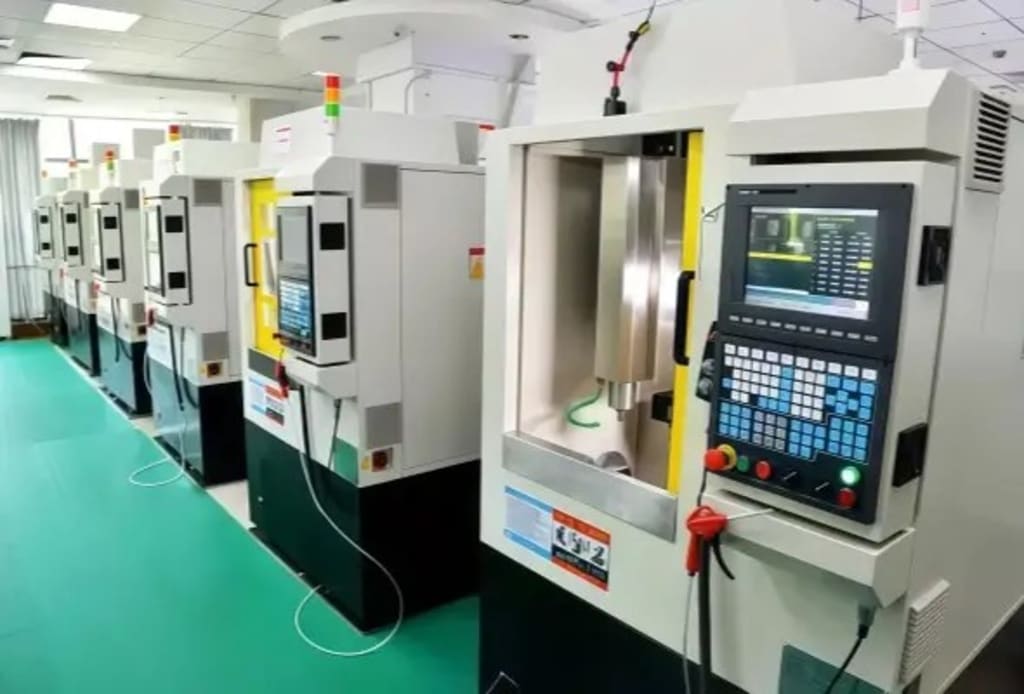
Computer simulations and virtual prototypes are essential, but they do not always capture assembly nuances, tactile feedback, or certain material behaviors. Rapid prototyping techniques — including CNC machining, sheet metal fabrication, vacuum casting and contemporary additive methods — produce parts that allow teams to:
Verify form, fit and function under realistic tolerances.
Observe material properties such as surface finish, stiffness, or wear in the intended context.
Detect assembly or serviceability issues that are difficult to model.
Present a tangible object for ergonomic, aesthetic and stakeholder review.
When these factors are validated early, teams reduce downstream surprises such as tooling changes, unexpected rework, or compliance delays. The practical effect is fewer costly schedule slips and clearer, evidence-based decisions.
Bridging prototypes and small-batch production
Rapid prototyping increasingly serves as the first step toward controlled, low-volume manufacturing. Rather than treating prototypes as disposable mockups, many programs plan pilot runs and limited production to validate processes, supply chains and market assumptions. This continuity brings several benefits:
Consistent materials and processes across prototype and pilot stages reduce variability.
Early life-testing and regulatory checks can be performed on representative parts.
Transition risks from design to production are lowered by preserving inspection criteria and assembly methods.
For practitioners seeking comparative technical overviews of prototyping and low-volume methods—how CNC machining, sheet metal fabrication, and vacuum casting are applied across development stages. Informational details and method comparisons from Xinprototype rapid prototyping are available at https://www.xinprototype.com
. Linking design validation with realistic production techniques improves the signal-to-noise ratio of test results and supports more reliable scale-up.
Flexibility as a strategic advantage
Market dynamics now reward organizations that can iterate quickly and tailor products to specific needs. Rapid prototyping supports that flexibility by enabling more design–test–learn cycles within the same development window. Strategic advantages include:
Faster iteration: shorter lead times for physical parts increase the number of validated concepts.
Reduced upfront risk: low initial production commitments avoid large inventory costs and decrease exposure to design failures.
Design freedom: teams can explore functionally superior or user-centric solutions without immediately constraining designs to legacy manufacturing limits.
Taken together, these benefits allow product teams to explore alternatives, converge on robust solutions sooner, and manage resources more efficiently.
Supporting distributed and cross-functional teams
Modern product development often involves geographically dispersed teams and multiple suppliers. Reliable prototyping practices and partners are essential to maintain alignment:
Clear technical documentation and standard inspection reports allow remote stakeholders to interpret results consistently.
Transparent costing and predictable lead times support planning across time zones.
Suppliers with engineering support and the ability to handle complex geometries reduce ambiguity during handoffs.
By institutionalizing consistent communication and documentation practices around prototypes, distributed teams convert individual test results into organization-level learning.
Practical recommendations for effective prototyping
To extract maximum value from prototyping, apply disciplined practices:
Define clear validation goals for each prototype (fit, function, durability, regulatory compliance).
Select materials and processes that map to the intended test objective so outcomes are meaningful.
Work with partners capable of scaling from prototype to pilot production to preserve continuity.
Record tests, root causes, and corrective actions in a centralized repository for reuse.
Conduct multidisciplinary reviews that include design, manufacturing, quality and product management to align decisions.
Conclusion
Rapid prototyping is now an integral part of modern product development rather than an isolated activity. When deployed with clear objectives, continuity into low-volume manufacturing, and disciplined documentation, prototyping reduces technical and commercial risk and accelerates the path from concept to validated product. Organizations that treat prototyping as an ongoing capability—supported by reliable partners, repeatable processes, and cross-functional rigor—are better positioned to respond to fast-moving markets and deliver products that meet both engineering requirements and user expectations.
About the Creator
Julia J
I'm Julia, an SEO expert specializing in link building strategies that deliver results. With a proven track record of enhancing online visibility and driving organic traffic, I tailor campaigns to elevate your site's search engine ranking.
The Rise of AI Presentation Tools: Transforming the Way We Create Slides
Artificial intelligence is quietly reshaping how we work, learn, and communicate. One area where this shift is especially noticeable is presentation design. Creating slides used to mean hours of formatting, arranging content, and adjusting visuals. Today, AI-powered tools are simplifying that process, helping users turn ideas into polished presentations in a fraction of the time.
By charliesamuela day ago in 01
Bomb Scare
It was 2027, and the world never thought it would happen. A missle hit the United States, but it wasn't where they had anticipated. A little town in the northeast was hit by a missile strike, they didn't know why, and they didn't know exactly where it hit, but they did know it was a coastal community, somewhere between Maine and Delaware.
By Gregory Payton6 days ago in Fiction


Comments (1)
This really captures how much faster product development has become. Getting something physical early changes the whole decision-making process. Teams like prototyperlab.com lean into this by helping founders test real prototypes quickly, which makes iteration far more grounded than working only in CAD.