
How Metal Additive Manufacturing Supports Sustainable Manufacturing
Why Metal Additive Manufacturing is Key to a Greener Future
In today’s world, sustainability has become a crucial topic in every industry, especially in manufacturing. With growing concerns about climate change and resource depletion, companies are looking for innovative ways to make their operations more eco-friendly. One such groundbreaking method is metal additive manufacturing (also known as 3D printing).
This modern technology is transforming how products are designed and produced, offering significant environmental benefits compared to traditional manufacturing methods. Let’s explore how metal additive manufacturing supports sustainable manufacturing and why it is becoming the future of eco-friendly production.
What is Metal Additive Manufacturing?
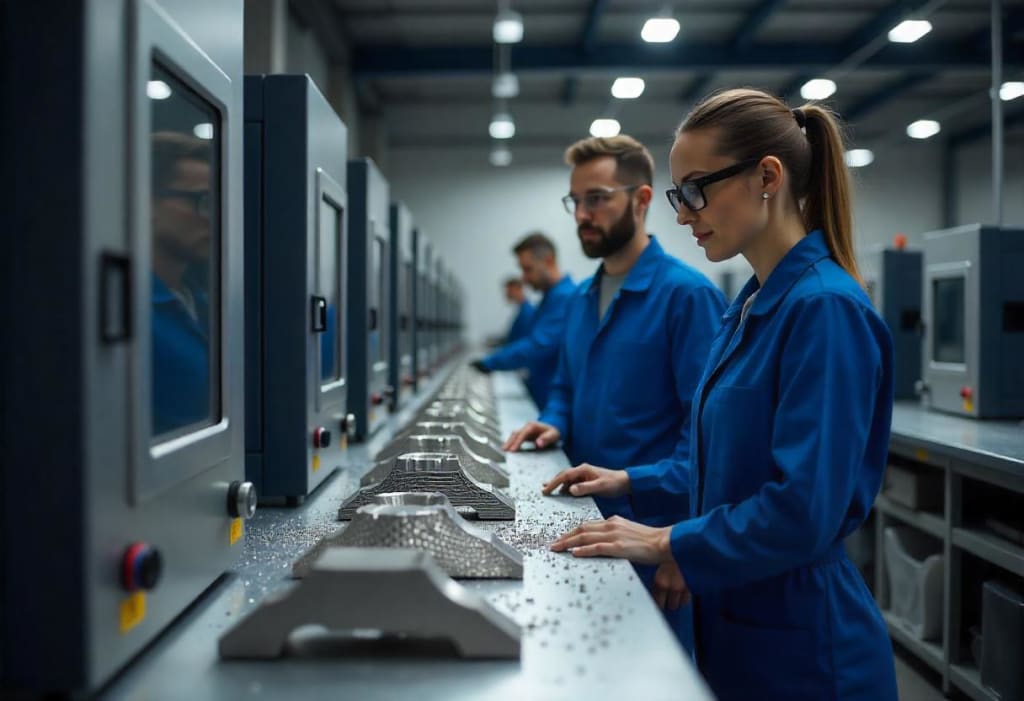
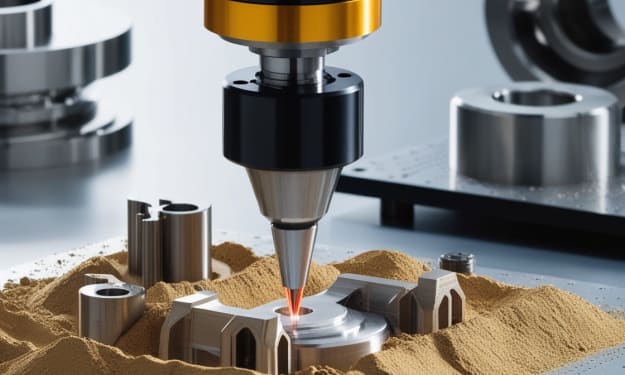
Metal additive manufacturing involves creating metal parts layer by layer using digital designs. Instead of cutting, drilling, or molding materials like in traditional manufacturing, this process builds objects from the ground up using metal powders or wire.
A metal additive manufacturing company uses advanced equipment, such as lasers or electron beams, to melt and fuse materials with precision. This technique is popular in industries like aerospace, automotive, healthcare, and energy, where custom, high-performance components are in demand.
Key Sustainability Benefits of Metal Additive Manufacturing
Reduction in Material Waste
Traditional manufacturing methods, like machining, often result in a lot of waste. For example, cutting a metal block into a specific shape can leave up to 90% of the material unused.
In contrast, metal additive manufacturing uses only the required amount of material to build a part. This drastically reduces waste, making the process far more sustainable. Companies can also recycle unused metal powder, further enhancing eco-friendliness.
Energy Efficiency
Additive manufacturing often uses less energy compared to traditional methods. For example, forging and casting processes require large furnaces and energy-intensive machinery.
A metal additive manufacturing company can optimize energy usage by focusing only on essential areas of production. Additionally, the lightweight designs achieved through this process help reduce energy consumption during the product's operational life, especially in industries like aerospace and automotive.
On-Demand Manufacturing
One of the standout features of metal additive manufacturing is its ability to produce parts on demand. Instead of manufacturing in bulk and storing inventory, companies can create parts only when needed.
This reduces overproduction, saves storage space, and minimizes waste caused by unused or outdated stock. On-demand production also cuts down transportation emissions, as companies can manufacture closer to their customers.
Design Optimization for Sustainability
Additive manufacturing allows designers to create complex shapes and lightweight structures that are impossible with traditional methods. Lightweight parts mean less material is needed, which leads to energy savings during production and use.
For instance, in the aviation industry, lighter components result in more fuel-efficient aircraft. This not only saves money but also significantly reduces carbon emissions.
Recycling and Reusability
Metal additive manufacturing promotes a circular economy by encouraging recycling and reusability. Many metals used in this process, such as titanium and aluminum, can be recycled without losing their quality.
Companies can reuse leftover powders or scrap material to produce new parts, reducing the need for virgin resources. This approach aligns perfectly with the principles of sustainable manufacturing.
Real-World Applications Driving Sustainability
Aerospace
The aerospace industry benefits greatly from metal additive manufacturing by producing lightweight yet strong components. This reduces aircraft weight, improves fuel efficiency, and lowers carbon emissions.
For example, some aerospace companies have reduced the weight of engine parts by up to 50% using 3D-printed designs.
Healthcare
In the medical field, metal additive manufacturing is used to create custom implants, prosthetics, and surgical tools. These products are tailored to individual patients, reducing material waste and improving patient outcomes.
Additionally, the precision of 3D printing minimizes errors, reducing the need for multiple production attempts.
Automotive
Metal additive manufacturing is helping car manufacturers develop lighter vehicles, leading to better fuel efficiency and lower emissions. Custom parts can also be produced quickly, reducing lead times and waste.
Some companies are even using this technology to repair damaged parts, extending the lifespan of vehicles and reducing the need for new materials.
Challenges to Overcome
While metal additive manufacturing has numerous sustainability benefits, it is not without challenges.
High Initial Costs
Setting up a metal additive manufacturing company requires a significant investment in equipment and training. However, as technology advances and becomes more accessible, these costs are expected to decrease.
Energy Use in Certain Processes
While additive manufacturing is generally more energy-efficient, some processes, like laser melting, can still consume a lot of energy. Companies need to adopt renewable energy sources to further enhance sustainability.
Material Limitations
Not all metals are compatible with additive manufacturing. Research is ongoing to expand the range of materials that can be used, which will further drive sustainability in various industries.
The Role of Metal Additive Manufacturing Companies
A metal additive manufacturing company plays a crucial role in promoting sustainable manufacturing. These companies are not just producing parts but also pushing the boundaries of what is possible in design, efficiency, and environmental responsibility.
By investing in research and development, these companies are creating new alloys, improving energy efficiency, and finding innovative ways to recycle materials. Their efforts are helping industries transition toward a more sustainable future.
Future Prospects
The future of metal additive manufacturing looks promising, especially as sustainability becomes a top priority for industries worldwide. Advances in technology, combined with government incentives for green manufacturing, will likely drive widespread adoption of this process.
As more companies embrace additive manufacturing, the global carbon footprint of manufacturing will decrease, helping combat climate change and preserve resources for future generations.
Conclusion
Metal additive manufacturing is more than just a revolutionary production method—it is a step toward a more sustainable future. From reducing material waste to improving energy efficiency, this technology offers numerous environmental benefits.
A metal additive manufacturing company not only meets the needs of modern industries but also aligns with global sustainability goals. By adopting this innovative approach, manufacturers can reduce their environmental impact while staying competitive in today’s eco-conscious market.
If you’re looking for an efficient, eco-friendly solution for your manufacturing needs, metal additive manufacturing is undoubtedly the way forward. The journey toward sustainability begins with embracing new technologies that prioritize the health of our planet.
About the Creator
dm3dtechnology
We, DM3D, are an advanced digital manufacturing company where we use our patented blown-powder metal Directed Energy Deposition (DED) technology coupled with fully integrated machining.
Keep reading
More stories from dm3dtechnology and writers in 01 and other communities.
How DED Metal 3D Printing Repairs High-Value Metal Parts
In today’s manufacturing world, repairing high-value metal parts is a critical challenge. Traditional methods of repairing metal components can be time-consuming, expensive, and often not as effective. However, Directed Energy Deposition (DED) metal 3D printing has emerged as a game-changing solution for repairing and refurbishing high-value metal parts. In this blog, we will explore how DED metal 3D printing works and why it's so effective for repairing damaged or worn-out metal components.
By dm3dtechnologyabout a year ago in 01
How to Implement Zoho CRM Plus Without Losing Data Accuracy?
I wasn’t afraid of migration. I was afraid of numbers lying quietly. When I approved our move to Zoho CRM Plus, the decision looked obvious on paper. We needed one system. One source of truth. One place where sales, support, and marketing finally aligned.
By Jane Smith3 days ago in 01


Comments
There are no comments for this story
Be the first to respond and start the conversation.