
From Soldier to Savior: The Untold Rise of Ibrahim Traoré"
Before he became the face of a new African revolution, Ibrahim Traoré was just a soldier with a conscience. This is the story of how he rose through fire and chaos to lead his people.
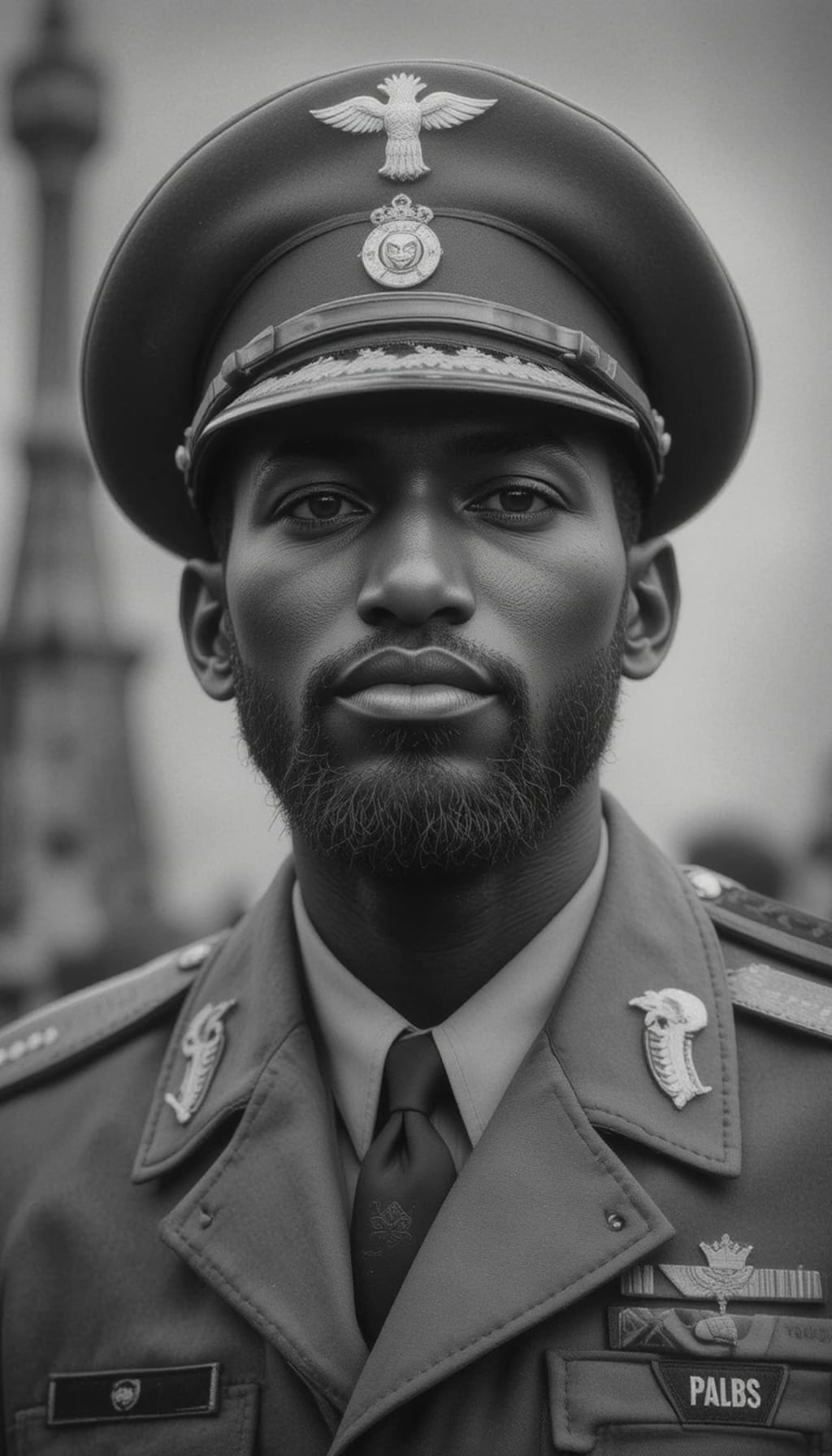
Part 1 of the Series: Rise of the African Lion
In the dusty, sun-scorched village of Bondokuy, in western Burkina Faso, a boy was born in 1988 whose name would one day echo through the streets of Africa as a symbol of defiance and dignity. Ibrahim Traoré did not come from power. He was not the son of a general, or a prince, or a wealthy merchant. He was the son of the soil—humble, quiet, but burning with questions.
Why were his people poor in a land so rich?
Why did their leaders kneel before foreign powers?
Why did justice never seem to arrive?
These were not just childhood musings—they were seeds. And those seeds would grow into a fire that could not be ignored.
A Life Shaped by Struggle
Traoré’s early life was not unlike millions of other Burkinabè. He grew up in a rural environment, watching his parents labor to feed the family. He walked long distances to school and understood the reality of hunger, insecurity, and broken systems from a young age.
Despite the challenges, he was a brilliant student—sharp, observant, and disciplined. His teachers often described him as “quiet but purposeful.” After completing his secondary education, he joined the University of Ouagadougou, where he studied geology. But something deeper called him.
The sight of foreign companies extracting Burkina Faso’s gold while local families struggled planted a quiet rage in him. It wasn’t enough to understand the land—he wanted to defend it.
So, he joined the army.
The Soldier Within
Traoré entered military training with the same discipline he applied to everything else. He quickly rose through the ranks—not because of family connections or favors, but because of skill and dedication. He was deployed to various conflict zones, where he saw firsthand the toll of jihadist violence on rural communities.
More importantly, he saw how unprepared and unsupported the Burkinabè forces were.
“They gave us guns but no maps. Bullets but no strategy,” he later recalled in a rare interview.
Over the years, his anger grew—not just at the terrorists, but at the government he served. Corruption in the military leadership, foreign military interference, and an elite class detached from the pain of ordinary citizens—these were the real enemies, he believed.
And then, in 2022, the spark arrived.
A Nation in Crisis
By mid-2022, Burkina Faso was teetering. Islamist insurgents controlled entire regions. Schools were shut down. Farmers were abandoning their land. Millions were displaced. And the government—led by Paul-Henri Damiba—seemed more interested in self-preservation than solutions.
Damiba himself had come to power just months earlier through a coup, promising security and reform. But little had changed. In fact, things were worse. Soldiers on the frontlines were dying due to lack of support. Villages were being overrun. And the people’s faith was collapsing.
That’s when Captain Ibrahim Traoré stepped forward—not for fame, but for duty.
The Coup That Changed Everything
On the morning of September 30, 2022, the capital Ouagadougou awoke to chaos. Military convoys rolled through the streets. Shots rang out near key installations. And by evening, it was clear: a second coup had occurred.
But unlike most coups driven by power-hungry generals, this one felt different.
Traoré appeared on national television with calm, firm words:
> “The current situation has reached its limit. We are taking our responsibilities for the future of the nation.”
He promised not riches, not alliances—but accountability. His message was clear: Burkina Faso would no longer be a puppet of foreign powers or internal corruption.
He was just 34.
The Youngest President in the World
With his rise to power, Ibrahim Traoré became the youngest head of state on Earth. But age was never the issue—integrity was. And from his first days in office, Traoré made it clear that he was not interested in the perks of the position.
He wore military fatigues instead of suits. He drove around the country meeting troops, inspecting schools, and listening to displaced citizens.
He refused to live in presidential luxury and slashed his own salary.
This wasn’t politics. This was a moral revolt.
People began calling him “Africa’s Thomas Sankara reborn”—a reference to the legendary revolutionary leader of Burkina Faso in the 1980s who was assassinated for defying global powers.
Traoré openly honored Sankara’s legacy. But he wasn’t here to imitate history. He was here to make it.
A Warning to the West, A Promise to the People
Perhaps one of Traoré’s most defining qualities is his fearless approach to foreign policy. Unlike leaders who bow to international pressure, he challenged the very presence of former colonizers.
In early 2023, he demanded the withdrawal of French military forces from Burkina Faso. He revoked defense agreements, closed foreign military bases, and called out hypocrisy in Western “partnerships.”
The West was shocked.
But across Africa, there was celebration. Videos of Traoré's speeches went viral. Youth groups in Mali, Niger, and even South Africa began chanting his name.
To the African people, he wasn’t just a president. He was a mirror of their frustration—and a vessel for their hope.
---
📌 Coming Up in Part 2:
"A Revolution in Motion: Ibrahim Traoré and the Rebirth of African Sovereignty"
About the Creator
Keep reading
More stories from Abdul Rahman and writers in 01 and other communities.
Nazi Germany: Rise, Reign, and Ruin"
1. Rise of Hitler and the Nazi Party: After Germany's defeat in World War I (1918), the country was left humiliated by the Treaty of Versailles in 1919. Economic depression, political instability, and national resentment created the perfect storm. Adolf Hitler, a former soldier and fiery orator, joined the National Socialist German Workers' Party (Nazi Party) and rose rapidly.
By Abdul Rahman 10 months ago in 01
2026 Reality How Mobile Apps Are Developed Now
In 2026, the question how are mobile apps developed no longer describes a linear build process. It reflects a structural shift inside the Google ecosystem where AI Retrieval, Zero Click discovery, and entity-level evaluation now determine whether apps gain visibility, authority, or fade into functional obscurity.
By Mary L. Rodriquez6 days ago in 01
Top 10 SEO Experts in Pakistan 2026
Pakistan continues to establish itself as a key contributor to the global digital marketing industry. By 2026, the country has developed a mature SEO ecosystem that extends well beyond traditional keyword optimization.
By SEO EXPERT IN PAKISTAN 2025about 2 hours ago in 01


Comments (1)
Traoré's story shows how a desire for change can drive a person from humble beginnings. His experiences in the military likely shaped his views on defending his country.