
Forecasting Ready Mix Concrete Plant Cost: What Buyers Can Expect in 2025
Understanding the Factors That Shape Ready Mix Concrete Plant Costs and How to Plan for a Profitable Investment in 2025

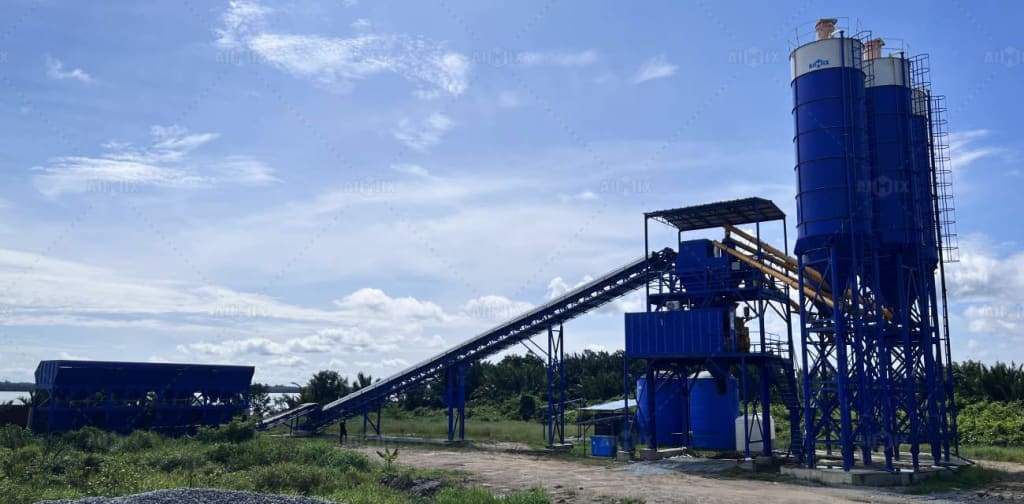
The demand for concrete remains a cornerstone of modern construction, and as the industry moves toward larger, faster, and more sustainable projects, the ready mix concrete (RMC) plant business is evolving rapidly. The cost of ready mix concrete plants is influenced by several factors ranging from technological upgrades to raw material prices and market demand. As we move into 2025, buyers looking to invest in an RMC plant business will need to consider how these dynamics affect plant costs and what they can expect in terms of pricing.
In this article, we’ll take a deep dive into the factors driving the ready mix concrete plant cost, offering valuable insights for prospective buyers looking to navigate the complexities of purchasing and operating RMC plants in the coming years.
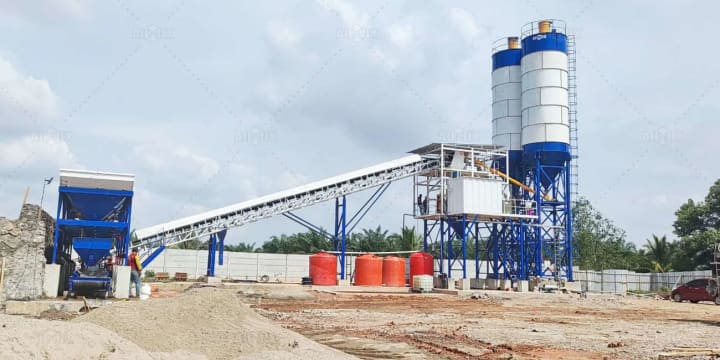
Key Factors Impacting Ready Mix Concrete Plant Cost in 2025
1. Technological Advancements and Automation
Technology plays a significant role in shaping the cost of ready mix concrete plants. Over the past few years, there has been a shift toward automated control systems, Internet of Things (IoT) connectivity, and artificial intelligence for quality control. In 2025, buyers can expect that plants equipped with more advanced features will come at a higher price, but with significant returns in terms of:
Reduced operational costs through automation
Higher quality control with AI-powered mix adjustments
Faster production speeds and efficiency
Remote monitoring for better management and maintenance scheduling
For businesses entering the RMC plant business, understanding these upgrades is crucial. The initial investment might be higher for plants with advanced technology, but the operational savings and enhanced productivity will likely lead to better ROI over time.
2. Plant Type and Configuration
Ready mix concrete plants come in various configurations, each suited for different operational needs. The cost of a ready mix concrete plant can vary significantly depending on whether you’re investing in a stationary plant or a mobile plant.
Stationary plants, which are designed for long-term use at a single site, tend to have a higher upfront cost due to their larger capacity, more complex infrastructure, and the need for a permanent setup.
Mobile plants, on the other hand, offer flexibility and are ideal for projects that require frequent relocation or a smaller output. While their initial cost is generally lower, their production capacity is also more limited.
For the RMC plant business, the decision to go stationary or mobile depends on the scale of the business, the type of projects, and the potential need for mobility. For example, if you are targeting large infrastructure projects, a stationary plant might be a better option. Conversely, if you focus on smaller, residential, or rural projects, a mobile plant may be more practical.
3. Raw Material Prices and Supply Chain Costs
The cost of raw materials such as cement, aggregates, sand, and water significantly influences the overall price of running a ready mix concrete plant. In 2025, buyers should expect the cost of ready mix concrete plants to fluctuate based on these factors:
Global supply chain disruptions: With the ongoing changes in international logistics and supply chains, raw material prices have been volatile, and this could continue into 2025. For instance, transportation costs have surged, which may increase the cost of running an RMC plant.
Regional price variations: Depending on the location of the plant, material sourcing costs will differ. In areas where raw materials are scarce or more expensive to transport, plant costs will be higher.
For an RMC plant business, it’s important to secure reliable and cost-effective sources of raw materials to maintain competitive pricing and keep operating costs in check. Strategic partnerships with local suppliers or using sustainable materials like recycled aggregates could offer long-term cost savings.
4. Regulatory Compliance and Sustainability Features
As environmental concerns continue to take center stage in the construction industry, governments around the world are implementing stricter regulations. In 2025, the demand for sustainable and eco-friendly concrete is likely to push ready mix concrete plant costs higher. Features like:
Water recycling systems for washout water
Dust control systems
Low-emission technologies
Green certification for energy-efficient operations
are increasingly being incorporated into new plants. While these technologies will add to the upfront cost of a ready mix concrete plant, they can improve long-term operational efficiency and help businesses comply with environmental regulations, reducing fines and penalties.
Moreover, sustainability trends are also shaping the cost of operating in the RMC plant business, as eco-conscious customers increasingly prefer suppliers that adopt green technologies.
5. Capacity and Throughput Requirements
The cost of a ready mix concrete plant will largely depend on the capacity required. A plant capable of producing 50 cubic meters of concrete per hour will cost significantly less than one designed to produce 200 cubic meters per hour.
When deciding on the capacity of the plant, buyers need to take into account the volume of concrete their target market will demand. This is critical for the RMC plant business, as a mismatch in capacity can result in either underutilization (leading to financial inefficiency) or overwork (resulting in excessive wear and tear on equipment).
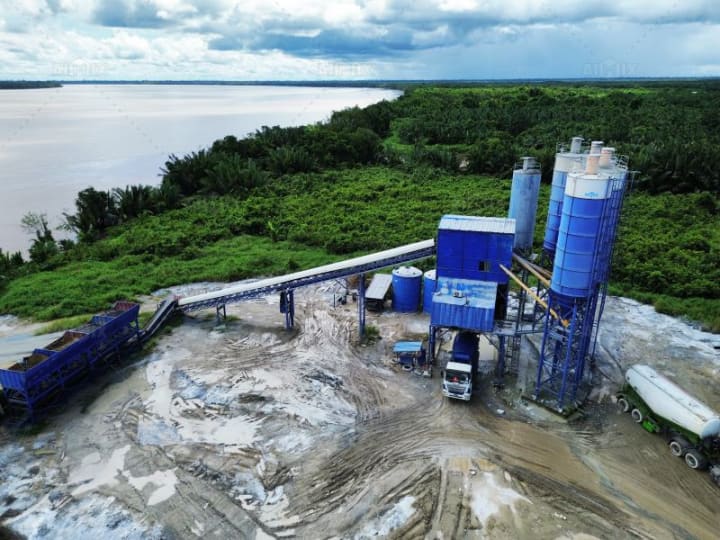
What Buyers Can Expect in Terms of Ready Mix Concrete Plant Cost in 2025
Given these factors, prospective buyers can expect the following trends in 2025:
Small to mid-sized stationary plants: Prices may range from $80,000 to $150,000, depending on the configuration and technology included.
Larger stationary plants: High-capacity plants suitable for large-scale commercial or infrastructure projects could cost anywhere from $200,000 to $400,000.
Mobile ready mix concrete plants: These plants will generally cost $50,000 to $120,000 based on features, mobility, and production capacity.
While prices for ready mix concrete plants are expected to increase slightly due to higher material and technological costs, smart investment decisions—such as investing in energy-efficient machinery, automation, and sustainable systems—will help companies maintain profitability in the long run.
Conclusion
As 2025 approaches, buyers entering the RMC plant business need to consider a variety of factors when forecasting the cost of ready mix concrete plants. From technological upgrades and raw material price fluctuations to plant capacity and sustainability requirements, understanding these elements will help businesses make informed decisions.
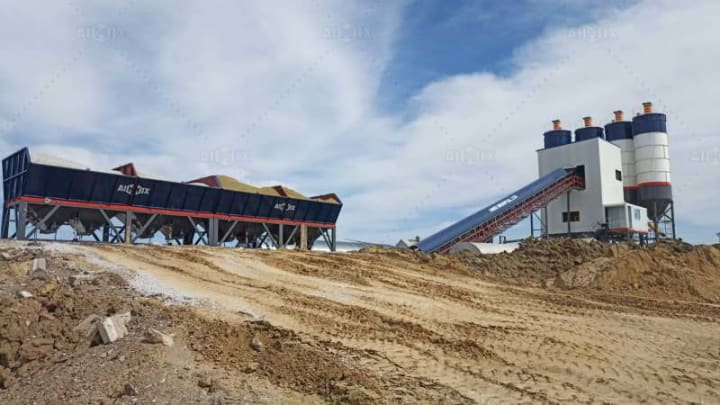
By planning carefully and balancing upfront costs with long-term gains, prospective buyers can position themselves for success in an increasingly competitive construction market. Whether investing in a stationary or mobile plant, making the right choices today will set the foundation for a profitable and efficient concrete production business tomorrow.
About the Creator
consrtuctionmachines
AIMIX is a customer-center-oriented heavy equipment manufacturer and supplier, devoted to production, innovation, combination, one-stop solution, etc.
https://aimixgroup.com/
Keep reading
More stories from consrtuctionmachines and writers in 01 and other communities.
How to Buy a Concrete Pump Truck Online on a Low Budget
Purchasing a concrete pump truck is a major investment for any construction business. While new models can cost $100,000 to $500,000+, it's possible to find reliable options at lower prices through smart online shopping strategies. This guide will show you how to safely buy concrete pump truck equipment online while sticking to a tight budget.
By consrtuctionmachines9 months ago in 01
Candace Owens pushes theory Charlie Kirk was 'time traveller' who went to 'X-Men school'
In a recent episode of her podcast, Candace Owens said Charlie Kirk told her he was a “time traveler” who was sent to “X-Men school,” and alleged he was monitored since childhood.
By Dena Falken Esq29 minutes ago in 01
Why the United States Stepped Back from Confrontation with Iran: A 360° Geopolitical Analysis
Introduction In the long and turbulent history of US–Iran relations, moments of escalation have often brought the world to the brink of war. From the Iranian Revolution of 1979 to the sanctions era of the 2010s, and through the proxy conflicts simmering across Iraq, Syria, Lebanon, and Yemen, the tension between Washington and Tehran has become a defining feature of Middle Eastern geopolitics. Yet, despite decades of hostility, every cycle of confrontation has also produced unexpected decisions of restraint.
By Muhammad Islam khan swati3 days ago in 01


Comments
There are no comments for this story
Be the first to respond and start the conversation.