
Difference Between Relay and Circuit Breaker
what is the difference between Relay and Circuit Breaker

Introduction
In the realm of electrical and electronic systems, two indispensable components play pivotal roles in managing circuits and ensuring their safety: relays and circuit breakers. These devices serve as key elements for controlling and protecting electrical systems. In this comprehensive comparison, we will delve deep into the differences and commonalities between relays and circuit breakers, shedding light on their distinct functions and applications, and providing a thorough understanding of their crucial roles in maintaining secure and efficient electrical operations.
Relays: The Control Switch
Understanding Relays
Relays are electromechanical devices that operate as electrically controlled switches. Their primary purpose is to manage the opening and closing of electrical circuits in response to a control signal. Relays come into play in scenarios where a low-power input signal is used to control a high-power electrical circuit.
Key Characteristics of Relays:
Electromagnetic Operation: Relays operate by harnessing the movement of a coil, which generates a magnetic field, attracting or repelling contacts to establish or interrupt the circuit.
Control Signal: These devices respond to a control signal, typically a low-voltage input, which initiates their switching action.
Switching Capacity: Relays exhibit versatility by handling both low and high currents, rendering them suitable for a wide array of applications.
Isolation: Relays offer electrical isolation between the control circuit and the load circuit, preventing interaction between the two.
Applications of Relays:
- Remote control systems
- Industrial automation and control
- Safety interlocks in machinery
- Signal routing in telecommunications
- Automotive applications, such as starter solenoids
Circuit Breakers: The Protection Mechanism
Understanding Circuit Breakers
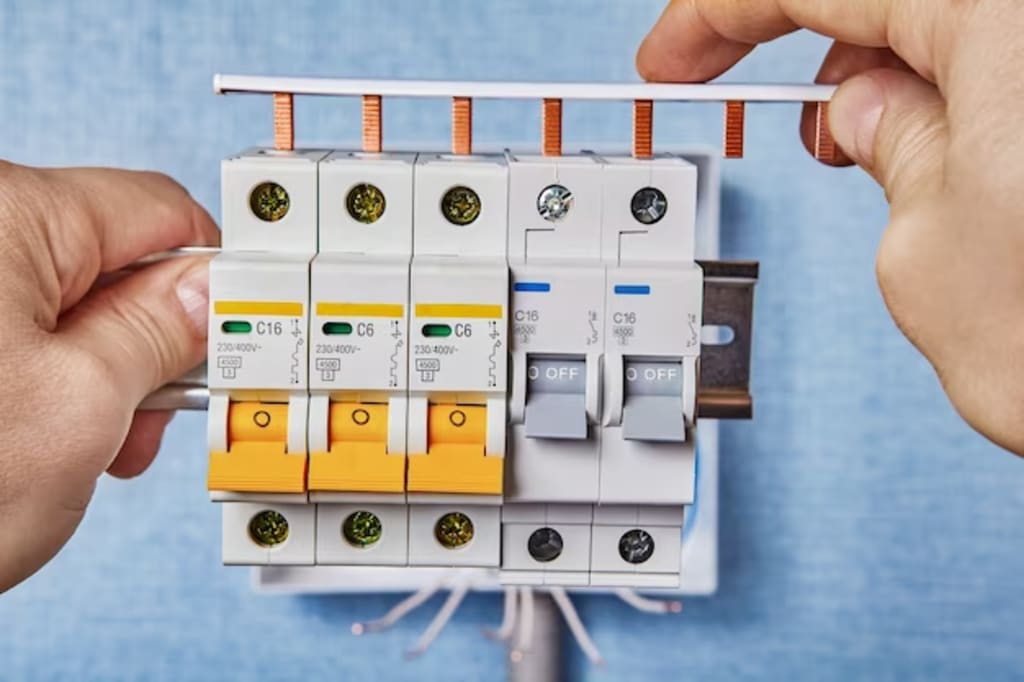
Circuit breakers, on the other hand, are protective devices that operate automatically to interrupt the flow of electrical current within a circuit when they detect overcurrent or fault conditions. The primary role of circuit breakers is to prevent damage to equipment and wiring caused by excessive current or short circuits.
Key Characteristics of Circuit Breakers:
- Automatic Protection: Circuit breakers operate autonomously, tripping when an overcurrent condition is detected.
- Current Sensing: They continuously monitor the current passing through the circuit, responding to deviations from specified values.
- Resettable: Circuit breakers are designed to be resettable after tripping, allowing for the restoration of power once the issue is resolved.
- Multiple Types: Circuit breakers come in various types, including thermal, magnetic, and thermal-magnetic variants, each suited for different applications.
Applications of Circuit Breakers:
- Residential electrical panels
- Industrial and commercial electrical distribution systems
- Motor protection
- Power generation and transmission
- Overcurrent protection within electrical circuits
Differences and Similarities
Function:
- Relay: Relays primarily function as control switches, allowing or interrupting the flow of current based on the presence or absence of a control signal.
- Circuit Breaker: Circuit breakers are dedicated to safeguarding electrical circuits, automatically disconnecting power in the event of overcurrent or short-circuit conditions.
Operation:
- Relay: Relays activate in response to a control signal, energizing a coil and creating a magnetic field that moves contacts to establish or break the circuit.
- Circuit Breaker: Circuit breakers operate based on monitoring current levels, tripping automatically when excessive current is detected.
Reset:
- Relay: Relays typically lack a reset function since they are primarily control devices and not protection devices.
- Circuit Breaker: Circuit breakers are intentionally designed to be resettable, allowing for the re-energization of the circuit after troubleshooting and resolving the issue.
Isolation:
- Relay: Relays provide electrical isolation between the control and load circuits, preventing interference between the two.
- Circuit Breaker: Circuit breakers do not offer electrical isolation; their primary focus is on protecting the circuit from overcurrent conditions.
Applications:
- Relay: Relays find common use in control and automation systems, serving as essential components for managing electrical circuits.
- Circuit Breaker: Circuit breakers are indispensable for safeguarding electrical equipment, wiring, and circuits from overcurrent and short-circuit risks.
Conclusion
Relays and circuit breakers are fundamental components in electrical and electronic systems, each offering distinct functions and characteristics. While relays excel in control applications, circuit breakers are the frontline protectors against electrical faults. Recognizing the distinctions and overlaps between these components is vital for ensuring safe and efficient electrical operations. Whether the objective is to control a circuit or protect it from overcurrent conditions, both relays and circuit breakers have their designated roles in the intricate world of electrical engineering.
About the Creator
AEC Switchgear
AEC Switchgear is the electric distributor with the best price offer in Ahmedabad. For more information call us at 079-4897-6523 and also visit our site https://www.aecswitchgear.com/
Keep reading
More stories from AEC Switchgear and writers in 01 and other communities.
Overload Relay | What is Overload Protection?
Introduction In the realm of electrical systems, the concept of overload protection is paramount to ensure the safe and efficient operation of equipment, particularly electric motors. At AEC Switcher, as electrical dealers, we recognize the significance of safeguarding motors and electrical circuits from excessive currents that can lead to overheating and damage. This blog aims to shed light on what overload protection entails, how it works, and the different types of overload relay devices used in electrical systems.
By AEC Switchgear2 years ago in 01



Comments
There are no comments for this story
Be the first to respond and start the conversation.